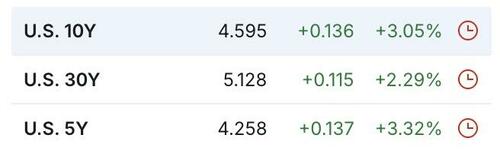
Rising Bond Yields Expose Deeper Market Fractures as Inflation and Fiscal Risks Challenge Narrow Equity Rally
Bond yields hitting 2026 highs amid inflation, oil shocks, and fiscal concerns signal tightening conditions and fragility in concentrated equity markets, pointing to capital shifts toward commodities that mainstream optimism has understated.
As U.S. 10-year Treasury yields surged to nearly 4.6%—their highest level in a year—global bond markets sent a clear message: underlying economic stresses are building despite optimistic equity narratives. Recent moves in Treasuries, UK gilts, and Japanese yields reflect repricing of persistent inflation driven by energy shocks from Middle East conflicts, swelling fiscal deficits, and doubts that central banks will deliver rapid easing. Bloomberg reported that investors fled government bonds after back-to-back inflation data showed accelerating pressures, pushing 30-year yields above 5% and prompting bets on higher Fed rates into 2027. This aligns with Reuters coverage of yields climbing 14 basis points in a single session amid oil price spikes and stronger growth expectations, forcing a reassessment of monetary policy paths.
These bond moves tighten financial conditions rapidly: higher corporate borrowing costs, elevated mortgage rates, and less forgiving equity valuations particularly threaten speculative growth names that have dominated recent indices. Mainstream coverage has often emphasized resilient growth and AI enthusiasm, yet this overlooks how concentrated market leadership—coupled with explosive options activity and low correlations—has created fragility beneath the surface. When rates rise aggressively, the same dealer hedging mechanics that amplified upside can accelerate downside moves. CNBC highlighted parallel concerns from Wall Street veterans about overdue credit recessions and volatility during Fed transitions, while PNC Insights noted that rising long-term yields at higher levels signal inflation persistence and term premium expansion rather than classic pre-recession flight to safety.
Deeper connections emerge in shifting capital flows: quotes in Reuters coverage indicate strategic reallocation from bonds into commodities, oil, and agriculture as hedges against sustained price pressures. Business Insider analysis of the steepening yield curve offers a nuanced positive signal for potential business investment, yet this coexists with warnings of fiscal pushback and energy-driven inflation that could erode real returns. The ZeroHedge-sourced observation that stress often originates in rates markets before hitting equities finds corroboration here—the bond market's size and focus on fundamentals over narratives positions it as an early warning system for fractures in overextended, narrowly driven asset bubbles. Optimistic equity coverage continues to downplay these risks, but sustained higher-for-longer yields may expose vulnerabilities in valuation multiples predicated on cheap capital and flawless execution in concentrated sectors like technology.
This environment suggests not an imminent traditional recession in all models, but a period of market reconfiguration where complacency around narrow rallies meets reality from the vastly larger fixed-income universe. Investors ignoring simultaneous selloffs in bonds, precious metals, and international equities do so at their peril, as these flows reveal deeper fractures in the post-pandemic financial architecture.
LIMINAL: Higher yields will likely accelerate capital flight from concentrated speculative equities into hard assets and defensives, fracturing the options-fueled rally and exposing fiscal-inflation vulnerabilities that optimistic forecasts continue to minimize.
Sources (5)
- [1]Bond Investors Flee as Inflation Worry Sends Yields to 2026 High(https://www.bloomberg.com/news/articles/2026-05-13/us-10-year-treasury-yield-hits-highest-since-july-after-ppi-data)
- [2]Yields surge to one-year high as oil prices and inflation data rattle markets(https://www.reuters.com/business/energy/yields-surge-may-2025-highs-oil-prices-and-inflation-data-rattle-markets-2026-05-15/)
- [3]Bonds have more pressing issue than Jamie Dimon credit recession warning(https://www.cnbc.com/2026/05/02/kevin-warsh-federal-reserve-interest-rates-bonds-fixed-income.html)
- [4]Recession Indicator Flashing Positive Signal for US Economy(https://www.businessinsider.com/recession-indicator-treasury-yield-curve-us-economic-outlook-bond-market-2026-5)
- [5]April 2026: Rate Volatility and Bond Signals Reshape Markets(https://www.pnc.com/insights/corporate-institutional/asset-management-group/addingalpha/april-2026-rate-volatility-and-bond-signals-reshape-markets.html)