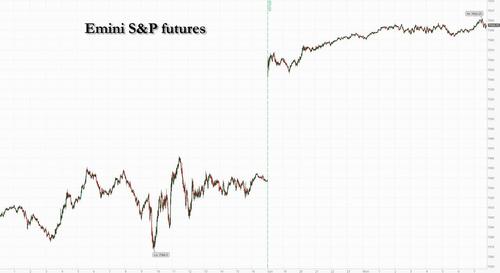
Markets Rally on US-Iran Deal: Oil Plunges, Equities Surge as Strait of Hormuz Reopens
Credible reporting confirms the ZeroHedge account of immediate market repricing after the US-Iran interim deal: equities surged, oil tumbled to multi-month lows, and inflation expectations eased as the Strait of Hormuz reopens for 60 days of talks. Supply-chain relief on energy costs offers tangible inflation tailwinds beyond abstract policy narratives.
Global markets staged a sharp risk-on rally Monday following the announcement of a preliminary US-Iran agreement to end hostilities, reopen the Strait of Hormuz, and initiate 60 days of nuclear negotiations. The deal, described as a memorandum of understanding with formal signing slated for June 19 in Switzerland, lifts the US naval blockade on Iranian ports and restores free transit through the critical chokepoint that handles roughly 20% of global oil flows before the February 2026 conflict.[1][2]
US equity futures led gains, with Nasdaq 100 up 2.1% and S&P 500 futures rising 1.3% in early trading. The Magnificent 7 tech names advanced, led by Nvidia (+2.1%), Meta (+2.0%), and Microsoft (+1.7%). European stocks climbed 0.7% to fresh pre-war highs, while Asian benchmarks followed suit. Bond yields eased 2-5 basis points, the dollar weakened, and safe-haven assets like gold (+2.8%) and silver (+3.9%) rallied alongside Bitcoin. Brent crude tumbled to around $83 per barrel and WTI slipped below $80—the lowest since the war began—reflecting expectations of restored supply.[3][4]
Sector rotation underscored the repricing: energy stocks fell while miners, cruise lines, and airlines gained on lower fuel costs. Swaps markets now price a 75% probability of a Federal Reserve rate cut by December, down from 80% on Friday, as lower energy prices ease inflation pressures. Analysts at Pictet and RBC noted the relief for central banks but cautioned that the 60-day window leaves significant risk premium embedded, given Trump’s mixed record on durable Middle East accords.[5]
Beyond headline moves, the deal’s supply-chain implications extend to downstream inflation and logistics. Reduced war-risk premiums and restored Hormuz flows should unwind elevated shipping insurance costs and ease feedstock pressures on refining and petrochemicals, potentially trimming CPI components tied to energy and transportation. This dynamic, often abstracted in policy coverage, directly benefits import-dependent economies and consumer-facing sectors while pressuring upstream energy producers. The interim nature—explicitly a ceasefire extension rather than permanent resolution—means volatility could return if nuclear talks stall, as Trump warned of renewed strikes.[6]
Related weekend developments included Fox’s $160/share acquisition of Roku and SpaceX’s strong post-IPO performance, though the dominant driver remained geopolitical de-escalation.
Macro Strategist: Sustained oil below $85 could accelerate Fed easing by 25bp by year-end, easing supply-chain bottlenecks in transport and manufacturing while pressuring energy producers and supporting consumer discretionary spending.
Sources (5)
- [1]NBC News(https://www.nbcnews.com/world/iran/us-iran-deal-expected-reopen-strait-hormuz-signed-days-both-sides-say-rcna349916)
- [2]BBC(https://www.bbc.com/news/articles/c6217106px6o)
- [3]Axios(https://www.axios.com/2026/05/24/iran-deal-strait-hormuz-sanctions-nuclear)
- [4]Wikipedia(https://en.wikipedia.org/wiki/2025%E2%80%932026_Iran%E2%80%93United_States_negotiations)
- [5]Fortune(https://fortune.com/2026/06/14/stock-market-today-dow-futures-us-iran-war-deal-hormuz-oil-prices-naval-blockade/)