IRGC Claims Strike on Oracle's Dubai Data Center as Tech Infrastructure Emerges as Target in Escalating Hybrid Conflict
IRGC claims an attack on Oracle's Dubai data center targeting cloud and AI infrastructure, part of wider threats against U.S. tech firms, but Dubai authorities deny any strike took place, highlighting verification issues in hybrid warfare.
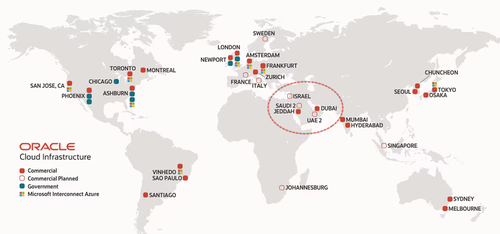
The Islamic Revolutionary Guard Corps (IRGC) has claimed responsibility for targeting a data center operated by Oracle in Dubai, according to Iranian state media reports. This development comes amid a broader campaign by Iran against U.S.-linked technology assets in the Middle East, following threats issued against 18 American companies with regional operations. Reuters national security correspondent Phil Stewart reported the claim on X, citing IRGC statements that the Oracle facility was hit as retaliation. Oracle's Dubai cloud region (me-dubai-1) supports significant cloud computing and AI-related infrastructure in the UAE.
However, the Dubai Media Office has firmly denied that any strike occurred, describing reports of an IRGC attack on Oracle's data center as 'fake news' with no basis in reality. Similar denials followed earlier claims of attacks on Amazon cloud facilities in Bahrain. Multiple outlets have noted the conflicting accounts, highlighting the challenges in verifying strikes on commercial infrastructure during heightened tensions.
This latest claim fits into a pattern of IRGC actions treating civilian tech assets as legitimate military targets. Earlier this week, the IRGC-affiliated outlet Sepah News listed companies including Oracle, Cisco, HP, Intel, IBM, Palantir, and UAE-based AI firm G42 as targets. Analysts see this as a dangerous expansion of hybrid warfare, where inexpensive drones and missiles expose vulnerabilities in data centers that underpin global cloud services and artificial intelligence development. Previous incidents included drone strikes on U.S. company data centers last month, causing reported outages.
Mainstream coverage has contextualized these events within the ongoing U.S.-Iran-Israel conflict, but has been relatively muted on the long-term implications for tech supply chains. Data centers in the Gulf have attracted billions in investment from Microsoft, Google, Oracle, and others to support AI training and regional digital transformation. Targeting them represents a shift toward economic and informational warfare, potentially disrupting not just local services but global AI infrastructure dependencies. Security experts warn that such facilities remain difficult to fully protect against asymmetric threats like low-cost aerial munitions.
The incident underscores overlooked connections between traditional geopolitical conflicts and the emerging resource wars over computational power and data sovereignty. As nations increasingly view cloud and AI capabilities as strategic assets, attacks like these could accelerate efforts to diversify infrastructure away from conflict zones or invest in more resilient, distributed systems.
LIMINAL: This marks a shift where data centers and AI infrastructure become frontline targets in state conflicts, exposing global tech vulnerabilities and likely driving rapid changes in how critical computing assets are protected and geographically distributed.
Sources (4)
- [1]IRGC claims to have attacked Dubai Oracle data center(https://www.jpost.com/middle-east/iran-news/article-891951)
- [2]Iran says it targeted Oracle data center in UAE; Dubai denies(https://www.aa.com.tr/en/middle-east/iran-says-it-targeted-oracle-data-center-in-uae-dubai-denies/3889973)
- [3]Iran says attacks Oracle data center; Dubai authorities deny(https://english.news.cn/20260403/003fd0e5f71e493da709e2ef597c2405/c.html)
- [4]Iran claims attack on Oracle data center in Dubai(https://timesofindia.indiatimes.com/technology/tech-news/iran-claims-attack-on-oracle-data-center-in-dubai-says-irgcs-navy-command-/articleshow/129988751.cms)