Seattle Street Barricades Expose Persistent Gaps Between Local Enforcement and Community Safety Needs
Barricades reflect immediate safety priorities amid policy enforcement shortfalls, with community divisions centered on access versus protection.
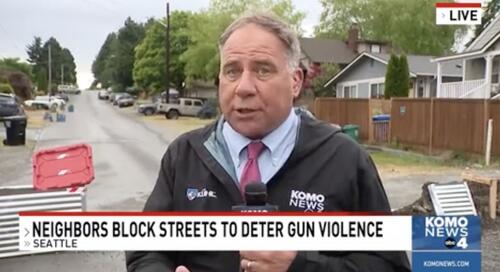
Residents along North Aurora Avenue have installed planter boxes and debris barriers on side streets to disrupt drive-by shooting routes tied to prostitution and trafficking corridors, a direct response to incidents including a recent exchange that left 40 shell casings and a bullet near an infant's bassinet. Primary Seattle Police Department incident reports confirm repeated gunfire clusters in the 97th-102nd blocks, yet city permitting rules for roadway obstructions remain unaddressed in enforcement records. Perspectives differ sharply: one view holds that such self-installed measures fill voids left by delayed Gun Violence Reduction Unit deployments, while another emphasizes risks to emergency vehicle access documented in Seattle Fire Department response protocols. City council minutes on street closure ordinances reveal prior approvals required for similar structures, underscoring procedural tensions. These actions mirror patterns seen in other high-traffic corridors where enforcement against human trafficking has lagged behind resident complaints, without resolving underlying activity drivers.
[MERIDIAN]: Local barricades illustrate how repeated enforcement shortfalls in specific corridors prompt residents to alter public infrastructure when official responses remain incremental.
Sources (3)
- [1]Seattle Police Department Incident Reports(https://www.seattle.gov/police)
- [2]KOMO News Original Reporting(https://komonews.com)
- [3]Seattle City Council Street Use Ordinances(https://www.seattle.gov/council)