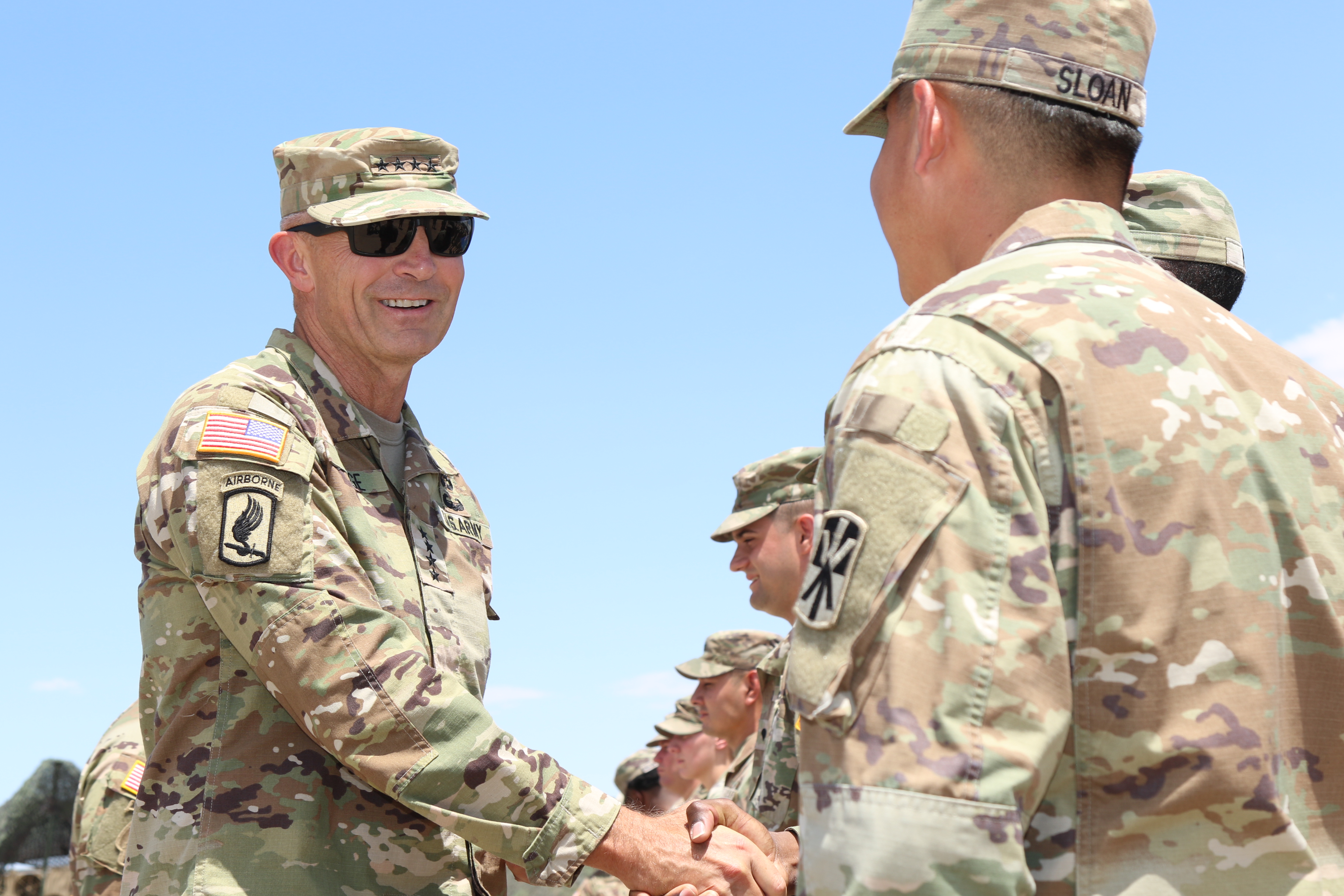
Pentagon Purge During Iran War Exposes Perilous Politicization of U.S. Military Command
Hegseth’s wartime dismissal of the Army’s top general and two other officers reveals risky Pentagon instability and a pattern of politicizing military leadership at a moment when command continuity is critical against Iran.
The abrupt demand by Defense Secretary Pete Hegseth for the Army’s top general to retire immediately, coupled with the firing of two other senior officers, represents far more than routine personnel reshuffling. As U.S. forces remain engaged in active combat operations against Iran and its proxies, this move introduces command friction at the worst possible moment. The original Defense News reporting correctly notes the intent to install leaders aligned with President Trump and Hegseth’s vision for the Army, yet it underplays the strategic costs of such a transition during hostilities and misses the deeper pattern of institutional politicization now reshaping the Pentagon.
This development fits a consistent trajectory visible since Trump’s first term. Public clashes with then-Defense Secretary Jim Mattis, the posthumous disputes with Gen. Mark Milley, and repeated accusations that senior officers were part of a ‘deep state’ resistance established a precedent where ideological conformity increasingly outweighs professional expertise. The current purge echoes historical warnings about civil-military norms under stress, similar to tensions during the Vietnam era when political pressure distorted military advice, though today’s version is accelerated by social media and partisan media ecosystems.
What the initial coverage largely omitted is the operational risk profile. Replacing the Army chief in the middle of a hot conflict disrupts continuity in ongoing campaigns, joint planning with CENTCOM, and critical decisions on force posture and escalation management with Iran. Tehran’s leadership, already adept at hybrid warfare, is likely to view leadership turmoil in Washington as a window of opportunity. Iranian state media and IRGC messaging have historically amplified U.S. internal divisions; this episode hands them potent material.
Synthesizing broader context, a 2024 RAND Corporation study on civil-military relations documented growing perception among active-duty officers that political loyalty tests were intensifying. Similarly, a Brookings Institution analysis from late 2025 highlighted how personnel decisions based on alignment rather than merit erode trust within the ranks and complicate recruitment from traditional warrior-class demographics. A Wall Street Journal investigation into Hegseth’s early tenure further revealed plans to aggressively target perceived ‘woke’ elements in training doctrine, suggesting these firings are the opening salvo of a wider ideological realignment.
The pattern is dangerous because it treats the military as an extension of the executive’s political base rather than a professional institution serving the Constitution. During major conflict, the costs compound: degraded morale, hesitation in the officer corps, and potential allied skepticism about U.S. reliability. While reform of Pentagon bureaucracy is legitimate, executing high-profile removals while Iran is actively testing American resolve signals weakness and invites further aggression. This is not strengthening the military; it is subordinating it.
SENTINEL: This purge during active combat with Iran creates exploitable command gaps and accelerates the dangerous trend of demanding political loyalty from uniformed leaders, likely weakening operational effectiveness against determined adversaries.
Sources (3)
- [1]Primary Source(https://www.defensenews.com/news/pentagon-congress/2026/04/02/hegseth-asks-armys-top-general-to-retire-immediately-as-iran-war-rages/)
- [2]Civil-Military Relations Under the Second Trump Administration(https://www.brookings.edu/articles/civil-military-relations-trump-2025/)
- [3]Hegseth Moves to Reshape Army Leadership(https://www.wsj.com/articles/hegseth-army-generals-retirement-iran-2026)