The Underestimated Abyss: Scale, Escalation Ladders, and Strategic Miscalculation in a U.S. Naval Blockade of Iran
A U.S. blockade of Iran represents vastly greater military, diplomatic, and escalation risks than mainstream reporting conveys. Synthesizing the Defense News account with CSIS wargames and RAND analysis reveals an operation likely to demand sustained commitment of major naval forces, invite direct Iranian asymmetric retaliation and proxy attacks, complicate relations with China, and risk accelerating Tehran’s nuclear breakout under a hardened regime.
The Defense News report correctly frames President Trump’s announced blockade of Iranian ports and the Strait of Hormuz as a 'major military endeavor' requiring an open-ended commitment of significant naval forces. Yet it barely scratches the surface of the operational, diplomatic, and strategic complexities that make this effort far riskier than mainstream coverage suggests. What is presented as a targeted pressure campaign is, in reality, a de facto act of war whose scale, escalation potential, and second-order effects have been consistently underestimated by both political rhetoric and much of the press.
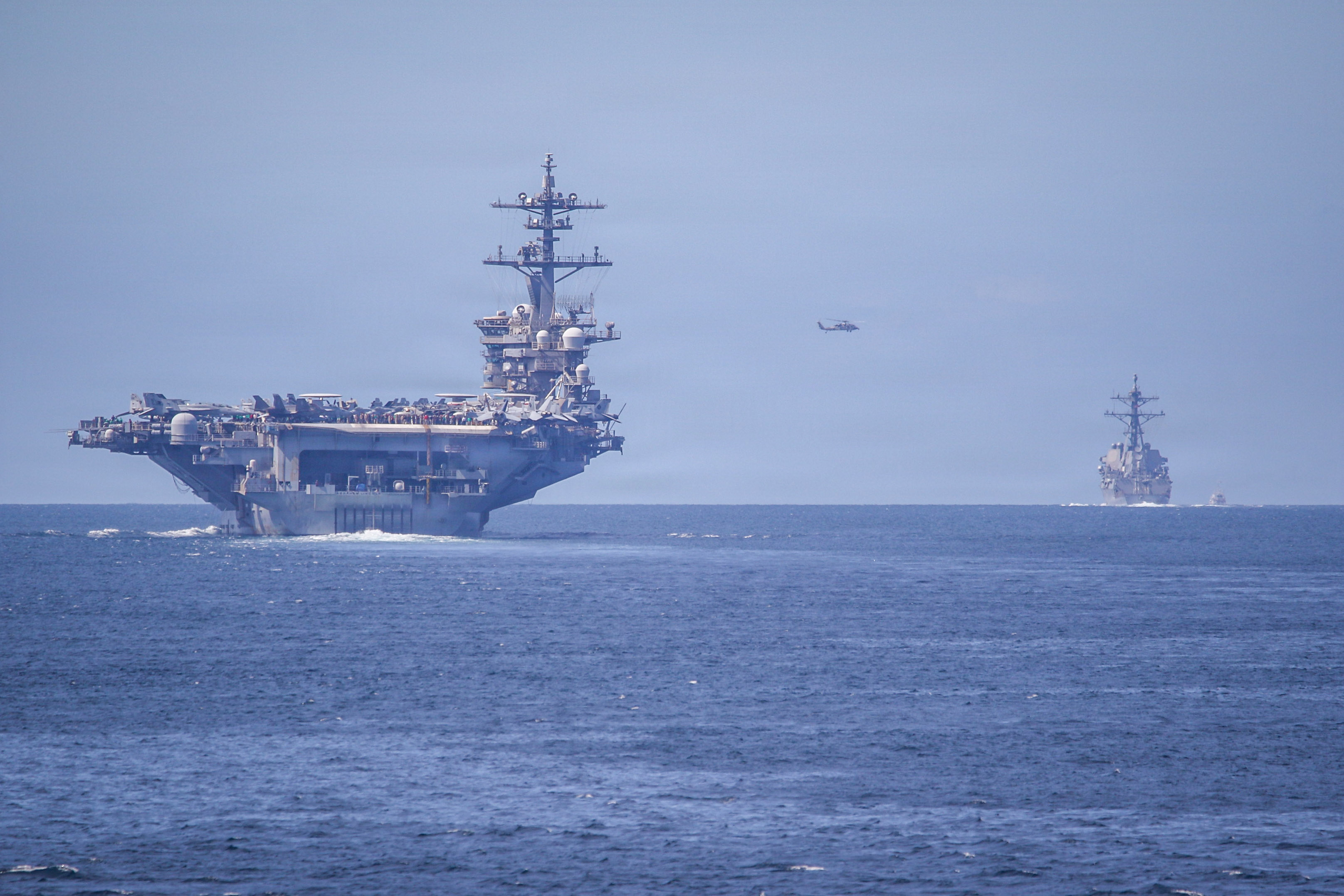
Historical patterns offer sobering context. During the 1980s Tanker War, the U.S. Navy’s relatively limited reflagging and escort operations in the Persian Gulf tied down dozens of surface combatants, minesweepers, and air assets for years while Iranian speedboats, mines, and Silkworm missiles still managed to damage or sink multiple vessels. A modern blockade would be exponentially harder. Iran’s current arsenal includes thousands of naval mines, thousands of coastal defense cruise and ballistic missiles (Khalij Fars, Raad, Zafar), drone swarms, and semi-submersible fast-attack craft. Enforcing a credible quarantine against determined Iranian asymmetric tactics would likely demand multiple carrier strike groups, Aegis destroyers for ballistic-missile defense, dedicated minesweeping squadrons, maritime patrol aircraft, and persistent ISR—assets already strained by concurrent Indo-Pacific commitments.
Two independent analyses illuminate what the original story missed. A 2022 CSIS wargame series on a Strait of Hormuz closure scenario concluded that even a limited Iranian mining and missile campaign could halt 90 percent of Gulf oil exports for weeks, with full U.S. naval response requiring sustained commitment of over 40 surface combatants and exacting daily losses in a high-intensity environment. Similarly, a 2023 RAND study on Iranian naval modernization highlighted Tehran’s layered A2/AD strategy and noted that any boarding operations against third-party tankers (especially Chinese-flagged vessels carrying Iranian crude) would risk direct confrontation with Beijing, whose economic lifeline is at stake. The Defense News piece alludes to Chinese oil purchases but fails to explore the diplomatic blowback or potential Chinese naval shadowing that could complicate U.S. interdiction efforts.
Mainstream reporting also glosses over rules-of-engagement dilemmas. Trump’s Truth Social declaration that vessels paying “illegal tolls” to Iran will be intercepted even in international waters creates enormous legal and operational ambiguity. Will U.S. forces fire on Indian or South Korean tankers? What constitutes sufficient evidence of sanctions evasion versus legitimate commerce? These questions matter when gas prices have already surged 50 percent and could trigger domestic political backlash ahead of the 2026 midterms.
Iranian retaliation vectors extend far beyond the immediate theater. Retired Adm. Roughead’s warning of attacks on Gulf infrastructure hosting U.S. forces is credible; Iranian proxies in Iraq, Syria, and Yemen have demonstrated precision drone and missile capabilities against Saudi and Emirati oil facilities in recent years. A hardened Iranian leadership emerging from the February 2026 war, possessing a covert stockpile of highly enriched uranium, may calculate that limited escalation or even sprinting toward weaponization offers the best chance of regime survival. The original coverage underplays this nuclear shadow.
The blockade further strains an already fragile ceasefire and risks mission creep. Trump’s Sunday hint at renewed strikes on Iranian missile factories suggests the administration views the naval operation as merely the opening phase of escalated coercion. Yet history shows blockade operations rarely remain isolated; they become magnets for escalation. Sustaining this mission alone, as Dana Stroul noted, appears unsustainable without allies—yet Gulf partners are hedging, deepening ties with China, and wary of becoming Iranian targets.
Ultimately, this endeavor reflects a dangerous mismatch between desired quick strategic gains—neutralizing Iran’s Hormuz leverage and lowering oil prices—and the structural realities of 21st-century naval warfare against a capable regional adversary. The operation could easily tie down a quarter of U.S. naval combat power for months or years, invite opportunistic moves by Russia and China elsewhere, and accelerate Tehran’s nuclear timeline. Mainstream simplification of this as a bold stroke misses the profound risk that the blockade becomes a self-reinforcing trap, driving higher energy prices, regional conflagration, and long-term erosion of U.S. deterrence credibility across multiple theaters.
SENTINEL: The blockade will almost certainly trigger calibrated Iranian mining and drone attacks on Gulf shipping and infrastructure, forcing Washington into prolonged force commitments that weaken its Pacific posture while accelerating Tehran’s nuclear hedging and drawing China into tacit naval support for sanctions-busting convoys.
Sources (3)
- [1]US blockade of Iran will be major military endeavor, experts say(https://www.defensenews.com/news/pentagon-congress/2026/04/13/us-blockade-of-iran-will-be-major-military-endeavor-experts-say/)
- [2]Wargaming a blockade of the Strait of Hormuz(https://www.csis.org/analysis/wargaming-blockade-strait-hormuz)
- [3]Iranian Naval Forces and Asymmetric Warfare(https://www.rand.org/pubs/research_reports/RRA1234-1.html)