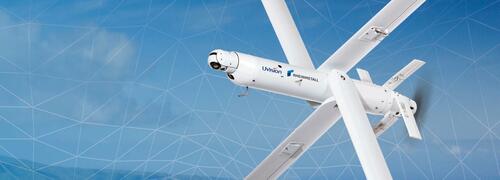
Germany's €300M Rheinmetall Kamikaze Drone Deal Signals Europe's Concrete Shift to Attritional Great-Power Conflict Prep
Germany's approval of major Rheinmetall loitering munition contracts for its Lithuania-based brigade reflects lessons from Ukraine on drone attrition warfare, marking deeper European readiness for sustained great-power conflict beyond routine defense upgrades.
Germany's parliament has approved a €300 million initial contract with defense contractor Rheinmetall for loitering munitions, with the framework potentially expanding to €2.4 billion, underscoring a rapid European adaptation to drone-dominated attrition warfare observed in Ukraine. These one-way attack drones, often called kamikaze or suicide drones, are slated initially for Germany's Bundeswehr brigade stationed in Lithuania on NATO's vulnerable eastern flank, a forward-deployed force explicitly designed to deter Russian aggression. While mainstream outlets frame such procurements as routine modernization, the scale, speed, and focus on expendable, low-cost strike systems reveal deeper recognition of deteriorating security realities: a return to industrial-scale, prolonged conflict where munitions depletion rates outpace production, as seen in the Russia-Ukraine war where cheap FPV drones and loitering munitions have inflicted disproportionate damage on expensive armor and artillery. This deal follows earlier awards to startups Helsing and STARK Defence for similar €270-300 million tranches each, highlighting Berlin's 'Zeitenwende' rearmament push that began after Russia's 2022 invasion. Connections missed in standard coverage include how this stockpiling prepares not just for defensive operations but for the attritional grind of peer or near-peer war, where traditional qualitative superiority yields to quantitative mass in autonomous systems. It also foreshadows a parallel race in counter-drone technologies, as vulnerabilities in critical infrastructure become glaring. Official milestones tied to development and delivery reflect urgency, with deliveries targeted to bolster NATO's forward presence amid fears that hybrid and conventional threats from Russia could escalate rapidly. This is no mere spending increase; it is material preparation for the end of the post-Cold War peace dividend. Sources confirm the contracts emphasize qualification requirements and innovation clauses to accelerate fielding. In a broader sense, Europe's pivot to these systems alongside increased defense budgets signals alliance-wide acknowledgment that future conflicts may resemble Ukraine's grinding stalemates more than short, decisive campaigns.
LIMINAL: Europe's accelerated kamikaze drone acquisitions signal concrete planning for prolonged, high-attrition wars against peer adversaries like Russia, where cheap autonomous munitions could overwhelm legacy forces and reshape NATO deterrence into a contest of industrial output and rapid innovation.
Sources (4)
- [1]Rheinmetall wins €300mn drone order from German armed forces(https://www.ft.com/content/a628efc5-8d04-4863-9818-bb78436b508b)
- [2]Germany Boosts Loitering Munitions Funding(https://aviationweek.com/defense/missile-defense-weapons/germany-boosts-loitering-munitions-funding)
- [3]The federal government plans to purchase Rheinmetall combat drones for up to EUR 2.4 billion(https://table.media/en/security/news-en/the-federal-government-plans-to-purchase-rheinmetall-combat-drones-for-up-to-eur-24-billion)
- [4]Germany Moves Forward with €900 Million Drone Deals(https://english.alahednews.com.lb/83486/528)