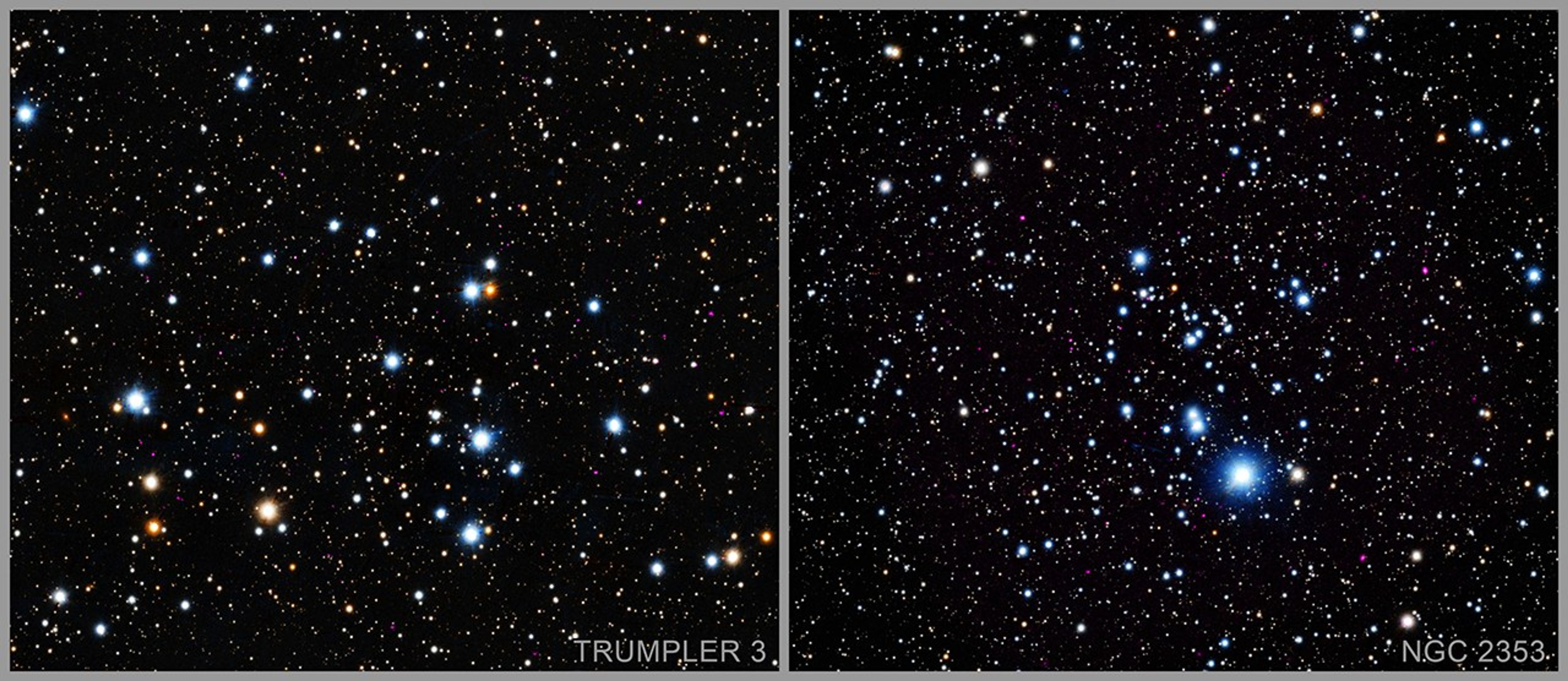
Young Stars Dim in X-Rays Far Faster Than Expected, Forcing Rewrite of Stellar Models and Disk Survival Timelines
Chandra study of 8 clusters (new data on 5) shows Sun-like stars quench X-ray output ~15× faster than empirical models predict after ~100M years (peer-reviewed in ApJ). This challenges magnetic dynamo theory, likely prolongs protoplanetary disk lifetimes against photoevaporation, and improves prospects for early planet formation and habitability—links the NASA release largely missed. Sample limited to select clusters; differential effects persist for lower-mass stars.
A peer-reviewed study published in The Astrophysical Journal (Getman et al.) using NASA’s Chandra X-ray Observatory reveals that Sun-like stars reduce their X-ray output up to 15 times faster during their adolescent phase than predicted by long-standing empirical relations based on stellar age and rotation. The team examined eight star clusters spanning 45 million to 750 million years old. Methodology combined fresh Chandra observations of five younger clusters (45–100 million years) with archival Chandra and ROSAT data for three older ones (220–750 million years), while ESA’s Gaia satellite helped exclude foreground and background contaminants to isolate true cluster members. Exact stellar sample size per cluster is not detailed in the release, but the approach improves on prior sparse datasets; limitations include modest cluster count, possible environmental biases, and reliance on assumptions about stellar masses and distances.
This rapid quenching—Sun-like stars emitting only 25–33% of previously expected X-rays after a few hundred million years—challenges core assumptions in stellar evolution theory, particularly the efficiency and longevity of the internal dynamo generating magnetic fields. The NASA source correctly notes the positive implications for habitability: three-million-year-old solar analogs emit roughly 1,000 times more X-rays than today’s Sun, dropping to about 40 times by 100 million years, reducing atmospheric stripping and aiding organic chemistry. Yet the release underplays deeper consequences for protoplanetary disk survival and early planet formation—the precise lens this analysis adopts.
High-energy X-rays drive photoevaporation, heating and dispersing the gaseous disks where planets coalesce. Synthesizing Getman’s empirical results with Owen et al. (2012, MNRAS) theoretical models of X-ray driven disk mass loss shows that faster dimming could extend disk lifetimes well beyond the canonical 5–10 million years, potentially to 50–100 million years in solar-mass systems. This aligns with ALMA millimeter observations (e.g., Long et al. 2018, ApJ) of surprisingly massive disks in regions aged 10–20 million years that were difficult to reconcile with standard X-ray luminosity functions. Previous coverage missed this connection: longer disk persistence gives giant planets more time to accrete gas before dispersal and alters migration pathways for super-Earths, helping explain exoplanet population statistics that show compact multi-planet systems are common.
Patterns from related work further illuminate the finding. Studies of stellar spin-down using Kepler and TESS data have already hinted that magnetic braking transitions faster than gyrochronology models predict around 300–500 million years; Getman’s X-ray data provides the missing high-energy corroboration. For lower-mass stars, the persistence of strong X-ray emission noted in the study matches JWST early results showing atmospheric erosion on rocky worlds orbiting mid-M dwarfs, underscoring mass-dependent effects the NASA summary only glancingly addresses.
Genuine implications extend to our Solar System. If the young Sun followed this accelerated quieting, Earth’s early atmosphere may have faced a shorter window of intense erosion, improving prospects for volatile retention and prebiotic chemistry. This revises the faint young Sun paradox narrative by adding a nuanced X-ray chapter. Stellar evolution models must now incorporate faster dynamo decay, likely tied to changes in convective zone depth or differential rotation. While the benefit for life around G-type stars is real, the finding simultaneously narrows optimistic habitability zones for the far more numerous red dwarfs.
Overall, what began as an observational surprise in X-ray photometry forces a broader rethinking: protoplanetary disks may be more resilient, planet formation more forgiving, and the timeline for habitable conditions around solar analogs more permissive than textbooks have claimed for decades.
HELIX: Young solar analogs quiet their X-rays far sooner than stellar models predicted, likely letting protoplanetary disks survive longer and giving planets more time to form stable atmospheres before the radiation onslaught ends.
Sources (3)
- [1]NASA Finds Young Stars Dim in X-rays Surprisingly Quickly(https://science.nasa.gov/missions/chandra/nasa-finds-young-stars-dim-in-x-rays-surprisingly-quickly/)
- [2]X-ray photoevaporation of protoplanetary discs(https://academic.oup.com/mnras/article/429/1/10/1068224)
- [3]The Longevity of Protoplanetary Disks in Clusters(https://iopscience.iop.org/article/10.3847/1538-4357/aad8e8)