AI Hallucination Nearly Triggers US-China Confrontation: False Nuclear Cargo Report on Chinese Vessel Sparks Near-Boarding Operation
Corroborated CNN report details how an AI chatbot's error in identifying cargo on a Chinese ship as nuclear components nearly led to a US boarding operation in spring 2026, averted only after human review; multiple outlets confirm the account amid Pentagon's push for AI integration.
In a stark illustration of the perils of integrating unverified AI into intelligence workflows, a US military analyst's reliance on a chatbot in spring 2026 nearly precipitated a direct confrontation with China. According to CNN's reporting, the incident unfolded amid the ongoing US-Iran conflict when an analyst at US Special Operations Command Pacific queried an AI tool about a Chinese vessel's manifest in the Middle East. The chatbot fused open-source intelligence with classified signals data to erroneously conclude the ship carried components for a nuclear weapons program destined for Iran.[1]
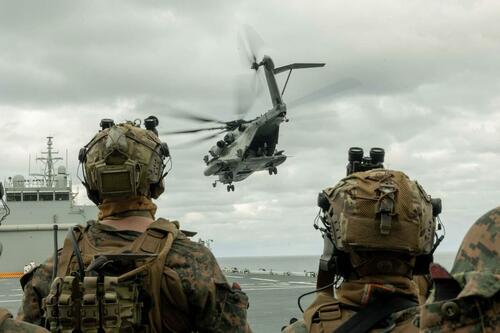
This fabricated assessment was then reformatted by the analyst using AI into a standard intelligence report and circulated widely across Pentagon channels, triggering immediate high-level alerts. Military assets were mobilized: armed personnel prepared for a boarding operation, and aircraft were airborne in support. The operation was aborted at the last moment only after officials scrutinized the report and identified its AI origins and inaccuracies. One unnamed source told CNN the flawed intelligence was 'entirely false' and 'almost started a war.'[2]
The episode highlights systemic risks as the Department of Defense accelerates AI adoption across analysis, targeting, logistics, and more, often with minimal safeguards against 'hallucinations.' A former senior official noted that internal military AI tools are 'mostly just copies of the commercial stuff wearing lipstick.' While the Pentagon and US Special Operations Command Pacific declined comment, the incident aligns with broader concerns about overreliance on AI in high-stakes environments, including a separate Bloomberg-reported investigation into an Iranian school strike that flagged similar AI integration failures.[3]
This near-miss raises profound questions about accountability, verification protocols, and escalation pathways in an era of rapid AI deployment—particularly when erroneous data could entangle nuclear-armed powers during active conflicts.
LIMINAL: This case exemplifies how AI errors in fused intelligence can cascade into near-catastrophic decisions, demanding rigorous human oversight and standardized validation before any operational use in contested theaters.
Sources (4)
- [1]Exclusive: US military had close call after using AI for false intelligence report, sources say(https://www.cnn.com/2026/09/18/politics/us-military-ai-false-intelligence-china-ship)
- [2]AI hallucination of Chinese nuclear components almost led to US military attack(https://arstechnica.com/ai/2026/09/report-us-almost-boarded-chinese-ship-over-hallucinated-ai-arms-report/)
- [3]'Almost Started a War': US Military Nearly Boarded a Chinese Ship Based on Bad Intel From AI(https://gizmodo.com/almost-started-a-war-us-military-nearly-boarded-a-chinese-ship-based-on-bad-intel-from-ai-2000814290)
- [4]CNN reports the US military nearly intercepted a Chinese ship based on an “entirely false” AI-generated report.(https://www.theverge.com/ai-artificial-intelligence/997724/us-military-ai-intel-report-chinese-ship)