Alunorte's 50% Output Cut Highlights Natural Gas Vulnerabilities in Aluminum Supply Chain Amid Rising Trade and Inflation Pressures
Credible reports confirm Alunorte's production halving due to natgas issues, driving aluminum prices higher with ripple effects on supply chains, costs of decarbonization, and broader economic pressures from energy volatility.
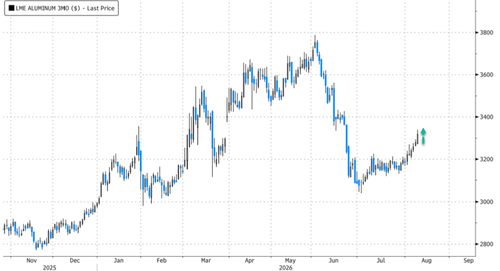
Norwegian aluminum producer Norsk Hydro announced that its Alunorte alumina refinery in Barcarena, Brazil—one of the world's largest single-site facilities outside China with 6.3 million metric tons annual capacity—has halved production due to disruptions in natural gas supply from its supplier CELBA (part of the New Fortress Group). The company stated it will restore full output once supplies normalize, while pursuing spot purchases and terminal access. Official Hydro communications and contemporaneous reporting confirm the cut aligns production with available gas for the high-temperature Bayer process steps including digestion, steam generation, and calcination at ~1,832°F. Aluminum prices on the London Metal Exchange rose nearly 2% to around $3,373 per metric ton, reaching a seven-week high, with alumina futures up 1% in Shanghai. LME warehouse inventories stand at their lowest since 1990. Bloomberg reporting links the move to broader supply concerns, including potential impacts from Strait of Hormuz trade disruptions that could widen the global aluminum deficit beyond 900,000 tons. The refinery's recent transition to natural gas from fuel oil (completed phases in 2024) aimed to cut CO2 emissions by 700,000 tonnes annually but has exposed it to gas market volatility. Hydro estimates a potential $75-100 million Q3 2026 financial hit from reduced output and higher spot gas costs. In parallel, copper futures exceeding $14,000 per ton reflect U.S. tariff-driven inflows, compounding cost pressures on electrification and decarbonization projects reliant on both metals for lightweighting, grid expansion, and recycling. UniCredit strategist Thomas Strobel noted aluminum's role in these structural trends alongside copper's supply constraints. This episode underscores how localized natural gas disruptions can propagate through global commodity chains, amplifying inflation risks for industrial metals critical to energy transition infrastructure.
UniCredit/Strategists: Persistent natgas-linked alumina cuts could sustain elevated aluminum prices through 2026, raising capex costs for EV and grid projects by 5-15% and prompting accelerated diversification of energy inputs in refining.
Sources (4)
- [1]Alunorte reduces alumina production on natural gas supply disruptions(https://www.hydro.com/en/global/media/news/2026/alunorte-reduces-alumina-production-on-natural-gas-supply-disruptions/)
- [2]Norsk Hydro's Alunorte cuts alumina output to 50% of capacity due to gas shortage(https://www.mining.com/web/norsk-hydros-alunorte-cuts-alumina-output-to-50-of-capacity-due-to-gas-shortage/)
- [3]Aluminum Extends Rally After Brazilian Plant Cuts Output to 50%(https://www.bloomberg.com/news/articles/2026-08-11/aluminum-hits-seven-week-high-as-hormuz-impasse-threatens-supply)
- [4]Alunorte starts alumina production using natural gas(https://www.hydro.com/en/global/media/news/2024/alunorte-starts-alumina-production-using-natural-gas/)