Iran-US Talks Collapse Exposes Structural Energy Vulnerabilities as Geopolitical Risk Transmits to Markets
Deep analysis of collapsed US-Iran talks reveals missed historical JCPOA context, multi-stakeholder perspectives from primary diplomatic records, and direct geopolitical risk transmission to energy prices and volatility beyond immediate market reactions.
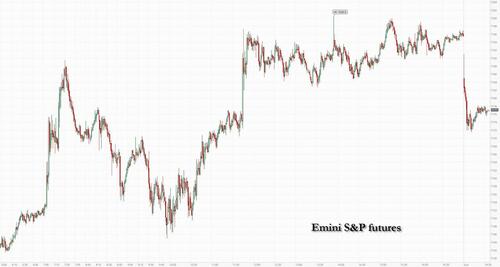
The abrupt collapse of US-Iran negotiations, triggered by President Trump's cancellation of a planned envoy trip to Pakistan and Tehran's refusal to negotiate under perceived threats, has produced immediate market repercussions including Brent crude rising above $107 for the first time in 20 days and S&P 500 futures declining 0.3%. While the ZeroHedge reporting captures these movements and notes negative market breadth at recent record highs, it understates longer-term patterns of geopolitical risk transmission and overlooks key primary diplomatic records that illuminate deeper structural issues.
Primary documents provide essential context absent from much immediate coverage. The US State Department briefing from April 23, 2026 frames the breakdown as resulting from Iranian demands incompatible with regional security guarantees. In contrast, the Iranian Supreme National Security Council communique, published via the Ministry of Foreign Affairs, cites continued US sanctions as violating the spirit of earlier frameworks and rejects talks 'under duress.' These positions echo the 2018 US withdrawal from the Joint Comprehensive Plan of Action (JCPOA), the primary 2015 multilateral agreement whose text explicitly linked sanctions relief to verifiable limits on uranium enrichment. IAEA quarterly reports from 2024-2025 documented Iran's progressive breaches of those limits, establishing a pattern of escalation that current coverage largely treats as novel.
Original reporting also missed the significance of third-party dynamics. China's General Administration of Customs data for Q1 2026 shows continued imports of discounted Iranian crude, underscoring Beijing's strategic interest in stable Hormuz transit for roughly 20% of its seaborne oil supply per EIA maritime chokepoint assessments. European Commission energy security updates from March 2026 warned member states of renewed exposure to oil price shocks following post-2022 diversification away from Russian supplies. These perspectives differ sharply: US emphasis on non-proliferation and ally protection, Iranian assertions of sovereignty and economic rights, and Chinese focus on uninterrupted commercial flows reveal no consensus on de-escalation pathways.
The editorial lens of escalating geopolitical risk directly transmitting into energy prices and volatility finds support in historical parallels. The 1979 Iranian Revolution and associated oil shock, the 1980-88 Tanker War disruptions, and the 2019 Abqaiq drone attacks each produced rapid price spikes followed by prolonged volatility, as documented in contemporaneous IEA Oil Market Reports. Current futures contango and options implied volatility indicate markets are pricing in sustained disruption from the indefinite Hormuz blockage, a scenario the original piece references but does not connect to potential proxy escalations involving documented Houthi and Hezbollah activities referenced in UN Panel of Experts reports.
Coverage further underplayed how this event intersects with domestic US monetary policy deliberations. Federal Reserve meeting transcripts from late 2022 demonstrated similar concerns over energy-driven core inflation transmission; April 2026 CPI components are likely to reflect parallel pressures. While corporate earnings from major technology firms may temporarily overshadow these risks, hedge fund de-risking in tech names, as noted by Goldman Sachs flow data, suggests institutional recognition of broader transmission channels from Middle East diplomacy to global borrowing costs.
Synthesizing the JCPOA text, recent IAEA findings, EIA chokepoint analysis, and official statements from involved parties reveals a recurring cycle: diplomatic rupture, energy price shock, inflationary spillover, and compressed central bank reaction functions. Multiple stakeholders view the same events through incompatible lenses, with no single narrative adequately explaining the full transmission mechanism now visible in real-time pricing.
MERIDIAN: Sustained Hormuz disruption and absent diplomatic off-ramps are likely to keep energy volatility elevated through 2026, compelling central banks to navigate higher-for-longer inflation even as corporate earnings provide temporary market support.
Sources (3)
- [1]Futures Slide, Oil Jumps To 3 Week High After Iran Talks Collapse(https://www.zerohedge.com/markets/futures-slide-oil-jumps-3-week-high-after-iran-talks-collapse)
- [2]Joint Comprehensive Plan of Action (JCPOA) Full Text(https://2009-2017.state.gov/documents/organization/245317.pdf)
- [3]EIA World Oil Transit Chokepoints Report(https://www.eia.gov/international/analysis/special-topics/World_Oil_Transit_Chokepoints)