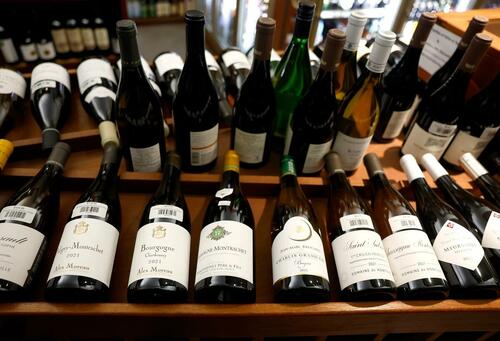
Trump's 100% French Wine Tariff Threat Risks Sharp Price Hikes for U.S. Consumers and Restaurants
Trump's renewed tariff threat on French wine over the digital services tax would rapidly inflate U.S. consumer and restaurant costs, building on a documented pattern of trade retaliation with tangible price effects.
President Donald Trump's June 15, 2026, threat to impose 100% tariffs on French wines and champagne unless France scraps its 3% digital services tax (DST) on U.S. tech firms echoes past trade disputes and directly imperils American pocketbooks. Multiple outlets confirm the warning, delivered in a New York Post interview where Trump stated he told French President Emmanuel Macron that failure to eliminate the levy would leave the U.S. with 'no choice but to charge a 100% tariff on all champagnes and all wines coming out of France.'
This latest salvo arrives ahead of the G7 summit in Évian-les-Bains and follows similar 2019 U.S. Section 301 investigations into France's DST, which targets revenue from large digital firms (mostly American) and has drawn criticism for imposing effective tax rates as high as 60% on low-margin operations. Macron responded by calling for 'respectful but firm' discussions, noting tariffs harm G7 economies.
The consumer impact is immediate and concrete: French wines, a staple in U.S. retail and restaurants, would see costs double or more within months of implementation, passing directly to diners via higher menu prices and to shoppers via elevated shelf tags. Industry analyses from prior episodes highlight ripple effects including reduced availability, shifts to pricier domestic or alternative imports, and potential job losses in U.S. distribution chains—estimates from 2020 disputes projected thousands of positions at risk from even partial duties. French exporters, via FEVS, have already flagged the threat as 'bad news' for an export-reliant sector.
Deeper connections emerge in the pattern of using iconic French alcohol as leverage: Trump previously floated 200% tariffs in January 2026 over a 'Board of Peace' initiative and in 2019-2020 over the same DST, underscoring wine's symbolic role in transatlantic spats despite minimal direct linkage to digital taxation. Economists note DSTs function like tariffs themselves, burdening consumers rather than tech giants, amplifying the mutual escalation risk.
[LIMINAL]: The threat accelerates price transmission from import duties to end-users, likely within 3-6 months via supply contracts, mirroring 2019-2020 episodes where similar proposals drove measurable retail inflation in affected categories.
Sources (5)
- [1]Trump threatens 100% tariff on French wine and champagne over digital tax(https://www.euronews.com/business/2026/06/15/trump-threatens-100-tariff-on-french-wine-and-champagne-over-digital-tax)
- [2]Trump says France must scrap tech 'sales tax' or face 100% wine tariffs: NY Post(https://www.cnbc.com/2026/06/15/trump-france-tech-tax-wine-tariffs-champagne.html)
- [3]French wine exporters say Trump's latest tariff threat is bad news(https://www.reuters.com/world/europe/french-wine-exporters-say-trumps-latest-tariff-threat-is-bad-news-2026-06-15/)
- [4]As he is headed to France for G7, Trump once again threatens 100% tariff on French wines over digital tax(https://www.lemonde.fr/en/economy/article/2026/06/15/as-he-is-headed-to-france-for-g7-trump-once-again-threatens-100-tariff-on-french-wines-over-digital-tax_6754508_19.html)
- [5]Trump threatens French wine after France passes digital tax(https://www.cnbc.com/2019/07/26/trump-threatens-french-wine-after-france-passes-digital-tax.html)