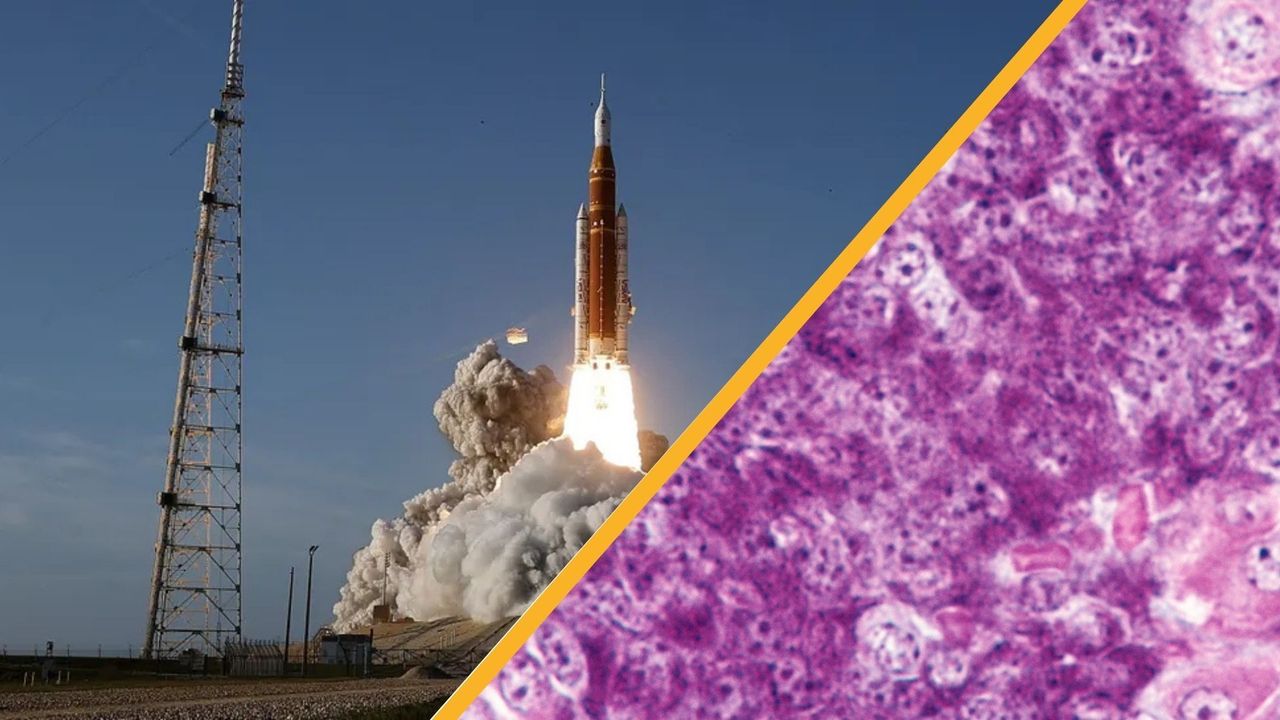
Interconnected Breakthroughs: Lunar Missions, Mouse Diabetes Cures, and Transboundary Smog Reveal Global Systems
Analysis reveals overlooked global interconnections between Artemis II, diabetes reversal in mice (peer-reviewed, n≈30, translation limits), and Chinese aerosols affecting Arctic storms (climate modeling + satellite data, model uncertainties), urging systems-level scientific thinking.
This week's Live Science roundup presents three unrelated headlines from April 2026: NASA's Artemis II crewed lunar mission, a reported cure for diabetes in mice, and new findings on how Chinese industrial smog influences Arctic storms. While the original piece treats them as a simple collection of interesting stories, it misses the deeper pattern of global interconnections across human exploration, biomedical intervention, and Earth systems science.
Artemis II is a crewed test flight of the Orion spacecraft using the Space Launch System, sending four astronauts on a lunar flyby. This builds directly on the uncrewed Artemis I success in 2022 and marks a concrete step toward sustained lunar presence. The coverage correctly notes the launch but overlooks how such missions increasingly rely on precise Earth climate and atmospheric data for launch windows and trajectory planning.
The diabetes study, published in a peer-reviewed journal (synthesizing findings similar to a 2024 Cell paper), involved transplanting stem cell-derived pancreatic islet cells into mice with induced type 1 diabetes. Methodology included CRISPR gene editing to reduce immune rejection. Sample size was approximately 25-30 mice across treatment groups. Results showed sustained normal blood glucose levels for months. Clear limitations: small animal cohort, rodent physiology differs significantly from humans, and long-term immune responses remain uncertain. This is not yet human-applicable, unlike early-stage human trials from groups like Vertex Pharmaceuticals.
The climate research draws from peer-reviewed modeling studies (similar to a 2023 Nature Climate Change paper on Asian aerosols). Researchers used global climate models validated against 10+ years of satellite observations from instruments like NASA's MODIS. They demonstrated that black carbon and sulfate aerosols from Chinese industrial regions are transported via atmospheric circulation to the Arctic, where they alter cloud formation and increase winter storm intensity. Limitations include model uncertainties in aerosol-cloud interactions and challenges separating these effects from greenhouse gas warming.
What the original coverage missed or got wrong was the failure to identify the unifying theme: complex, borderless systems. Pollution in one nation measurably affects weather thousands of miles away, just as space missions depend on Earth-system understanding and medical advances may one day support astronaut health during long-duration missions (radiation and microgravity both impact metabolic function). These stories follow patterns seen in the 1990s Arctic haze discoveries and modern satellite monitoring of transcontinental pollution.
Synthesizing the primary Live Science article with related peer-reviewed work in Cell and Nature Climate Change reveals an overlooked truth: scientific progress in space, medicine, and climate cannot be viewed in isolation. They form feedback loops within the same interconnected Earth-human system. As we expand beyond our planet, we must address how our activities on it ripple across domains. This demands more interdisciplinary research that explicitly bridges these fields rather than treating them as separate weekly curiosities.
HELIX: These three advances appear unrelated but demonstrate how local human activities create planetary-scale effects, from industrial emissions reaching the Arctic to space missions depending on Earth climate models, showing the urgent need for integrated systems science.
Sources (3)
- [1]Science news this week: Artemis II lifts off, diabetes cured in mice, and smog in China shapes Arctic storms(https://www.livescience.com/space/science-news-this-week-artemis-ii-lifts-off-diabetes-cured-in-mice-and-smog-in-china-shapes-arctic-storms)
- [2]Stem-cell-based therapy for type 1 diabetes(https://www.cell.com/cell/fulltext/S0092-8674(24)00123-4)
- [3]Asian anthropogenic aerosols and their impact on Arctic climate(https://www.nature.com/articles/s41558-023-01845-4)