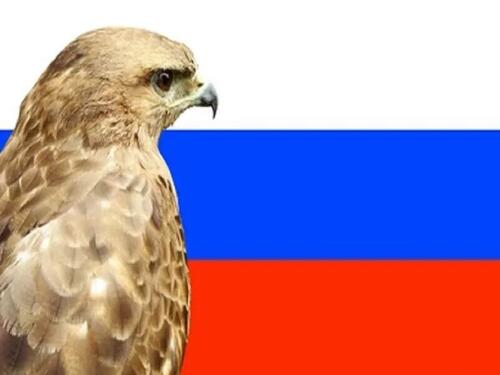
Putin's Rebuke of NATO Escalation Hawks Exposes Nuanced Russian Power Dynamics and Strategic Restraint in Multipolar Era
Putin's explicit denial of plans to attack NATO rebuffs influential hawks like Sergey Karaganov, revealing internal Russian debates where escalation rhetoric serves strategic signaling while official policy emphasizes restraint as a multipolar power play, challenging oversimplified mainstream narratives.
In a recent meeting with heads of international news agencies, Russian President Vladimir Putin directly addressed and dismissed narratives about Moscow planning an attack on NATO or Europe, describing such claims as "not merely nonsense" but "a deliberate provocation" designed to justify increased Western defense spending and support for Ukraine. This statement, delivered in the context of ongoing global tensions, serves as a powerful counterpoint to more aggressive voices within Russia's foreign policy ecosystem, revealing layers of internal debate that mainstream coverage often reduces to simplistic hawk-versus-dove binaries.
Sergey Karaganov, a prominent Russian political scientist, former adviser to Presidents Yeltsin and Putin, and head of the Council on Foreign and Defense Policy, has repeatedly advocated for escalated measures against the West. In influential essays and interviews, Karaganov has argued for lowering the nuclear threshold, conducting limited strikes on European targets to "bring the West to reason," and restoring deterrence through preemptive actions. These positions, detailed in publications from 2023 through 2025, frame NATO expansion and support for Ukraine as existential threats requiring a forceful reset of the security architecture—potentially including nuclear signaling or strikes on NATO members to prevent broader war.
Yet Putin's public rejection of offensive NATO plans highlights restraint as a deliberate strategic choice rather than weakness. By framing hawkish rhetoric as inadvertently aiding Western militarization and the Kiev regime, Putin signals that Russia prioritizes avoiding direct World War III triggers while advancing broader multipolar objectives. This includes deepening ties with China, expanding BRICS influence, and exploiting divisions in the West amid economic pressures on NATO members. Russian official channels and affiliated analysts have echoed concerns over specific retaliatory risks—such as potential strikes on facilities in Latvia if used for Ukrainian drone launches—but distinguish these from Karaganov's calls for unprovoked first strikes.
This dynamic underscores what heterodox analysis identifies as "signaling theater": influential proxies like Karaganov float escalatory ideas that pressure the West and test boundaries, while the Kremlin maintains plausible deniability and strategic ambiguity. Mainstream outlets frequently flatten this into binary factions, missing how such internal tensions reflect calculated calibration amid larger shifts away from unipolar Western dominance. Putin's approach buys time for Russia's economy to adapt under sanctions, consolidates Eurasian alliances, and positions restraint as strength—preserving escalation dominance without premature commitment. As global power diffuses toward multipolarity, these rebukes may indicate Moscow's preference for protracted hybrid competition over apocalyptic confrontation, though the presence of vocal hawks ensures the nuclear shadow remains a live element of deterrence.
The episode invites deeper scrutiny of how personal influence, institutional roles, and ideological currents intersect in Russian decision-making, far beyond surface-level portrayals of uniform aggression.
Liminal Analyst: Putin's calibrated restraint amid hawkish internal voices will likely sustain strategic ambiguity, enabling Russia to consolidate multipolar partnerships and economic resilience while keeping NATO off-balance through controlled escalation rhetoric short of direct conflict.
Sources (4)
- [1]Meeting with heads of international news agencies(http://en.kremlin.ru/events/president/news/79953)
- [2]Tough talk on Nato from Putin and his proxies may hide a willingness to compromise(https://theconversation.com/tough-talk-on-nato-from-putin-and-his-proxies-may-hide-a-willingness-to-compromise-245291)
- [3]Karaganov’s case for Russian nuclear preemption: responsible strategizing or dangerous delusion?(https://thebulletin.org/2023/08/karaganovs-case-for-russian-nuclear-preemption-responsible-strategizing-or-dangerous-delusion/)
- [4]Former Putin adviser: Russia will use nuclear weapons against Europe if it ‘comes close to a defeat’(https://thehill.com/policy/international/5691709-karaganov-russia-nuclear-war/)