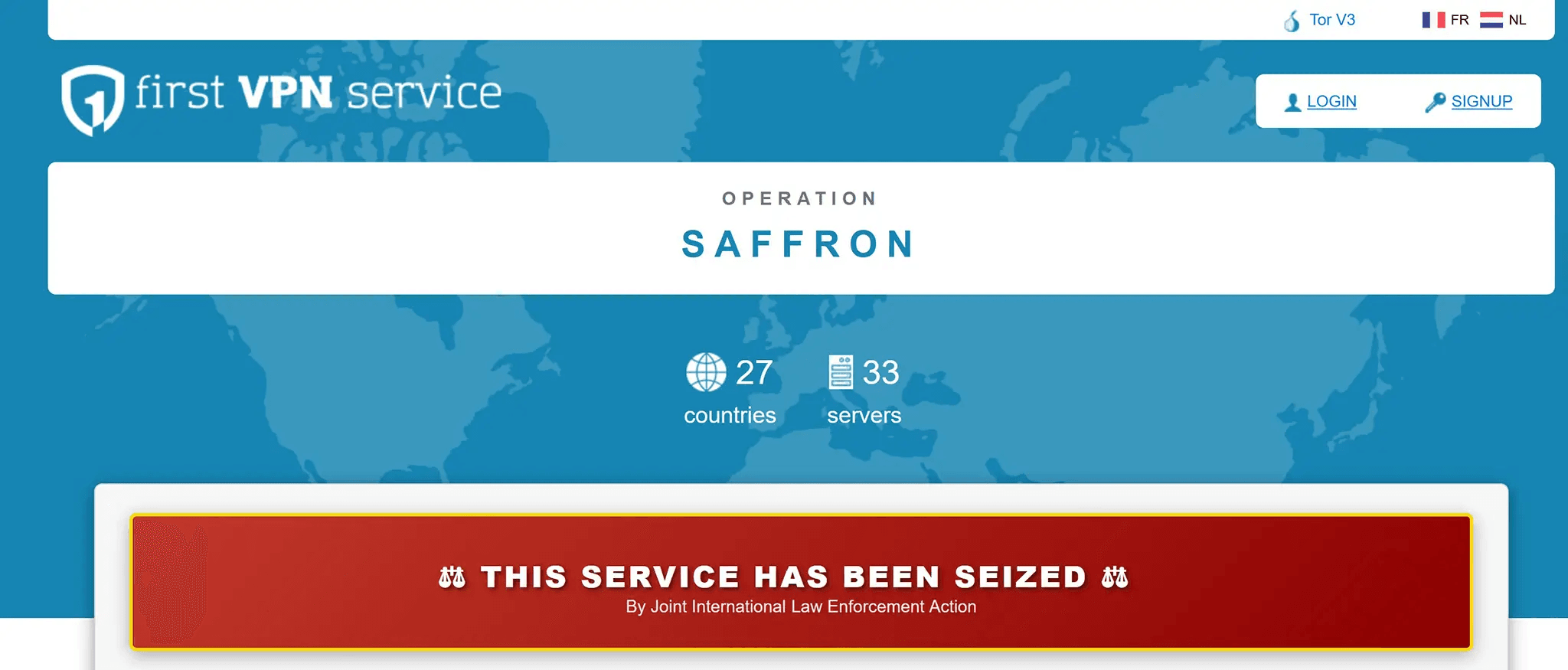
First VPN Takedown Forces Ransomware Operators to Rethink Anonymity Infrastructure
Europe's First VPN bust disrupts ransomware anonymity tools with lasting effects on attacker infrastructure choices and highlights successful cross-border data exploitation tactics.
Europe's coordinated May 19-20 operation against First VPN marks a pivotal shift in disrupting cybercrime supply chains, moving beyond individual arrests to dismantle the anonymity layers that ransomware groups have long treated as operational bedrock. While the original reporting highlights the service's marketing on Russian-language forums and its appearance in nearly every major Europol investigation, it underplays how this reflects a broader pattern of law enforcement exploiting insider access to user databases—gained here through Ukrainian questioning of the administrator—mirroring tactics seen in the 2021 takedown of the DoubleVPN service and the 2023 infiltration of the NoName05716 botnet infrastructure. First VPN's promise of no-logs, anonymous crypto payments, and explicit non-cooperation with authorities created a false sense of security that ignored jurisdictional realities, particularly Ukraine's willingness to assist French-led probes amid ongoing regional tensions. This exposes a critical tradecraft vulnerability: over-reliance on single-point VPN providers leaves operators exposed when investigators seize servers and exfiltrate connection logs, potentially linking thousands of sessions to ransomware campaigns like those tied to Conti successors or LockBit affiliates. Synthesizing Europol's 2024 Internet Organised Crime Threat Assessment with Recorded Future's analysis of Russian cybercrime ecosystems and prior VPN disruptions reveals that attackers are now pivoting toward decentralized alternatives such as self-hosted WireGuard meshes or obfuscated proxies, increasing setup complexity and detection risks. The operation's notification to users of their identification adds psychological pressure, signaling that perceived safe havens are eroding and compelling groups to fragment their C2 communications further.
SENTINEL: Ransomware crews will accelerate migration to decentralized anonymity stacks like Tor-hidden proxies and blockchain VPNs, raising their operational overhead while creating fresh detection opportunities for intelligence agencies.
Sources (3)
- [1]Primary Source(https://therecord.media/europe-dismantles-first-vpn)
- [2]Europol IOCTA 2024(https://www.europol.europa.eu/publications-events/main-reports/internet-organised-crime-threat-assessment)
- [3]Recorded Future Russian Cybercrime Infrastructure Report(https://www.recordedfuture.com/russian-cybercrime-ecosystems-2023)