Morocco's Mass Deportations Expose EU's Outsourced Border Model as Scalable Template for Global Migration Control
Morocco's 2025 escalation of raids, arrests, and deportations of sub-Saharan migrants operationalizes the EU's externalization strategy, providing a replicable framework for distant border control that trades human rights oversight for political insulation and regional leverage.
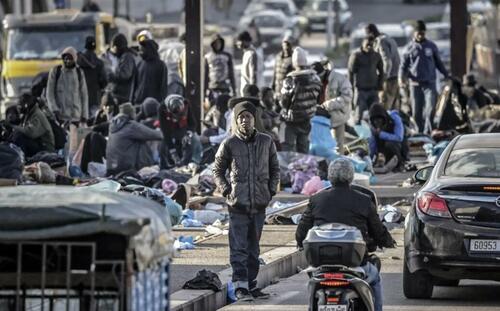
Recent large-scale operations by Moroccan authorities against sub-Saharan migrants illustrate the European Union's long-term strategy of externalizing border enforcement to transit states with uneven human rights records. Since mid-April 2025, Moroccan security forces have conducted coordinated raids in northern forest camps near Fnideq, Belyounech, and Tangier, detaining hundreds and deporting many by air from Casablanca or transferring others toward the Algerian border under reported conditions of abuse and abandonment. These actions align with Morocco's official 2025 figures of thwarting over 73,000 irregular crossing attempts, a continuation of intensified cooperation with EU agencies like Frontex.
The EU has allocated substantial funding—over €900 million through its Global Europe instrument—for migration control, surveillance, and returns across North Africa as part of the new Pact on Migration and Asylum. This 'downstream' approach, as described by migration researchers, allows European states to exert control far from their own borders without direct responsibility for enforcement tactics that include raids, forced internal relocations to southern Morocco, and pushbacks that expose migrants to further risks in the Sahara or Algerian detention. Reports document patterns of racist abuse, beatings, and abandonment in desert zones, echoing longstanding criticisms from human rights monitors.
Deeper analysis reveals this as more than bilateral cooperation: Morocco leverages its position as Europe's 'de facto border guard' for geopolitical gains, including influence over Western Sahara recognition and financial aid, while the EU gains a deniable buffer that reduces domestic political pressure from arrivals. This externalization model—pioneered in deals with Turkey, Libya, and now expanded in North Africa—creates a scalable template. Similar dynamics appear in EU partnerships across the Sahel and Balkans, where funding for capacity-building often correlates with increased reports of arbitrary detention, internal deportations, and xenophobic violence against Black African migrants. Mainstream coverage frequently treats these as isolated Moroccan or regional issues rather than systemic outcomes of deliberate EU policy design that prioritizes interception over protection.
Documents from independent monitors highlight how these practices strain Morocco's own social fabric, fueling local tensions and trapping migrants in legal grey zones without adequate asylum processes. As the Pact rolls out, this approach risks normalizing outsourced enforcement that externalizes not only borders but accountability, potentially inspiring parallel models in other high-pressure migration corridors worldwide.
Liminal Analyst: This externalization blueprint lets the EU enforce strict controls at arm's length, lowering its domestic political costs while exporting abuses and creating a flexible, expandable system likely to spread to more transit nations.
Sources (5)
- [1]Morocco launches mass deportations to block Europe migration route(https://www.middleeasteye.net/news/morocco-launches-mass-deportations-block-europe-migration-route)
- [2]Sub-Saharan African Migrants in Morocco: Security Concerns and the Test of Human Rights(https://carnegieendowment.org/sada/2026/01/sub-saharan-african-migrants-in-morocco-security-concerns-and-the-test-of-human-rights)
- [3]Morocco intercepted fewer irregular migration attempts in 2025(https://www.infomigrants.net/en/post/70796/morocco-intercepted-fewer-irregular-migration-attempts-in-2025)
- [4]Morocco - Global Detention Project(https://www.globaldetentionproject.org/countries/africa/morocco)
- [5]Keeping track in Africa - Mixed Migration Centre(https://mixedmigration.org/publications/mmr/2025/keeping-track-migration-africa-2025/)