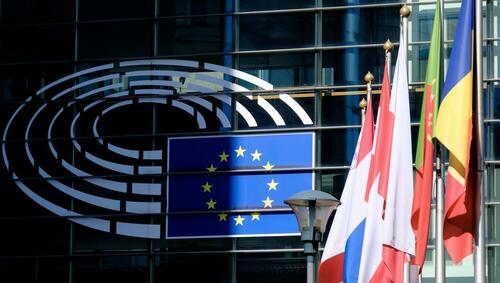
Europe 2.0: The Accelerating Erosion of EU Cohesion and the Return to National Sovereignty
Rising populist nationalism, demographic pressures, and legitimacy deficits are eroding the centralized EU model, signaling a shift toward flexible national sovereignty arrangements as foreseen in Heinsohn's demographic analysis. Recent elections and policy fractures reveal a deeper reconfiguration beyond Brussels' administrative state.
The European Union is confronting not merely a series of policy crises but a fundamental reconfiguration. As populist and nationalist forces gain ground across the continent, the post-war project of ever-closer union is yielding to a pattern of renationalization that prioritizes historically rooted peoples, borders, and interests over administrative centralization in Brussels. This shift, anticipated in demographic and economic terms by German social scientist Gunnar Heinsohn in his 2011 essay "Europa 2.0: Recutting the Old World," reflects the unsustainability of a system that burdens productive middle classes with cascading liabilities while eroding the cultural and political legitimacy needed for cohesion.
Recent electoral trends confirm the acceleration. The 2024 European Parliament elections delivered significant gains for radical right and Eurosceptic parties, reshaping the political landscape and highlighting growing nationalist sentiment, opposition to further integration, and resistance to EU policies on migration, climate, and fiscal transfers. Populist parties now top polls in major states including Germany, France, and Italy, hold government roles in multiple countries, and have formed influential blocs in the European Parliament. These movements increasingly frame the EU not as a guarantor of prosperity but as an administrative overlay that disregards national particularities and democratic consent.
Heinsohn's arithmetic remains prescient: low fertility rates across Europe, especially in net-contributor nations, combined with expansive welfare commitments and bailouts, have created unsustainable chains of liability on shrinking cohorts of productive taxpayers. Official analyses of Europe's "demographic winter" echo this, noting that immigration alone cannot resolve the skilled workforce shortages or the political tensions arising when rapidly aging societies with divergent economic structures are forced into uniform fiscal and regulatory molds. The result is visible fracture—East-West divides over migration and rule of law, North-South economic asymmetries, and differing security priorities exposed by the Ukraine conflict and energy shocks.
Deeper connections emerge beyond daily Brussels disputes. The very language of "European sovereignty" now proliferating in EU documents on technology, semiconductors, AI, and digital infrastructure represents a belated recognition of external dependencies. Yet this top-down push for bloc-level autonomy is increasingly undermined by internal populist demands for national control. Rather than resolving the legitimacy deficit, further centralization risks amplifying backlash, as electorates reject the administrative state's substitution of procedural expertise for organic loyalty. Countries with stronger demographic vitality or distinct historical experiences are opting for selective cooperation over harmonization, pointing toward variable geometry: a Europe of concentric circles or flexible alliances rather than a unitary superstate.
This pattern—missed by coverage fixated on incremental summits—suggests the EU's bureaucratic exhaustion is giving way to "Europe 2.0," a recut continent where legitimate authority once again rests on the consent of distinct peoples rather than unaccountable institutions. The administrative reflex of more rules, more redistribution, and more standardization has reached its limit. What follows will be shaped by the resurgence of national sovereignty frameworks, with all the opportunities and risks that reconfiguration entails.
Sovereignty Sentinel: National frameworks will likely produce a multi-tiered Europe with selective integration by 2030, weakening Brussels' supranational authority while exposing economic and demographic fault lines.
Sources (4)
- [1]Rise to the challengers: Europe's populist parties and its foreign policy future(https://ecfr.eu/publication/rise-to-the-challengers-europes-populist-parties-and-its-foreign-policy-future/)
- [2]European democracy in action? The 2024 European Parliament elections and the populist radical right(https://www.tandfonline.com/doi/full/10.1080/13501763.2025.2542254)
- [3]Europe’s demographic winter(https://ecrgroup.eu/files/Europes_demographic_winter_brochure.pdf)
- [4]The new weapons of European sovereignty(https://institutdelors.eu/en/publications/the-new-weapons-of-european-sovereignty/)