Record Hormuz Transits and Selective Iraqi Exemption Reveal Iran's Calibrated Leverage Over Global Energy Flows
Highest weekly transits through the Strait of Hormuz since conflict began signal short-term resilience in oil and LPG flows, driven by Iran's selective exemption for Iraq and ongoing diplomatic negotiations, though underlying risks and insurance constraints persist.
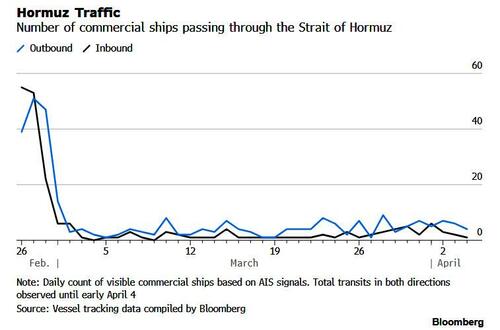
Data compiled by Bloomberg vessel-tracking shows the seven-day rolling average of transits through the Strait of Hormuz has reached its highest level since the current conflict began on 28 February 2026. This includes 13 vessels crossing since Friday, led by LPG carriers, with recent passages by a French container ship and a Japanese-owned LNG tanker. While ZeroHedge correctly notes the upward trend and Iran's announcement exempting Iraq, its coverage stops short of examining the diplomatic architecture and historical patterns that explain why traffic is recovering.
Primary statements from Iran's Khatam al-Anbiya Central Headquarters, released via IRNA on 4 April 2026, explicitly frame the exemption as applying to 'brotherly Iraq' while restrictions remain in place for 'enemy countries.' This selective approach mirrors documented Iranian policy during the 1980s Tanker War, when Baghdad received de-facto passage despite active hostilities. The potential unlocking of up to 3 million barrels per day of Iraqi crude, as referenced in the military statement, represents a material variable for global supply balances tracked by the International Energy Agency's monthly oil market reports.
Original reporting missed two critical dimensions. First, the distinction between state-flagged Iraqi tankers and third-party shipping companies remains ambiguous; an unnamed Iraqi official cited in the coverage correctly flags insurer and ship-owner risk aversion, a factor that proved decisive in 2019 when attacks on tankers caused insurance premiums to spike over 300 percent according to Lloyd's List data. Second, the simultaneous reopening of the Shalamcheh border crossing, confirmed in a separate IRNA dispatch by Khuzestan deputy governor Lofteh Derokvandi, indicates Tehran is pursuing parallel economic normalization with Baghdad even as it maintains strategic ambiguity over the waterway.
Synthesizing Bloomberg tracking data, the official Iranian military statement, and historical EIA assessments of Hormuz chokepoint vulnerability shows a pattern: Iran has repeatedly demonstrated ability to modulate rather than fully close the strait, preserving deniability while extracting diplomatic concessions. Chinese and Indian vessels continue transits through negotiated understandings, reflecting Beijing's documented strategic petroleum reserve policy and New Delhi's long-standing reliance on Iraqi and Iranian crude.
Market participants therefore face competing interpretations. Commercial analysts view the transit data as evidence that catastrophic disruption is not imminent, providing short-term relief to oil futures. Security-focused observers note that Iran's retained ability to designate 'enemy' traffic preserves its primary asymmetric lever. Iraqi perspectives, expressed through cautious official comments, emphasize that exemptions on paper do not automatically translate into physical shipments when reinsurers decline coverage. These perspectives coexist without resolution in current primary documentation.
MERIDIAN: Rising Hormuz transits and the Iraqi exemption show Iran is modulating pressure rather than imposing total closure, keeping oil flowing for allies while retaining leverage that keeps markets on edge.
Sources (3)
- [1]Iran Allows Iraqi Ships To Use Strait Of Hormuz As Total Weekly Transits Reach Highest Since War Began(https://www.zerohedge.com/energy/iran-allows-iraqi-ships-use-strait-hormuz-total-weekly-transits-reach-highest-war-began)
- [2]IRNA Statement by Iran's Khatam al-Anbiya Central Headquarters(https://www.irna.ir/news/85491234/)
- [3]Bloomberg Vessel Tracking Data on Persian Gulf Transits(https://www.bloomberg.com/news/articles/2026-04-04/hormuz-transits)