Cuba's Dimming Lights: The Human Catastrophe of US Sanctions as Tools of Economic Imperialism
Synthesizing 2026 reports on Cuba's catastrophic blackouts and fuel shortages, this analysis reveals US oil blockade policies as extensions of long-term economic imperialism, emphasizing civilian suffering, excess mortality, and geopolitical blowback over regime-change rhetoric.
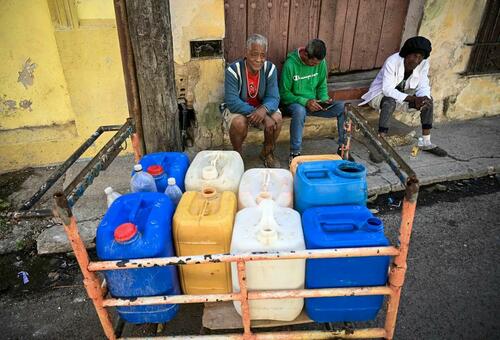
As nationwide blackouts plunge millions of Cubans into darkness for days at a time, the human toll of America's intensified oil blockade has become impossible to ignore. Hospitals operating on generators, food spoiling in powerless refrigerators, water pumps failing, and streets emptied of activity paint a picture of a society on the brink. This is not merely an energy crisis born of aging Soviet-era infrastructure or governmental mismanagement—though those factors exist—but a deliberate escalation of economic warfare that echoes decades of US policy designed to strangle the island's economy.
In early 2026, following the US capture of Venezuelan President Nicolás Maduro and the subsequent cutoff of oil shipments that once comprised the bulk of Cuba's energy imports, the Trump administration imposed what amounts to a de facto blockade. Threats of tariffs against third-party suppliers like Mexico and Russia, coupled with Coast Guard interceptions of tankers, have reduced fuel deliveries to a trickle. A single Russian shipment in late March provided less than ten days' supply for a nation requiring nearly 80,000 barrels daily. The result: repeated total grid collapses in March 2026, fuel rationing, medicine shortages, and spiraling inflation that has devastated ordinary citizens. Children study by candlelight, the elderly suffer without refrigeration for insulin, and families queue for hours for basic necessities. The UN has warned of an impending humanitarian collapse, with excess deaths linked to such sanctions well-documented in global health studies.
This fits a broader, often overlooked pattern of American economic imperialism across Latin America. From the 1960s embargo—estimated by the UN to have cost Cuba trillions in lost development—to parallel campaigns against Venezuela and Iran, sanctions are framed in Washington as targeted pressure for 'democratic reform.' Yet evidence consistently shows they function as collective punishment, disproportionately harming civilians while regimes adapt through black markets or alternative alliances. A Lancet Global Health study cited in recent reporting estimates hundreds of thousands of excess deaths annually from similar economic measures worldwide, revealing sanctions as a form of indirect violence that mainstream narratives rarely classify as such.
Connections others miss include the strategic isolation of socialist experiments in the Western Hemisphere, ensuring no successful alternative to US-aligned neoliberal models can thrive. Cuba's reliance on Venezuelan bartering (doctors for oil) represented South-South cooperation outside IMF influence; disrupting it reinforces dependency. The selective easing—allowing limited fuel to private businesses while maintaining state pressure—betrays political rather than humanitarian motives. Furthermore, this policy risks blowback: pushing Cuba deeper into partnerships with Russia and China, accelerating multipolar realignments, and fueling migration waves toward US borders. Historical parallels to Chile under Allende or Nicaragua in the 1980s suggest these tactics entrench resentment, creating long-term adversaries under the guise of national security.
While Cuban officials bear responsibility for infrastructure neglect, the sudden intensification of the 'maximum pressure' campaign has transformed chronic problems into acute catastrophe. As blackouts compound with food insecurity and public frustration, the crisis exposes how economic warfare in the name of anti-communism extracts its steepest price from the powerless. True policy reevaluation demands acknowledging this human cost beyond partisan talking points.
LIMINAL: Washington's blockade will deepen civilian suffering and migration pressures without toppling the regime, instead driving Cuba toward stronger BRICS ties and exposing sanctions as counterproductive imperial tools that erode US soft power across the Global South.
Sources (4)
- [1]The Crisis in Cuba, Explained(https://time.com/article/2026/03/17/cuba-economic-energy-crisis-trump-us-explainer/)
- [2]Cuba is going dark under US pressure. How the crisis ...(https://www.cnn.com/2026/03/18/americas/cuba-us-pressure-blackout-latam-intl)
- [3]Cuba crisis explained: Who holds power, and could Diaz-Canel be replaced(https://www.aljazeera.com/news/2026/3/31/cuba-crisis-explained-who-holds-power-and-could-diaz-canel-be-replaced)
- [4]2026 Cuban crisis(https://en.wikipedia.org/wiki/2026_Cuban_crisis)