Conflicting US-Iran Claims on Enriched Uranium Transfer, Hormuz Access, and Three-Page Peace Framework Reveal High-Stakes Negotiating Game
Trump claims imminent Iran deal including enriched uranium handover ('nuclear dust') and permanent Hormuz openness; Tehran denies uranium transfer as 'baseless' and 'sacred,' links temporary strait access to Lebanon ceasefire while threatening closure if US blockade persists. US $20B frozen-funds-for-uranium proposal and 20-year enrichment moratorium form core of reported three-page MOU, with talks eyed for this weekend. Fragmented coverage obscures interconnected risks to energy chokepoints and nuclear escalation.
As oil prices tumbled and global markets reacted to signals of de-escalation, President Donald Trump has repeatedly claimed major breakthroughs in talks with Iran, including Tehran's agreement to hand over its stockpile of near-weapons-grade enriched uranium—described by Trump as 'nuclear dust'—and a permanent commitment to never close the Strait of Hormuz. These assertions, made in interviews and Truth Social posts this week, portray a fast-moving peace process with 'most main points finalized' and follow-up talks potentially occurring in Islamabad as soon as this weekend. Trump has emphasized an 'unlimited' prohibition on Iranian nuclear weapons development and denied that any cash-for-uranium swap was central, while suggesting the uranium would be retrieved collaboratively under a future agreement.
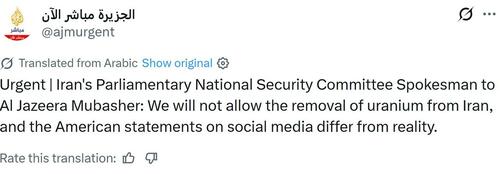
However, Iranian officials have issued sharp denials, calling Trump's uranium claims 'baseless.' Iran's Foreign Ministry stated that its enriched uranium is 'as sacred to us as the soil of Iran' and 'will not be transferred anywhere under any circumstances.' Foreign Minister Abbas Araqchi declared the Strait of Hormuz 'completely open' to commercial shipping for the remainder of a Lebanon-linked ceasefire, yet Iranian state media and sources warned that any continued US-led maritime blockade would constitute a ceasefire violation, potentially triggering renewed closure. These contradictions echo Iran's pre-ceasefire stance and suggest deep divisions remain despite reported progress on a three-page memorandum of understanding aimed at ending active hostilities.
Mainstream reporting fragments these elements—some outlets emphasize Trump's optimism and market reactions, while others highlight Iranian pushback and the persistence of US demands for a 20-year (or longer) uranium enrichment moratorium. Axios previously detailed US proposals tying access to approximately $20 billion in frozen Iranian funds to the surrender of roughly 972 pounds of near-weapons-grade material, alongside broader fissile stockpiles. Reuters and BBC coverage confirms the Hormuz reopening announcement coincided with the Lebanon truce but notes ongoing US insistence that its naval blockade remains 'in full force' until a final deal is sealed. Washington Post and other outlets report Iran has neither accepted nor rejected the cash-for-uranium concept outright, framing it as one option among several in high-stakes indirect and direct talks.
The implications extend far beyond bilateral relations. The Strait of Hormuz carries roughly one-fifth of global seaborne oil trade; even temporary closure threats have historically triggered energy shocks. A verifiable transfer of Iran's advanced uranium stockpile would dramatically extend its nuclear breakout timeline, offering nonproliferation wins but risking domestic Iranian backlash if perceived as capitulation. Conversely, failed negotiations could see renewed blockade enforcement or Hormuz disruptions, compounding escalation risks amid fragile Lebanon and regional ceasefires. What mainstream coverage often misses is the potential linkage: the temporary Hormuz opening and Lebanon truce appear bundled in Iranian statements as confidence-building measures, while uranium talks serve as the ultimate litmus test for a 'war-ending' grand bargain. Trump's maximalist public framing may be leverage, yet Iran's 'excessive demands' rebuttal indicates Tehran's red lines on sovereignty and enrichment rights remain firm. With odds of a permanent deal reportedly rising, the coming days of negotiations will determine whether these conflicting signals mask genuine convergence or foreshadow renewed confrontation—with global energy security hanging in the balance.
LIMINAL: Public contradictions between Trump’s optimism and Iranian denials likely reflect hardball tactics around uranium surrender and Hormuz leverage; a quiet transfer deal could slash nuclear risks and calm oil markets, but collapse would threaten renewed closure of the world’s critical energy artery and broader regional war.
Sources (5)
- [1]Trump says Iran agrees to hand over ‘nuclear dust’(https://www.washingtonpost.com/politics/2026/04/16/trump-iran-nuclear/)
- [2]Iran says Strait of Hormuz is 'open' as Trump says US blockade will continue(https://www.bbc.com/news/live/cqxdg17yr2wt)
- [3]Iran war live: Tehran reopens Strait of Hormuz, Trump says deal 'soon'(https://www.reuters.com/world/iran-war-live-trump-hints-new-us-iran-peace-talks-lebanon-ceasefire-begins-2026-04-17/)
- [4]U.S. asked Iran to freeze uranium enrichment for 20 years, sources say(https://www.axios.com/2026/04/13/iran-uranium-enrichment-moratorium-talks-vance)
- [5]U.S. weighs $20B cash-for-uranium agreement with Iran - report(https://seekingalpha.com/news/4576111-us-weighs-20b-cash-for-uranium-agreement-with-iran---report)