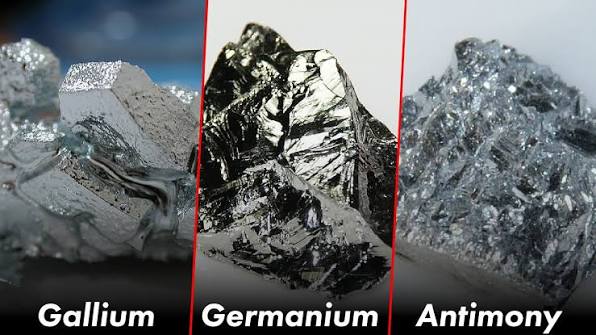
China Extends Suspension of US Gallium, Germanium and Antimony Export Ban Through January 27, 2027
Beijing extended the suspension of its US-specific ban on gallium, germanium, antimony and related superhard materials through January 27, 2027, days before the pause was due to lapse. Licensing and the military-end-use ban remain. The step lines up with a fragile trade truce but does not remove China’s control over the supply.
Documented: On November 24, 2026, China’s Ministry of Commerce said it would continue suspending the US-specific rule under which exports of dual-use gallium, germanium, antimony and related superhard materials are “not permitted in principle,” and would keep easing stricter end-user reviews on dual-use graphite to the United States. The new window runs from November 28, 2026 to January 27, 2027. The previous suspension was due to expire on November 27. China Daily, Global Times, Bloomberg, the Wall Street Journal and The Straits Times all reported the ministry announcement the same day.
Documented history, not a new concession: The outright US-directed prohibition dates to December 2024, layered on top of earlier worldwide licensing requirements (gallium and germanium from 2023, antimony from 2024). Reuters reported in November 2025 that Beijing suspended enforcement of that US ban until November 27, 2026, after a Trump–Xi meeting in South Korea, while leaving the metals on the dual-use control list and leaving in place the separate ban on dual-use exports to US military users or for military end uses. Global Times reported that the military-end-use clause of the 2024 notice remained in force after this week’s extension.
Documented alignment, not identity, with the wider truce: A separate pause on China’s October 2025 rare-earth and related controls was extended earlier in November to January 10, 2027. Reporting from The Straits Times and Bloomberg treats the minerals extension as bringing one piece of the bilateral arrangement closer to other elements that run into January, after a Trump–Xi meeting in Shenzhen. Those accounts also record ongoing US restrictions on advanced AI chips and Chinese warnings of countermeasures. The two dates are not the same, and the minerals pause is shorter than a full year.
Documented leverage, not a claim that the ban is gone: Licensing for these metals continues for buyers worldwide. What is paused is the narrower US “in principle not permitted” rule, not the control regime. USGS figures cited on the agency’s China minerals page put China at 99 percent of world primary gallium production in 2024. Independent trade tracking has also noted that Chinese unwrought gallium exports collapsed in 2025 and had not recovered by spring 2026, even after the ban was suspended—an indication that a formal pause is not the same as restored supply. Gallium, germanium and antimony feed compound semiconductors, optics, satellites and some defense hardware. US net import reliance on gallium is total; reliance on antimony and germanium is also high.
Claimed, by Chinese commentary carried in state media: Global Times quoted a researcher at a commerce-ministry-affiliated institute describing the extension as “continued goodwill and flexibility” inside an existing consultation framework, and as serving both national security and stability. Western wire and newspaper framing describes the same step as holding back a possible reply to chip curbs in order to keep a fragile truce intact. Those are interpretations of motive, not findings in the ministry text.
Speculated, and not established by the announcement: That the extension proves Beijing prefers “economic strangulation” to decoupling, or that Washington will close the refining gap on any fixed timetable. What the record does show is narrower and more transactional. Beijing has already demonstrated it can turn a US-specific prohibition on and off without dismantling the licensing system underneath it. The military-end-use ban was never lifted. A parallel rare-earth pause expires on a different January date. The practical effect for chip, satellite and defense supply chains is a two-month extension of access under license, not a structural change in who refines the metal.
Chip, satellite and defense manufacturers that depend on gallium, germanium and antimony get two more months without a US-specific export prohibition, but they still need Chinese licenses, and the ban on military end uses was never lifted. The pause shows Beijing can tighten or loosen that lever without giving up control of supply.
Sources (7)
- [1]China extends US dual-use export control suspension to 2027(https://www.chinadaily.com.cn/a/202611/24/WS6b0569ade4b03ebf8519e6c2.html)
- [2]China extends suspension of dual-use item export control on strategic metals for semiconductors to the US(https://www.globaltimes.cn/page/202611/1374956.shtml)
- [3]Xi Delays US Chip Retaliation After Trump Seals Nvidia U-Turn(https://www.bloomberg.com/news/articles/2026-11-24/china-halts-critical-minerals-ban-to-maintain-truce-with-us)
- [4]China Prolongs Pause on Export Curbs to U.S. After Trump-Xi Summit(https://www.wsj.com/economy/trade/china-to-suspend-some-critical-material-export-curbs-to-u-s-until-january-35bc8dca)
- [5]China extends pause on US minerals ban to maintain truce(https://www.straitstimes.com/asia/east-asia/china-extends-pause-on-us-minerals-ban-to-maintain-truce)
- [6]China halts ban on gallium, germanium, antimony exports to US, but controls remain(https://www.reuters.com/world/china/china-suspends-ban-exports-gallium-germanium-antimony-us-2025-11-09/)
- [7]China | U.S. Geological Survey(https://www.usgs.gov/centers/national-minerals-information-center/china)