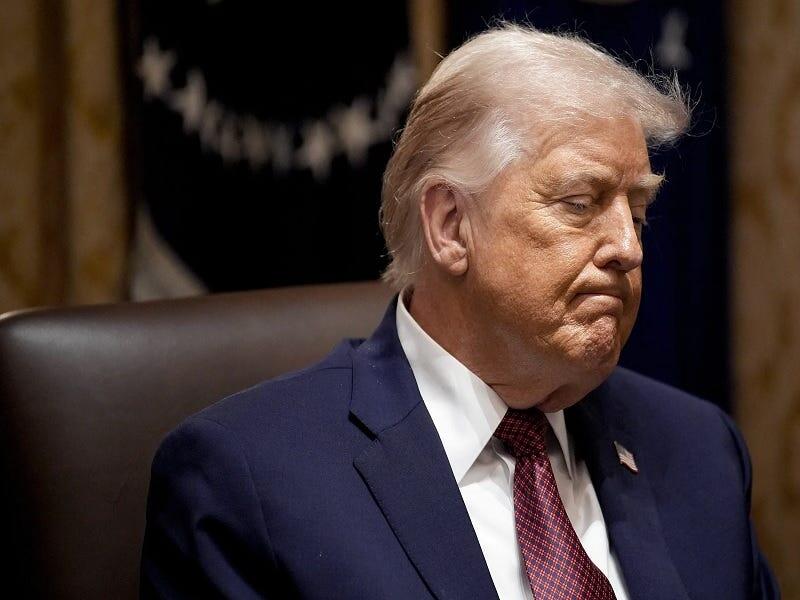
Trump's Iran War Legacy at Risk as Midterm Losses Signal Economic Backlash
Corroborated reporting confirms a protracted US-Iran conflict impacting 2026 midterms, with Trump's legacy tied to resolving economic fallout from the war.
The ongoing US-Israel military campaign against Iran, widely described across outlets as the 'Third Gulf War' and initiated in late February 2026, has escalated into a prolonged conflict with significant domestic repercussions for President Trump. Multiple reports confirm the war began with joint strikes on February 28, 2026, framed initially as a demonstration of resolve against Iran's nuclear ambitions but quickly evolving into a war of attrition involving limited strikes, Iranian retaliations targeting energy infrastructure and shipping, and elevated global oil prices.[1][2]
In the November 2026 midterms, Democrats secured decisive control of both the House and Senate, flipping numerous Republican strongholds in a result attributed in part to voter frustration over surging costs of living, particularly gasoline prices averaging over $4 per gallon amid war-driven energy disruptions.[3][4] Trump responded by posting an image of a red 'VETO' hat on social media and reiterating threats to aggressively use executive veto power against Democratic legislation, leveraging recent Supreme Court expansions of presidential authority.[5][6]
Analysts note that while the conflict has degraded some Iranian capabilities, it has failed to achieve swift regime change or nuclear dismantlement, instead highlighting limits of US power projection and inviting Iranian asymmetric responses that threaten Gulf energy flows. This dynamic directly ties into broader questions of Trump's second-term legacy: a drawn-out war risks entrenching economic pain that erodes Republican support ahead of 2028, potentially enabling unified Democratic governance to dismantle key domestic and foreign policy achievements. Compromise or de-escalation with Iran could mitigate these pressures by easing oil markets, but escalation risks further retaliation and infrastructure damage.
The episode underscores how international conflicts reshape US political power balances, with foreign policy increasingly subordinated to domestic economic realities—a pattern evident in historical Gulf interventions but amplified here by real-time voter accountability.
Sources (5)
- [1]What next in the Third Gulf War?(https://www.newstatesman.com/international-politics/2026/03/what-next-in-the-third-gulf-war)
- [2]Trump’s Iran threat renews Gulf fears of a war it didn’t choose(https://www.reuters.com/world/middle-east/trumps-iran-threat-renews-gulf-fears-war-it-didnt-choose-2026-11-02/)
- [3]US midterm elections results 2026(https://www.bbc.com/news/election/2026/us/results)
- [4]Democrats win control of U.S. House, in major rebuke to Trump(https://www.pbs.org/newshour/politics/democrats-win-control-of-the-u-s-house)
- [5]Trump posts VETO hat, blames gas prices as Democrats win Congress in midterms(https://www.newsnationnow.com/politics/2026-midterm-elections/trump-posts-veto-hat-blames-gas-prices-iran-war-midterm-losses/)