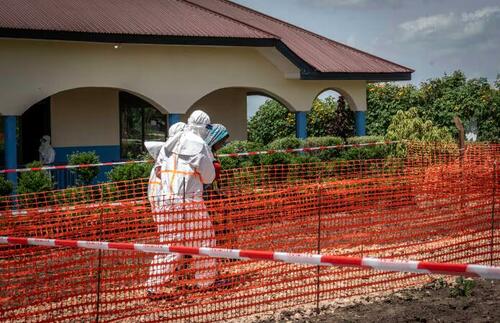
US Ebola Quarantine Facility in Kenya Directly Threatens American Travelers' Health and Triggers Immediate Fear
Instead of repatriating Ebola-exposed Americans to U.S. facilities as in past outbreaks, the Trump administration is rushing a Kenya-based quarantine site near the crisis zone, directly endangering travelers' health while igniting immediate fear with one stark, shareable fact.
The Trump administration is preparing to deploy U.S. Public Health Service officers to staff a quarantine facility in Kenya for Americans exposed to or infected with Ebola amid a rapidly expanding outbreak centered in the Democratic Republic of Congo, according to multiple reports citing the Wall Street Journal. This represents a marked departure from prior outbreaks, when exposed U.S. citizens were typically repatriated to specialized high-containment units on American soil. The facility, still pending final approval from the Kenyan government as of May 26, 2026, would hold individuals at high risk or testing positive rather than risk transporting them closer to U.S. borders.
Viewed through the lens of direct impact on Americans, this policy places travelers, aid workers, and medical personnel at heightened risk by situating quarantine in a country bordering Uganda—where cases have already appeared—within a region where hospitals are overwhelmed and the true scale of infections is believed to be significantly undercounted. An American doctor recently infected in Congo was diverted to Germany instead of the United States, underscoring the new containment-at-a-distance approach. The core message is simple, concrete, and highly shareable: Americans exposed to Ebola in Africa will now be held there, not brought home. This alone is poised to trigger immediate fear among travelers, business interests, and humanitarian organizations, potentially deterring essential personnel from deploying and slowing containment efforts.
Deeper connections emerge when linked to simultaneous U.S. actions, including a pause on visa issuance for anyone who has visited Congo, Uganda, or South Sudan in the prior 21 days. While the CDC maintains the risk to the American public remains low, the decision to avoid domestic monitoring facilities—proven effective in past responses—suggests internal assessments view the current strain and outbreak dynamics as more threatening than publicly emphasized. The WHO's recent declaration of a global health emergency, combined with over 750 suspected cases and at least 177 deaths in Congo (with indications of wider undetected spread), reveals a crisis straining local resources to the breaking point. By offshoring the quarantine burden to Kenya, the U.S. may be prioritizing political optics and border security over optimal medical outcomes for its own citizens, a heterodox interpretation that raises questions about preparedness, trust in domestic biocontainment, and the long-term chilling effect on American engagement in African health crises.
Travel Fear Analyst: One sentence about Americans being quarantined for Ebola in Kenya instead of the US will spread rapidly, deter aid workers and travelers across East Africa, and amplify economic fallout from the outbreak.
Sources (4)
- [1]U.S. Races to Set Up Quarantine Facility in Kenya for Americans Exposed to Ebola(https://www.wsj.com/world/africa/kenya-ebola-quarantine-center-us-citizens-3d95cd47)
- [2]U.S. Pauses Visa Issuance for People Who Have Visited Ebola-Hit Countries(https://www.wsj.com/world/africa/u-s-pauses-visa-issuance-for-people-who-have-visited-ebola-hit-countries-b2a9ba00)
- [3]US to set up quarantine facility in Kenya for Americans exposed to Ebola, WSJ reports(https://www.yahoo.com/news/us/articles/us-set-up-quarantine-facility-kenya-211011908.html)
- [4]An American Has Tested Positive for the Deadly Ebola Virus(https://www.wsj.com/health/an-american-has-tested-positive-for-the-deadly-ebola-virus-9aa23c87)