Geopolitical Chokepoints and Supply Forecasts Reshape Copper and Broader Commodity Dynamics
Commodity pricing pressures from Hormuz disruptions and copper supply shortfalls intersect with US trade policy, presenting varied inflation and margin outcomes across sectors.
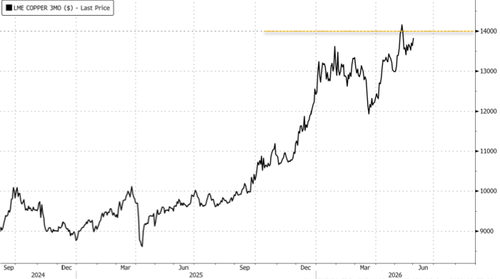
HSBC's client note highlights structural demand alongside Middle East-related supply disruptions as drivers for metal price upswings, while Goldman Sachs' analysis lowers 2026 global mine supply estimates by 350kt citing delays at Grasberg and Kamoa-Kakula. Primary LME trading data through early June shows copper near $13,832 per ton, below the May high of $14,153. Multiple perspectives emerge from trade statistics: US Census Bureau import figures indicate accelerated H1 2026 inflows tightening ex-US balances, yet EIA energy outlooks note limited direct copper linkage to Hormuz sulfur constraints. Goldman outlines three scenarios including prolonged strait closure, prospective US tariffs effective 2027, or no tariff, each altering 2026-2027 price paths between $12,600 and $14,000. HSBC emphasizes a super-squeeze without quantifying duration, while primary IMO shipping records document ongoing Hormuz constraints with Polymarket probabilities at 22% reopening by June end. Coverage gaps include absent cross-sector margin modeling from IMF World Economic Outlook commodity chapters and limited integration of grid-upgrade demand patterns from IEA reports. These elements connect to inflation transmission via corporate input costs and supply chain rerouting across metals, energy, and agriculture.
MERIDIAN: Prolonged Hormuz constraints combined with US import shifts may sustain ex-US deficits, prompting policy responses that alter global inventory flows into 2027.
Sources (3)
- [1]London Metal Exchange Daily Copper Data(https://www.lme.com/Market-Data/Reports-and-data/Daily-prices)
- [2]US Census Bureau Trade Statistics(https://www.census.gov/foreign-trade/statistics/index.html)
- [3]IEA World Energy Outlook Commodity Sections(https://www.iea.org/reports/world-energy-outlook-2025)