Petrochemical Supply Shocks from Hormuz Disruptions Idle Asian Plants, Exposing Underreported Global Manufacturing Risks
Middle East conflict-driven disruptions to petrochemical feedstocks via the Strait of Hormuz are causing force majeure declarations, plant idling, and sharp price spikes across Asia's textiles, plastics, and packaging industries, revealing underreported pathways to manufacturing slowdowns and recession risks globally.
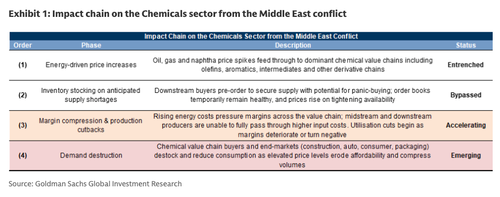
As conflict in the Middle East escalates with disruptions to the Strait of Hormuz, early economic fractures are emerging far beyond kinetic headlines. Reuters reports that a growing number of Asian refineries and petrochemical firms have cut production runs, shut units, or declared force majeure after U.S.-Israeli actions against Iran halted crude and feedstock exports. Asian steam crackers, sourcing over 60% of naphtha from the Middle East, have been particularly hard hit, with companies in South Korea, Thailand, Indonesia, and Singapore curtailing output. Bloomberg highlights how plastic bottle and packaging manufacturers face acute shortages of monoethylene glycol (MEG) and purified terephthalic acid (PTA), key inputs for PET production, as multiple producers declared force majeure. China, which controls roughly three-quarters of global PTA capacity, has seen spot prices surge over 30% with 15% of domestic capacity idled. Downstream impacts are already visible: India's synthetic textile hub in Surat has shifted to single 12-hour shifts, halving output amid a 17% COGS shock for apparel where petrochemical inputs comprise 50-65% of costs. China Daily and ICIS analyses show similar pressures on plastics used in food packaging and consumer goods, with Thai and Indonesian plants halting operations due to naphtha shortages. Goldman Sachs analysts, cited across multiple outlets including Investing.com, warn the supply shock is transmitting faster and with greater magnitude than anticipated—moving beyond price spikes to production cuts, margin compression, and demand destruction in textiles and packaging first. Wood Mackenzie estimates millions of tonnes of stranded feedstocks and plastics, with operators in Asia running below breakeven. This connects resource chokepoints directly to manufacturing viability: Asia's heavy reliance on Gulf naphtha (50-90% in key hubs) reveals structural fragilities that could cascade into Europe, Africa, and eventually the U.S. West Coast. While media emphasizes battlefield developments, these idled factories signal broader recessionary risks through higher consumer prices, supply chain breakdowns, reduced industrial output, and potential job losses in export-oriented sectors—early warnings of global economic contagion that extend well beyond any ceasefire.
LIMINAL: Petrochemical fractures in Asia are the canary in the coal mine for cascading manufacturing failures and hidden recessionary pressures that markets and media are underpricing amid focus on military headlines.
Sources (5)
- [1]Asian refineries, petchem firms cut runs as Iran war disrupts supplies(https://www.reuters.com/business/energy/asia-refineries-cut-runs-middle-east-oil-disruption-2026-03-16/)
- [2]Plastic Bottle Makers Get Pinched by War-Driven Forces Majeures(https://www.bloomberg.com/news/articles/2026-04-01/plastic-bottle-makers-get-pinched-by-war-driven-forces-majeures)
- [3]Oil shock impacts Asia's plastics industry(https://global.chinadaily.com.cn/a/202603/28/WS69c719aca310d6866eb40582.html)
- [4]Strait of Hormuz blockade bites global chemicals sector(https://www.woodmac.com/news/opinion/strait-of-hormuz-blockade-bites-global-chemicals-sector/)
- [5]Best Petrochemical Stocks to Buy Amid Middle East Conflict(https://m.investing.com/news/stock-market-news/best-petrochemical-stocks-to-buy-amid-middle-east-conflict-93CH-4598842)