India's Gold and Silver Tariff Hike: A Desperate Defense of the Rupee Amid Global Economic Pressures
India's doubling of gold and silver import tariffs to 15% is a desperate bid to defend the crashing rupee amid the Iran war's economic fallout. Beyond currency protection, this move risks fueling global commodity volatility, domestic smuggling, and cryptocurrency adoption, reflecting broader emerging market currency pressures.
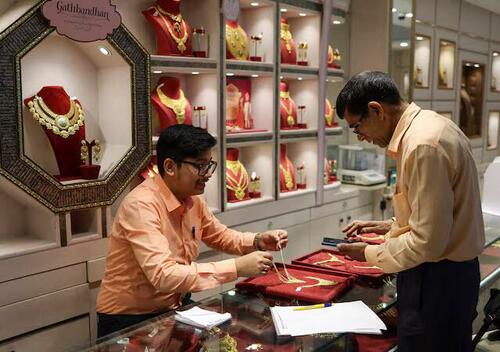
India's recent decision to more than double import tariffs on gold and silver to 15% from 6%, as reported by ZeroHedge, is a stark response to the rupee's precipitous decline, which has fallen over 6% in 2026, exacerbated by the Iran war's disruption of energy markets. This move, following Prime Minister Narendra Modi's unusual public appeal to curb gold purchases and foreign travel, reflects deeper systemic vulnerabilities in India's economy and mirrors broader emerging market struggles with currency depreciation amid global instability. While the ZeroHedge report focuses on the immediate currency defense motive and cultural significance of gold, it overlooks critical regional and historical contexts, as well as potential unintended consequences on global commodity markets and domestic behavior.
Firstly, the tariff hike must be understood within the context of India's long-standing balance-of-payments challenges. As the world's second-largest gold consumer and third-largest oil importer, India has historically grappled with current account deficits, particularly during geopolitical crises that spike energy costs. The Reserve Bank of India's (RBI) interventions to sell dollars from its foreign-exchange reserves—already strained at $600 billion as of late 2025 per RBI data—signal a desperate attempt to stabilize the rupee, projected to hit 100 against the USD. The Iran war's impact on Persian Gulf oil supplies has inflated import bills, a dynamic reminiscent of the 2013 taper tantrum when the rupee similarly crashed amid capital outflows. Yet, unlike 2013, today's global environment is further complicated by post-pandemic supply chain fragilities and inflationary pressures, amplifying the stakes for New Delhi.
Secondly, the ZeroHedge coverage misses the potential ripple effects on global commodity markets. Gold and silver prices, already volatile due to geopolitical uncertainty, could face upward pressure as India's import demand—710 tons of gold in the last year alone—contracts. This aligns with patterns observed during India's 2013 gold duty hikes, which temporarily spiked global prices by 5-7% as per World Gold Council reports. Moreover, reduced Indian demand may not translate to lower domestic consumption but instead fuel smuggling networks, a persistent issue in South Asia. Historical data from the Directorate of Revenue Intelligence shows smuggled gold seizures rose by 30% following past tariff increases, suggesting that Modi's appeal may be undermined by black market dynamics.
Lastly, the tariff decision reflects a broader trend among emerging markets under currency stress. Countries like Turkey and Argentina have similarly imposed import curbs or capital controls in 2025-2026 to protect local currencies, as documented by IMF policy trackers. India's move, while pragmatic in the short term, risks alienating a population culturally tied to gold as a store of value, potentially accelerating adoption of cryptocurrencies like Bitcoin or stablecoins such as Tether, as hinted in the original report. This pivot to non-fiat alternatives could undermine RBI's monetary control, a risk not adequately addressed in initial coverage.
In synthesizing these perspectives, it becomes clear that India's tariff hike is not merely a currency defense but a gamble with domestic trust and global market stability. The government faces a delicate balancing act: curbing capital outflows without triggering social unrest or illicit trade. Whether this policy will stabilize the rupee or exacerbate underlying tensions remains an open question, particularly as energy-driven inflation and geopolitical uncertainty persist.
MERIDIAN: India's tariff hike may temporarily slow rupee depreciation by curbing gold imports, but rising smuggling and cryptocurrency use could undermine long-term stability.
Sources (3)
- [1]India More Than Doubles Gold, Silver Tariffs To Defend Crashing Rupee(https://www.zerohedge.com/precious-metals/india-more-doubles-gold-silver-tariffs-defend-crashing-rupee)
- [2]Reserve Bank of India - Foreign Exchange Reserves Data(https://www.rbi.org.in/Scripts/Data_Foreign_Exchange_Reserve.aspx)
- [3]World Gold Council - Gold Demand Trends(https://www.gold.org/goldhub/research/gold-demand-trends)