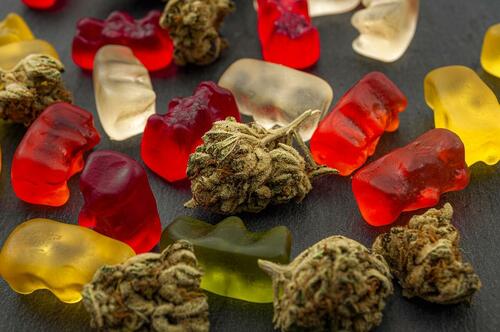
Canadian Study Records Elevated Lane Deviation at 2 and 5 Hours After 10 mg and 20 mg THC Edible Doses
JAMA Network Open trial measured driving metrics after controlled THC edible doses and found persistent lane-control deficits at commonly consumed levels. Blood concentrations stayed within many enforcement limits, revealing a mismatch between statutory thresholds and functional impairment. Regulators must weigh expanded market access against documented safety externalities for commercial drivers.
Researchers administered 0 mg, 2 mg, 10 mg and 20 mg THC gummies in a Canadian hospital setting and tracked SDLP, speed variability and reaction time. Whole-blood THC peaked at 3.4 ng/mL after the 20 mg dose, remaining inside or near enforcement thresholds used by several U.S. states. Reaction time lengthened and willingness to drive declined only at the highest dose. Public Safety Canada funded the work while two authors disclosed pharmaceutical grants. The reclassification of cannabis to Schedule III by the Department of Justice creates commercial incentives for wider edible sales even as USDOT testing authority for safety-sensitive workers remains contested by the American Trucking Associations. Centre for Addiction and Mental Health noted that all observed blood levels fell below or near roadside limits, underscoring the gap between current per se thresholds and observed impairment duration. University of Colorado simulator trials previously documented similar lane variability increases after edible but not inhaled cannabis. Transport Canada and state motor-vehicle agencies now face the choice between extending mandatory waiting periods or accepting higher residual risk in commercial fleets. Primary documents show no adjustment to labeling rules has yet been proposed despite the recorded five-hour performance decrement.
Transport Canada: Within 18 months, at least one province will mandate an 8-hour no-drive interval on edible packaging after any dose above 5 mg.
Sources (3)
- [1]Primary Source(https://jamanetwork.com/journals/jamanetworkopen/fullarticle/2823453)
- [2]Supporting Source(https://www.cuanschutz.edu/about/news/stories/cannabis-and-driving)
- [3]Supporting Source(https://www.trucking.org/news-insights/ata-urges-congress-protect-fmvssa-testing-authority)