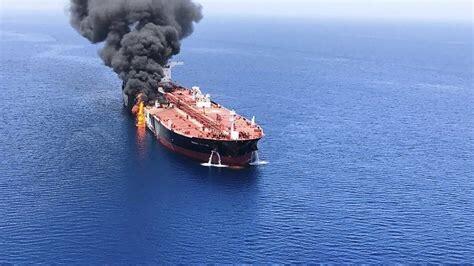
Commentary says ~50 Hormuz ship strikes since Sept. 1 hit plastics and fertilizer cargoes, not only crude
A commentary argues that strikes on shipping around Hormuz matter less as a crude shortage than as a shock to polyethylene, naphtha, methanol and fertilizer, which lack oil’s pipelines and strategic stocks. The cited trade shares are large; the strike count and a referenced UN series are not independently shown in the text. The exposure runs to Asian chemical plants and to packaging and fertilizer buyers, and it also hits Gulf exporters, including Iran’s methanol shipments.
Larry C. Johnson, writing for Sonar21 and carried by ZeroHedge, says Iran has hit roughly fifty ships in and around the Strait of Hormuz since Sept. 1, most of them tankers. He sets that against a world fleet he puts above 8,000 tankers and calls the count small relative to crude supply. His claim is that much of what leaves the Gulf is not oil: plastics feedstocks, methanol and fertilizer intermediates, markets he says are less able to absorb a shipping shock.
The numbers are analyst tallies cited in the commentary, not a government release. ICIS is quoted for 18.7 million tons of Middle East polyethylene exports in 2025, of 43.8 million tons globally, and for about 84 percent of regional polyethylene capacity depending on Hormuz. S&P Global is cited for nearly 1.2 million barrels a day of naphtha through the strait before the war, 60 to 70 percent of Asia’s import needs. The piece says the Middle East exported more than 17 million tons of methanol in 2025, Iran more than 9 million, and that about 70 percent of China’s methanol imports came from the region. CRU is cited for nearly a third of global urea exports, 44 percent of sulfur and almost a fifth of ammonia moving through or originating west of the strait. A UN comparison of April 2026 with a year earlier is mentioned; those figures are not in the text.
Crude has workarounds these cargoes do not. Saudi Arabia can move oil west to Yanbu; the UAE can pipe crude to Fujairah, outside the strait. Governments hold strategic petroleum stocks. The commentary says there is no equivalent reserve for polyethylene or methanol, and that plants at Jubail, Ras Laffan and Ruwais were built to load ships. On the ledger, pressure on the strait raises the cost of war-risk cover and lost loadings for Gulf exporters, including Iran’s own methanol trade, while giving Tehran leverage over inputs Asia’s crackers were built to take. Brokers noted in June that smaller product and chemical tankers were already deterred by premia a very large crude carrier could absorb.
Asian steam crackers were configured around Gulf naphtha. Some can use more liquefied petroleum gas, but that gas uses the same strait, so the switch does not leave the chokepoint. The S&P assessment quoted in the piece says availability, not price, is now the constraint, and that crackers cut rates or declare force majeure when feedstock stops. The downstream list in the commentary is packaging, polyester and PET bottles, textiles, auto parts, medical supplies and nitrogen fertilizer — farm and factory inputs, not the Brent print on a cable graphic. The ship-strike count itself is the author’s, not confirmed here by a flag-state or insurer tally.
Plastics feedstocks, methanol and fertilizer that move through Hormuz feed packaging, textiles, bottles and crop nutrients, and Asian plants were built around those Gulf cargoes. Unlike crude, the commentary says they cannot be piped around the strait or drawn from a strategic reserve.
Sources (1)
- [1]Your Shopping Bag Runs Through Hormuz(https://www.zerohedge.com/geopolitical/your-shopping-bag-runs-through-hormuz)