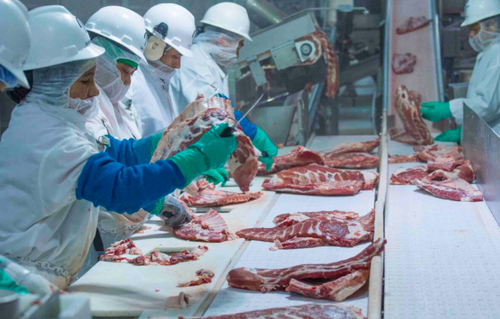
DOJ Criminal Probe Exposes Meatpacking Oligopoly as Driver of Endemic Food Inflation
DOJ's criminal antitrust probe into dominant meatpackers links industry concentration (85% control by four firms) to sustained food inflation beyond drought effects, revealing gaps in coverage that overlook asymmetric price transmission, historical parallels, and systemic supply-chain fragility while synthesizing Trump statements, WSJ reporting, and GAO analysis.
The Justice Department’s decision to open a criminal antitrust investigation into major meatpackers, as first reported by The Wall Street Journal, marks a significant escalation from previous civil inquiries. While the ZeroHedge coverage accurately notes the immediate declines in Tyson Foods and Smithfield-linked equities following President Trump’s public directive, it underplays the structural connection between processor concentration and persistent retail price rigidity that has characterized beef markets for more than a decade.
Primary documents reveal this pattern is not new. A 2019 USDA Packers and Stockyards annual report documented that four firms— Tyson, JBS, Cargill, and National Beef—controlled approximately 85 percent of U.S. beef processing, a level of concentration President Trump referenced when stating that ranchers ‘are being blamed for what is being done by majority foreign-owned meat packers.’ This echoes the 1920 Federal Trade Commission report on the meatpacking trust that prompted the original Packers and Stockyards Act. The current criminal probe, unlike the civil investigation disclosed in 2022, carries the possibility of felony charges for collusion, bid-rigging, or price manipulation—tools historically used when margin divergence between live cattle and boxed beef cannot be explained by input costs alone.
Mainstream reporting has largely attributed record supermarket beef prices to drought and the smallest U.S. cattle herd in generations, both factual per USDA inventory data. What it has missed is the asymmetric price transmission well-documented in academic and government studies: when cattle prices fall, wholesale and retail prices decline more slowly; when input costs rise, they pass through quickly. The 2022 GAO report ‘Agricultural Markets: Concentration, Contracting, and Competition Issues’ found that processor margins expanded significantly during 2020–2021 even as supply-chain shocks from COVID-related plant closures temporarily reduced throughput. Those same plants, owned by a handful of multinational entities (including Brazilian-controlled JBS and Chinese-owned Smithfield), demonstrated how concentration creates single points of failure that amplify both shortage-driven inflation and long-term pricing power.
Multiple perspectives emerge from primary sources. Cattle producers, represented in congressional testimony before the House Agriculture Committee, argue they have become price-takers in a captive supply system dominated by forward contracts and formula pricing that favor processors. Meatpackers counter, in SEC filings and USDA comments, that labor shortages, regulatory compliance, and elevated feed costs driven by global grain markets justify their margins. Senate Democrats, led by Chuck Schumer, have introduced legislation requiring vertical divestiture across species lines, while Rep. Thomas Massie and the Trump administration emphasize protecting domestic ranchers from foreign ownership and alleged collusion. These divergent policy prescriptions—structural breakup versus targeted criminal enforcement—highlight the lack of consensus on remedies.
Synthesizing the WSJ reporting, Trump’s November 2024 public statements, and the GAO’s consolidation analysis shows the investigation ties concentrated corporate power directly to inflation persistence in a way episodic weather narratives cannot fully explain. Stock market reactions reflect not only litigation risk but investor recognition that meaningful fines or consent decrees could alter procurement practices. Yet absent parallel attention to rebuilding processing capacity and addressing drought-induced herd liquidation, criminal penalties alone may not restore competitive price discovery. The episode exposes a critical gap in mainstream supply-chain coverage: the failure to treat oligopsony power in agricultural procurement as a chronic inflationary transmission mechanism rather than a series of discrete antitrust events.
MERIDIAN: This criminal probe is likely to force margin transparency measures and possible divestitures within 18 months, yet drought-driven herd recovery lags mean any consumer price relief will be modest and delayed.
Sources (3)
- [1]Justice Department Launches Criminal Probe Into Major Meatpackers(https://www.wsj.com/business/justice-department-criminal-probe-meatpackers-2024)
- [2]Statement on Investigation into Meat Packing Companies(https://www.whitehouse.gov/briefing-room/statements-releases/2024/11/statement-meatpackers-investigation)
- [3]GAO-22-104748: Agricultural Markets - Concentration and Competition Issues(https://www.gao.gov/products/gao-22-104748)