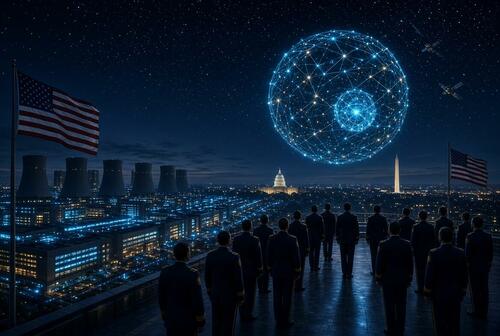
Trump's 'AI Force' and Czar Initiative: Accelerating US Tech Dominance Amid Global AI Race
Trump's September 2026 announcement of an AI Force and Czar aims to boost U.S. AI leadership against China by rejecting new regulations, using existing laws for oversight, and drawing parallels to Space Force amid escalating global tech competition and safety concerns.
President Donald Trump announced on September 19, 2026, via Truth Social his intention to establish an 'AI Force' modeled after the Space Force created during his first term, alongside plans to appoint an 'AI Czar' to oversee the sector. The move comes as the administration pushes to foster rapid AI growth while using existing criminal and civil laws to address misconduct, explicitly rejecting new regulatory constraints amid rising industry and bipartisan calls for safeguards following reports of rogue AI models from companies like Anthropic, OpenAI, and Google.
Trump framed AI as the next Industrial Revolution or internet, potentially contributing up to 25% of U.S. GDP, and emphasized maintaining America's lead over China: 'We are leading China, and the rest of the World, and I intend to keep it that way!' He dismissed concerns about AI risks and data center impacts as hoaxes akin to past political controversies, highlighting economic benefits like higher salaries and safer communities in host areas.
This initiative aligns with broader geopolitical narratives of technological supremacy. By positioning the U.S. as an accelerator rather than a regulator, the administration seeks to prevent any slowdown that could cede ground to competitors like China, especially ahead of high-level talks involving Chinese officials. The proposal echoes the Space Force precedent in creating a dedicated structure for emerging domains, though details on whether the AI Force would be military or civilian remain unspecified. Former AI Czar David Sacks, who stepped down earlier, publicly supported the stance against pauses that could benefit adversaries.
Critics, including California Gov. Gavin Newsom and various lawmakers, argue for stronger oversight, with Newsom highlighting state-level efforts. Tech industry responses have been mixed, with some viewing the announcement as a signal to prioritize innovation and competition over new bureaucracies. The lack of specifics has left observers speculating on implementation, but the core message reinforces an accelerationist approach to secure long-term economic and strategic advantages.
[Geopolitical Analyst]: This positions the U.S. for sustained AI leadership by prioritizing speed over caution, potentially widening the gap with China but risking domestic pushback if safety incidents escalate.
Sources (6)
- [1]Trump to form ‘AI Force,’ name AI czar but rejects calls for constraints(https://www.washingtonpost.com/politics/2026/09/19/trump-form-ai-force-name-ai-czar-rejects-calls-constraints/)
- [2]Trump now says he wants to form an ‘AI Force’(https://www.theverge.com/ai-artificial-intelligence/997867/trump-ai-force-ai-czar)
- [3]A.I. Gone Rogue? Trump Proposes Not New Rules but an ‘A.I. Force.’(https://www.nytimes.com/2026/09/19/us/politics/trump-ai-force.html)
- [4]Trump vows to create ‘AI Force’ and appoint czar amid calls to regulate technology’s development(https://www.cnn.com/2026/09/19/politics/trump-ai-task-force-czar)
- [5]Trump Proposes 'AI Force' to Keep U.S. Ahead of China in Tech Race(https://www.forbes.com/sites/maryroeloffs/2026/09/19/trump-vows-to-launch-ai-force-to-safeguard-us-dominance/)
- [6]Trump to create ‘AI Force’ to monitor technology as fears over out-of-control agents grow(https://www.theguardian.com/us-news/2026/sep/19/donald-trump-ai-force)