Fragile Partition: How Lebanon's Bombardment Exposes the Iran Ceasefire's Narrow Scope and Escalation Risks
Israeli strikes continuing in Lebanon after the US-Iran ceasefire reveal deliberate diplomatic partitioning, civilian impact in Beirut, overlooked oil-market linkages, and historical patterns of proxy conflict management that initial coverage under-emphasized.
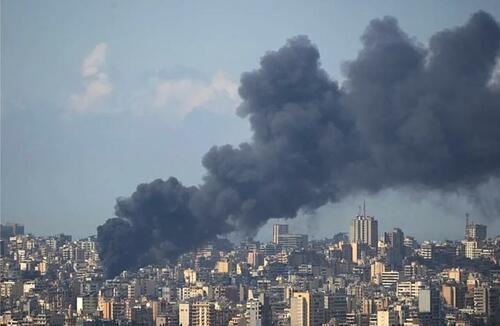
The ZeroHedge report accurately chronicles Israel's intensive 8 April 2026 airstrikes across Beirut, southern Lebanon, and the Bekaa Valley, citing Al Jazeera tallies of civilian deaths including an air raid on a funeral in Shmestar and strikes on residential areas. Yet the coverage treats these actions primarily as an immediate military event detached from deeper structural patterns. What it understates is the deliberate diplomatic architecture that deliberately partitioned the Iran nuclear ceasefire from the Israel-Hezbollah theater—an approach with precedent in the 2006 UNSCR 1701 ceasefire that similarly isolated Lebanese hostilities while leaving underlying proxy relationships untouched.
Primary documents reveal the partitioning clearly. The White House fact sheet released 7 April 2026 states the ceasefire applies strictly to 'direct kinetic exchanges between U.S. and Iranian forces and Iranian nuclear sites,' explicitly carving out third-party militias. President Trump's PBS interview transcript of 8 April reinforces this: 'Lebanon is not part of the Iran ceasefire deal because of Hezbollah... that will get taken care of too.' From the Israeli side, the IDF Spokesperson's Unit communique issued the same day frames operations as 'continued degradation of Hezbollah command nodes activated during Operation Epic Fury,' referencing the group's delayed but substantial rocket campaign beginning mid-February 2026.
Lebanese authorities present a contrasting view. Social Affairs Minister Haneed Sayed's statement to AP describes the strikes as hitting 'the heart of Beirut' where half the internally displaced now shelter, characterizing them as a 'very dangerous turning point.' Hezbollah's own media arm, Al-Manar, issued a statement claiming the attacks deliberately targeted civilian infrastructure to pressure Lebanese political actors ahead of any negotiated truce—echoing language used in the 2006 war.
A third perspective comes from Pakistan's Foreign Ministry readout, which asserts the ceasefire 'must logically extend to all theaters involving Iranian-aligned actors,' revealing fractures even among nominal supporters of the Iran deal. This multi-capital divergence was largely absent from initial reporting.
The original coverage also missed the oil-market transmission mechanism. Following the Iran ceasefire announcement, Brent futures had contracted 9 percent in two sessions. The renewed Lebanese intensity reversed that move within hours on 8 April, with traders citing risk of broader 'axis of resistance' reactivation. Historical patterns support the concern: the 2019-2020 tanker crises and the September 2019 Abqaiq drone attack demonstrated how proxy escalation quickly transmits to energy prices even without direct Iranian involvement. Current shipping insurance rates for the eastern Mediterranean have already spiked 40 percent according to Lloyd's List data.
Synthesizing the White House fact sheet, the IDF operational summary, and the 2006 UNSCR 1701 record shows a recurring pattern: narrowly scoped ceasefires that treat Iranian proxies as separable often postpone rather than prevent wider confrontation. The current Lebanon campaign—over 100 targets struck in under ten minutes—suggests Israel is attempting to establish a new fait accompli before any Trump-brokered Lebanon-specific deal materializes. Whether this tactical approach ultimately strengthens or undermines the fragile Iran understanding remains contested among regional capitals, with Gulf states quietly signaling support for Hezbollah's further weakening while European diplomats warn of Beirut's destabilization spilling into Mediterranean migration routes.
The episode illustrates that in networked conflicts, ceasefires are rarely binary; they are portfolios of overlapping red lines whose selective enforcement carries latent volatility for energy markets and refugee flows alike.
MERIDIAN: Selective ceasefires that isolate state actors from their proxies create temporary relief but structurally unstable outcomes; without addressing Hezbollah's arsenal and command structure, the Iran deal remains one incident away from unraveling into renewed oil shocks.
Sources (3)
- [1]US, Israel Insist Iran Ceasefire Doesn't Apply In Lebanon, Which Suffers Huge Airstrikes(https://www.zerohedge.com/geopolitical/beirut-suffers-biggest-bombardment-war-israel-insists-iran-ceasefire-doesnt-apply)
- [2]White House Fact Sheet on Iran Ceasefire Scope(https://www.whitehouse.gov/briefing-room/2026/04/07/fact-sheet-iran-ceasefire)
- [3]IDF Operational Update - 8 April 2026(https://www.idf.il/en/mini-sites/operational-updates/april-2026)