Ukraine's Live-Fire Laboratory: German Weapons Data Exposes NATO's Readiness Gap for Attritional War
Real-time performance data from German systems in Ukraine reveals critical gaps in artillery durability, air defense integration, and munitions sustainability under high-intensity conditions, compelling NATO to accelerate rearmament, scale production, and overhaul doctrine for attritional conflict.
The formalization of real-time German weapons performance data sharing with Ukraine, embedded in a €4 billion defense package, marks a pivotal evolution in how Western militaries learn from contemporary conflict. While the Defense News report accurately captures the memorandum covering the PzH 2000 howitzer, RCH 155 artillery, IRIS-T air defense, and access to Ukraine's DELTA battlefield management system, it frames the arrangement primarily as mutual benefit and industry feedback. This misses the deeper strategic revelation: NATO is receiving rare, unfiltered validation of its post-Cold War arsenal under conditions of prolonged high-intensity combat that no simulation or limited engagement could replicate.
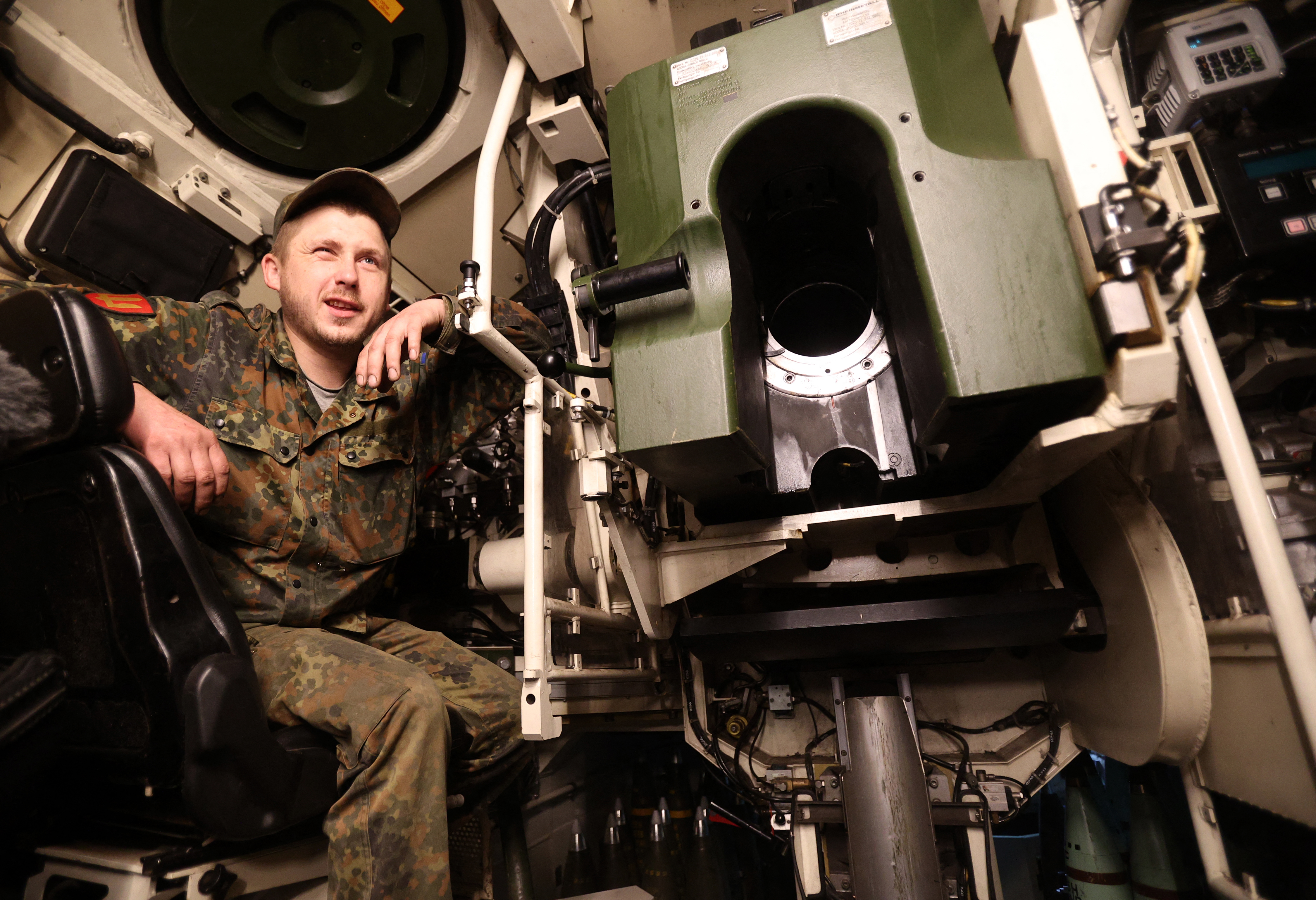
Synthesizing the original reporting with RUSI's multiple battlefield studies on Ukrainian artillery employment (notably their 2023-2024 papers documenting daily fire rates exceeding 300 rounds per tube in key sectors) and a 2024 CSIS analysis on European air defense lessons, the pattern is unmistakable. The PzH 2000's barrel wear, attributed to Ukraine's 'higher-than-NATO fire rate,' is not an anomaly but a symptom of doctrinal obsolescence. Western artillery was optimized for precision, limited-duration fires in expeditionary campaigns, not the counter-battery duels and suppressive barrages characteristic of peer conflict against Russian massed fires, drone-adjusted artillery, and electronic warfare. Ukrainian crews have burned through barrels at rates requiring frequent replacement, exposing insufficient hardness in chromium linings and logistical fragility in forward repair capabilities. These data points are now directly shaping Rheinmetall and KNDS upgrade paths, including the RCH 155's automated loading systems designed to reduce crew exposure while maintaining tempo.
IRIS-T emerges as the unambiguous success, with Ukrainian-reported 99% interception rates against Shahed-136 drones and cruise missiles, exceeding 250 confirmed kills. Yet even here, mainstream coverage overlooks critical context: this performance relies on Ukraine's improvised multi-sensor fusion, commercial satellite cuing, and DELTA-enabled AI target deconfliction. Without these force-multipliers, NATO forces operating under stricter rules of engagement might see significantly lower efficacy. The data-sharing deal's emphasis on feeding Ukrainian operational data into German AI development models represents a genuine leap, potentially accelerating autonomous interceptors and predictive maintenance algorithms far beyond what German firms could achieve in sterile testing ranges.
What original coverage and much Western reporting missed is the indictment of industrial base atrophy. Germany's quiet incorporation of Ukrainian lessons into Leopard 2A8 Trophy integration and next-generation artillery mirrors earlier, less-publicized fixes to Gepard systems and Panzerfaust munitions. The war has demonstrated that Western 'just-in-time' procurement and peacetime stockage levels would sustain major combat operations for mere weeks, not months. RUSI estimates suggest NATO's collective 155mm shell production in 2022 could not match even conservative Ukrainian daily expenditures. The transactional shift noted in the article - from altruistic aid to data-for-weapons exchanges - reflects harsh realism: Berlin gains battlefield validation to rebuild its defense sector, while Kyiv secures continued flows including Patriot interceptors, additional IRIS-T launchers, and €300 million for long-range strike capabilities.
The omission of Taurus missiles, despite funding parallel long-range programs and Ambassador Makeiev's public comments, underscores persistent German political caution even as data proves the necessity of deep strikes against Russian logistics. This selective approach risks undercutting the very innovation loop being celebrated. Furthermore, the 'Build with Ukraine' joint drone production initiative signals recognition that mass matters: 5,000 AI-enabled munitions will test whether European industry can shift from boutique systems to scalable output.
The meta-lesson mainstream analysis has underplayed is that prolonged high-intensity conflict favors adaptability, sustainability, and industrial depth over exquisite technology alone. NATO rearmament strategies, including the European Defence Industry Strategy, must now prioritize barrel life extension, modular munitions, hardened supply chains, and AI-driven battlefield management drawn from DELTA. Failure to internalize these insights risks repeating the pre-2022 complacency that left Europe dependent on American stocks. Zelenskyy's vision of folding Ukrainian know-how into the 'European security system' is already happening through silicon and steel rather than treaties. For NATO, the German data pipeline offers both validation and uncomfortable proof that its arsenals were never truly sized or tested for the wars it may face.
SENTINEL: Germany's data pact delivers combat-proven insights showing Western artillery and munitions stocks are sized for short conflicts, not sustained peer warfare; expect accelerated NATO investment in hardened components, mass production, and AI targeting but persistent political limits on deep-strike systems.
Sources (3)
- [1]Berlin gets a front-row seat to German weapons’ performance in Ukraine(https://www.defensenews.com/global/europe/2026/04/15/berlin-gets-a-front-row-seat-to-german-weapons-performance-in-ukraine/)
- [2]RUSI Occasional Paper: The War in Ukraine and European Defence Industry(https://rusi.org/explore-our-research/publications/occasional-papers/war-ukraine-and-european-defence-industry)
- [3]CSIS Analysis: Learning from Ukraine’s Artillery War(https://www.csis.org/analysis/learning-ukraines-artillery-war)