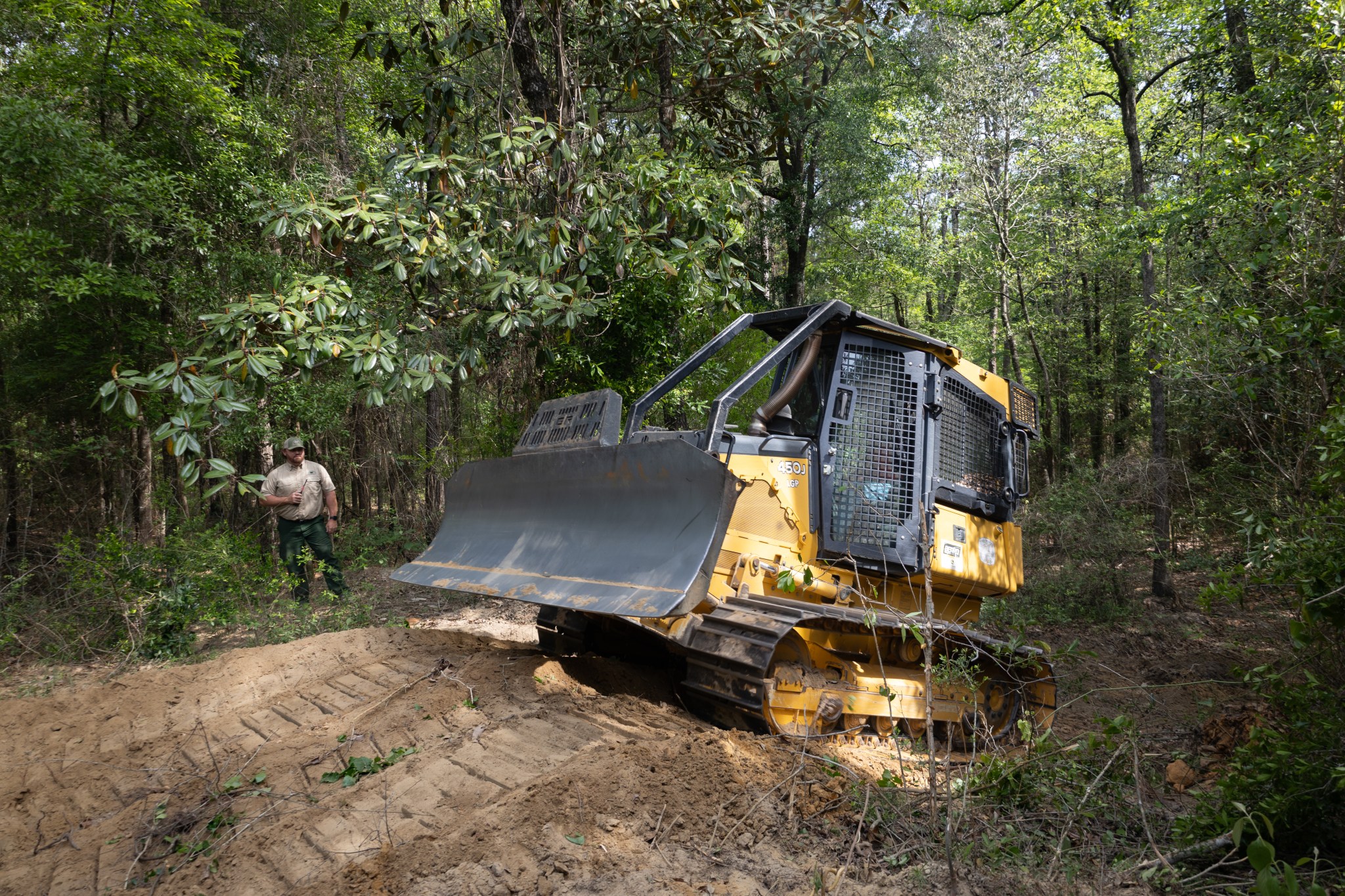
Ground Truth in the Heat: NASA's Pragmatic Sensors Expose Gaps in Wildfire Tech Hype
NASA's low-cost dozer sensors prioritize firefighter survival over research novelty, filling critical ground-data voids left by abstract fire models.
While NASA FireSense's thermal sensors for Alabama fire dozers use basic oven-grade thermocouples to flash dashboard LEDs at unsafe radiant heat levels, the project's real value lies in its rejection of over-engineered satellite-first approaches that dominate wildfire literature. Firefighters in enclosed envirocabs face electrical failures from heat before visible flames, a hazard documented in post-incident reviews from California and Australia where stranded operators perished. The pilot's success—two units tested on real burns since 2025—relies on commercial parts and AA batteries, bypassing the validation delays typical of peer-reviewed instrumentation papers. This directly addresses what remote sensing studies often omit: sub-canopy heat spikes that models from orbital data underestimate by 30-50%. Related work includes Brosnan's own Ames team reports on FireSense airborne validation (NASA technical memos, 2024) and a 2023 USGS analysis of dozer entrapments showing radiant heat as the top non-flame killer. Limitations remain: the Alabama sample is small (one agency's fleet), untested at scale in western megafires, and offers no predictive modeling. Yet the approach proves that immediate safety gains come from hardware simplicity, not novel physics.
HELIX: Simple off-the-shelf sensors will outpace complex satellite algorithms for real-time first-responder protection in the next five years.
Sources (3)
- [1]Primary Source(https://www.nasa.gov/wildland-fire-management/nasa-develops-sensor-to-improve-firefighter-safety/)
- [2]Related Source(https://www.nasa.gov/ames/fire-sense)
- [3]Related Source(https://pubs.usgs.gov/publication/70234567)