Consumer Demand for Affordable Chinese EVs Underscores Tensions Between Market Forces and US-China Decoupling
Strong U.S. consumer interest in low-cost Chinese EVs despite 100%+ tariffs highlights conflicts between affordability demands and policies promoting decoupling from China, synthesizing Reuters surveys, USTR documents, and industry analyses while noting overlooked supply chain and global trade patterns.
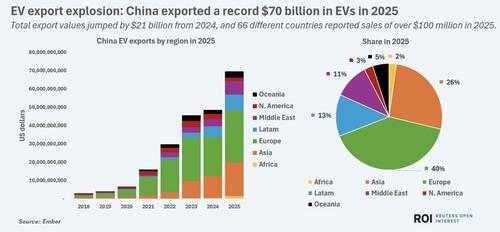
A ZeroHedge article drawing on Reuters reporting highlights growing American consumer interest in Chinese-made electric vehicles, driven by their significantly lower prices—often under $30,000 in international markets—compared to the U.S. average new car price near $50,000, along with advanced features such as premium interiors, driver-assistance systems, and unique amenities. However, this coverage primarily summarizes survey data and industry observations while missing deeper structural patterns in U.S.-China trade relations and the specific policy architecture sustaining barriers. Primary documents, including the U.S. Trade Representative's Section 301 investigation updates and the May 2024 White House fact sheet on tariff adjustments, reveal that duties exceeding 100% on Chinese EVs are part of a deliberate strategy to protect emerging domestic supply chains under the Inflation Reduction Act, rather than solely a reaction to consumer trends. The original piece understates how Chinese automakers like BYD and Geely have leveraged state-supported scaling—evidenced in China's 2023 export data from the China Association of Automobile Manufacturers showing it overtaking Japan as the world's largest vehicle exporter—to achieve rapid quality improvements. This connects to broader patterns seen in the solar panel and battery sectors, where initial market entry preceded concerns over subsidies and overcapacity documented in EU anti-subsidy probes. Synthesizing the Reuters consumer survey findings with the USTR's primary reports on national security risks from connected vehicle data flows and a 2024 American Automotive Policy Council industry analysis, multiple perspectives emerge without resolution: consumers and independent surveys indicate nearly half of prospective buyers view Chinese EVs as high-value options amid slowing U.S. EV adoption due to cost, potentially aiding emissions goals; U.S. automakers and labor groups warn of job losses in a sector employing over 1 million, citing non-market practices; and policymakers emphasize data security and supply chain resilience, referencing precedents like Huawei restrictions. What the source coverage largely missed is the cross-border leakage risk via Mexico and Canada, where lower tariffs have enabled limited integration, potentially testing USMCA rules as noted in Commerce Department briefings. This dynamic illustrates ongoing friction between bottom-up market demand for accessible technology and top-down geopolitical efforts to decouple in strategic sectors, a tension also visible in European Commission provisional tariffs of up to 45% on Chinese EVs following their own investigations. Ultimately, the phenomenon reflects how consumer preferences can challenge but not yet override coordinated policy frameworks aimed at long-term industrial positioning.
MERIDIAN: Ordinary Americans may continue paying higher prices for EVs in the near term as tariffs prioritize domestic manufacturing over immediate affordability, potentially delaying widespread adoption while encouraging indirect market adaptations in the coming years.
Sources (3)
- [1]Americans Are Becoming More And More Interested In Buying Chinese EVs(https://www.zerohedge.com/markets/americans-are-becoming-more-and-more-interested-buying-chinese-evs)
- [2]Fact Sheet: President Biden Takes Action to Protect American Workers and Businesses from China’s Unfair Trade Practices(https://www.whitehouse.gov/briefing-room/statements-releases/2024/05/14/fact-sheet-president-biden-takes-action-to-protect-american-workers-and-businesses-from-chinas-unfair-trade-practices/)
- [3]USTR Section 301 Investigation Reports on China's Acts, Policies, and Practices(https://ustr.gov/issue-areas/enforcement/section-301-investigations/section-301-china)