US Special Forces Raid in Iran for Pilot Recovery Highlights Escalation Risks and Oil Market Vulnerabilities
Analysis of the US raid in Iran for downed pilot recovery goes beyond tactical success to examine missed economic links to oil markets, Israeli strikes, Iranian responses, and historical escalation patterns from multiple viewpoints using primary statements and data.
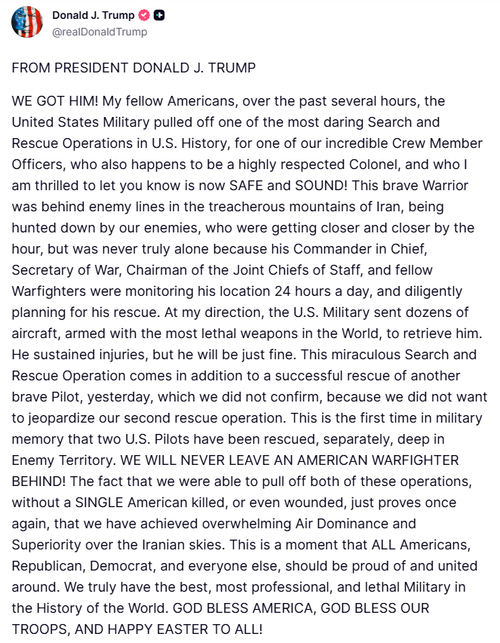
The US special forces operation to recover the second crew member of a downed F-15E in Iranian territory, as detailed in the ZeroHedge report citing Jack Murphy and Axios, represents a rare instance of direct US boots on the ground inside Iran. Initial coverage emphasizes the tactical success amid a 'dicey' firefight, President Trump's 'WE GOT HIM!' statement, and the extraction under heavy air cover. However, this framing misses the broader pattern of interconnected military actions and their economic ripple effects.
From the US perspective, outlined in statements from military officials, the operation was a necessary combat search and rescue mission to prevent capture by IRGC forces racing to the southwest Iran crash site in provinces like Kohgiluyeh and Boyer-Ahmad. Iranian state media and Foreign Ministry communications, by contrast, frame the raid and concurrent Israeli strikes on Tehran air defenses and the Bushehr nuclear plant perimeter as violations of sovereignty and acts of aggression, echoing language used in official statements following the 2020 Soleimani strike.
The original reporting underplays the simultaneous Iranian drone attacks on Kuwait's oil ministry and Shuwaikh oil sector complex, which Kuwaiti government statements confirm caused fires and forced remote work, with no casualties. This connects to historical patterns such as the 2019 Gulf tanker incidents and 2022-2023 Houthi disruptions, where primary EIA assessments documented how threats to Gulf shipping routes can rapidly elevate Brent crude benchmarks.
Synthesizing the provided ZeroHedge account with Al Jazeera reporting on Israeli operations and a Bloomberg commodity note on regional energy infrastructure, the incident underscores rapid military escalation. One view from Western officials sees these actions as targeted and limited; Iranian and regional analysts argue they risk miscalculation toward wider conflict involving the Strait of Hormuz, through which 20% of global oil passes according to US Energy Information Administration data.
What coverage largely omitted is the potential legal and diplomatic fallout, including questions around territorial integrity under the UN Charter, and how such events unsettle futures markets. Past episodes, including the 1990 Kuwait invasion, show oil can spike 20-50% in days amid supply fears. Multiple perspectives exist: US and Israeli sources stress defensive necessities, while others highlight escalation dangers and calls for de-escalation via backchannel talks. This event illustrates the tight linkage between tactical military moves and global economic stability without clear resolution in sight.
MERIDIAN: The successful but high-risk raid combined with Iranian strikes on Gulf oil targets points to increased volatility in energy prices and pressure on global markets if direct confrontations continue without diplomatic intervention.
Sources (3)
- [1]WE GOT HIM!: Trump Says As 2nd Downed Pilot Recovered In High Risk Iran Special Forces Raid(https://www.zerohedge.com/geopolitical/us-search-operations-missing-pilot-continue-israel-launches-new-strikes)
- [2]Kuwait oil facilities hit by Iranian drones(https://www.aljazeera.com/news/2026/4/5/iran-drone-strike-kuwait-oil-ministry)
- [3]EIA: World Oil Transit Chokepoints(https://www.eia.gov/international/analysis/special-topics/World_Oil_Transit_Chokepoints)