Houthis Escalate with Ballistic Missile and Drone Strikes on Southern Saudi Energy and Military Sites, Wounding 73
Corroborated reports confirm Houthi missile/drone attacks on Saudi southern sites wounding 73 and disrupting energy ops, amid Yemen escalation and wider regional war; multiple mainstream sources align on details and retaliation cycle.
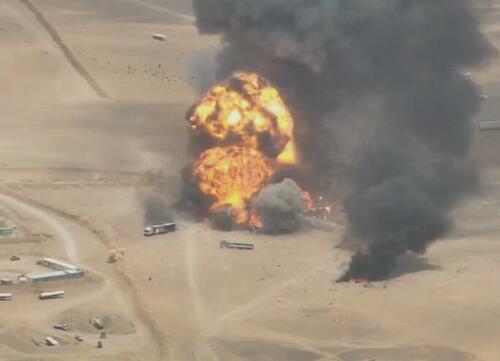
On September 8, 2026, Yemen's Iran-backed Houthi movement launched a large-scale operation using dozens of ballistic missiles and drones targeting Saudi Aramco facilities in Abha, Najran, and Jizan, as well as King Khalid Air Base in Khamis Mushait and other sites in the southern provinces. Saudi authorities reported fires at multiple energy installations leading to temporary operational halts, with the Energy Ministry confirming damage and injuries. The Saudi-led coalition stated that 73 civilians, including women and children, were wounded across Abha, Khamis Mushait, Jizan, and Najran.[1][2]
Houthi military spokesperson Yahya Saree framed the strikes as retaliation for recent Saudi airstrikes on Yemeni provinces including Al-Jawf, Al-Bayda, Ma'rib, Taiz, and Al-Hudaydah, vowing further escalation. Saudi coalition spokesman Maj. Gen. Turki Al-Maliki condemned the attacks as 'dangerous' and announced plans for operational responses. NASA satellite imagery reportedly showed smoke plumes over affected sites like the Jazan refinery.[3][4]
The clashes coincide with intensified ground fighting in Yemen, where Saudi-backed forces have launched counteroffensives amid a shattered truce. Broader context ties into the ongoing US-Israel-Iran conflict, with these attacks representing one of the heaviest Houthi operations against Saudi territory since February 2026. Oil markets reacted with Brent crude approaching $100 per barrel amid supply concerns.[5]
Deeper analysis reveals connections beyond immediate border skirmishes: repeated targeting of southern energy infrastructure highlights vulnerabilities in Saudi diversification efforts and Red Sea logistics, potentially amplifying global energy price volatility that ripples into transportation costs, industrial operations, and regional defense budgeting. Fear-inducing alerts about such strikes could indirectly heighten public anxiety around commuting and employment stability in energy-dependent sectors, while spurring accelerated investments in missile defense and alternative supply routes.
Geopolitical Risk Analyst: Renewed Houthi strikes on Saudi energy hubs signal sustained supply-chain pressures that could elevate fuel costs and defense expenditures, indirectly pressuring regional economies and daily logistics while accelerating shifts toward bypass infrastructure and air-defense upgrades.
Sources (5)
- [1]Iran-backed Houthis attack four Saudi cities in expansion of Middle East war, 73 hurt(https://www.reuters.com/world/middle-east/iran-says-it-plans-new-gulf-exclusion-zone-threatens-us-with-new-missiles-2026-09-08/)
- [2]Saudi Arabia says 73 wounded as Houthis attack civilian and energy sites(https://www.aljazeera.com/news/2026/9/8/houthi-attacks-on-saudi-arabia-have-wounded-73-civilians-official-says)
- [3]Houthi attacks on Saudi Arabia target oil facilities and wound 73 people(https://www.npr.org/2026/09/08/g-s1-142296/houthi-attacks-saudi-arabia)
- [4]Houthis strike Saudi Arabian cities in significant expansion of Middle East war(https://www.theguardian.com/world/2026/sep/08/houthi-strike-saudi-arabia-oil-facilities-middle-east-war-iran)
- [5]Saudi Arabia Halts Energy Facilities After Attacks Near Yemen Border(https://www.bloomberg.com/news/articles/2026-09-08/saudi-arabia-says-several-energy-sites-halted-after-attacks)