Trump says he would work with Democrats to cap credit card rates at 10%
Trump told Fox News he would work with Democrats on a one-year 10% credit card rate cap, aligning with Warren and a stalled Sanders-Hawley bill as card balances hit a record $1.29 trillion. The cap is not law; banks and some Republicans warn it could cut off credit.
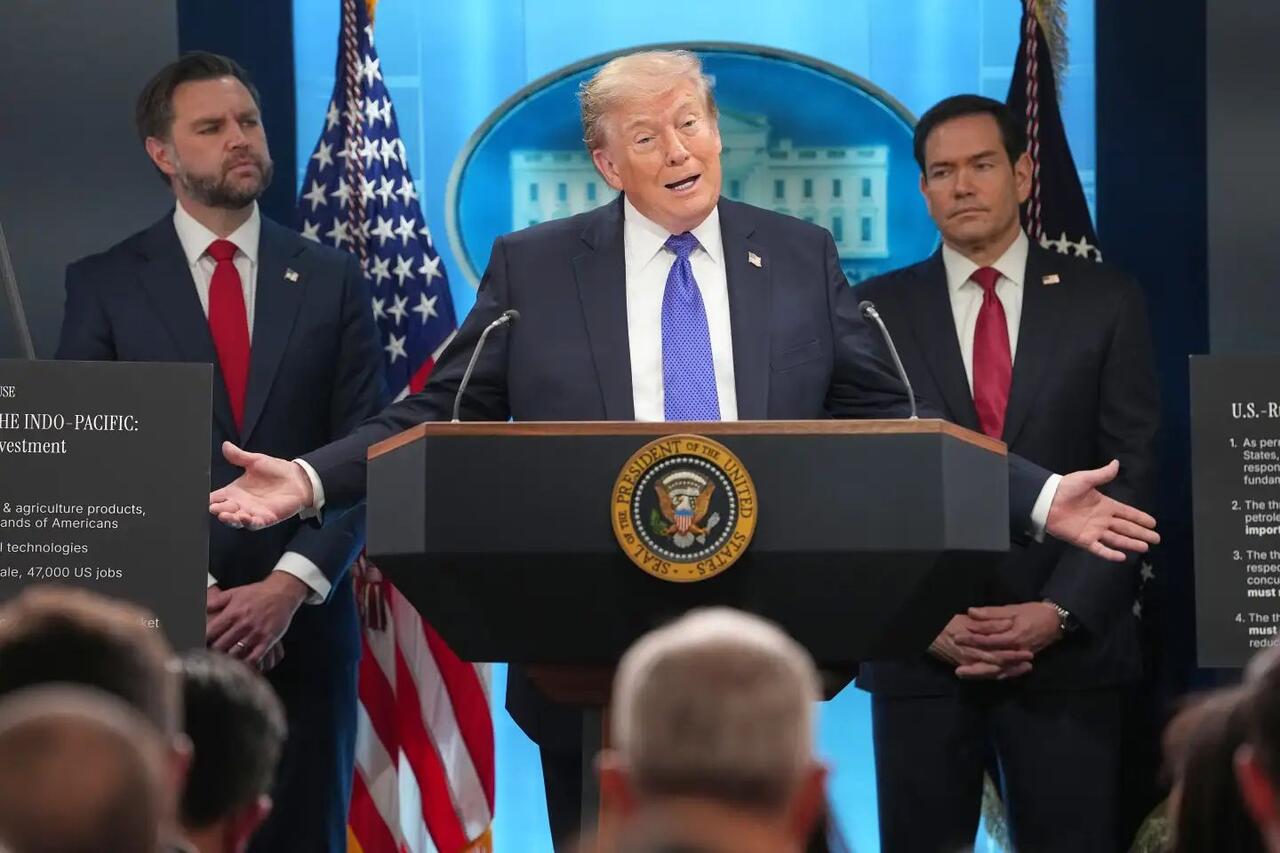
Documented: On Saturday, Nov. 21, 2026, President Donald Trump told Fox News host Kayleigh McEnany on Saturday in America that he would work with Democrats on a one-year, 10% cap on credit card interest rates. Asked whether that was a place he could work with Democrats, he answered that it was, then said he would do it, that credit card companies have made a lot, and that he was “all into it” on the fees they charge. He waved off free-market objections by asking what free enterprise means when a household gets a bill set by someone in a Park Avenue office, called himself a “common-sense person” rather than defining himself as a conservative, and closed by saying the companies are “getting too much,” with fees and interest too high. Fox Business, Newsweek, The Hill, the Los Angeles Times, and the Associated Press all reported the interview.
The alignment is not new, and it is not only Trump’s. Documented: On Nov. 8, 2026, on CBS’s Face the Nation, Sen. Elizabeth Warren said Trump himself had said he wants credit card rates reduced to 10%, that she had the bill, and that she was ready to go. News outlets described her as in line to chair the Senate Banking Committee after Democrats take control of Congress in January. Sen. Josh Hawley responded to Trump’s Saturday remarks by urging passage of his bill to cap credit card interest. In February 2025, Hawley and Sen. Bernie Sanders introduced legislation to cap card rates at 10% for five years, with a House companion from Reps. Alexandria Ocasio-Cortez and Anna Paulina Luna. That Senate bill has sat without recorded action and dies when this Congress ends.
Documented history of the same idea: On Jan. 9, 2026, Trump posted that, effective Jan. 20, 2026, he was calling for a one-year 10% cap, arguing Americans were being “ripped off” at rates of 20% to 30% and higher. The Associated Press reported that banks balked, that similar legislation already existed, and that researchers who studied the campaign pledge estimated roughly $100 billion a year in interest savings if rates were capped at 10%—an estimate, not a measured result. CBS News reported that Jan. 20 passed without issuers broadly cutting rates, and that experts said a binding cap would require Congress, not a social-media demand. Warren’s earlier reaction to the voluntary ask was that begging card companies to play nice was a joke. Republican leaders, including Senate Majority Leader John Thune, had cooled on the idea while their party held Congress; Newsweek reported GOP concerns about cutting off credit.
The household numbers behind the politics are also documented, and they do not depend on whether a cap becomes law. The Federal Reserve Bank of New York reported on Nov. 10, 2026, that credit card balances rose $22 billion in the third quarter to $1.29 trillion ($1.285 trillion in the detailed table), up $52 billion from a year earlier, while total household debt reached $19.1 trillion. News outlets citing Bankrate put average card rates near 19.7% in early November 2026; other reports put rates on accounts that revolve or on new offers well above 20%. Axios noted that serious delinquency on cards has eased nationally but remains concentrated in lower-income neighborhoods.
Claimed, not enacted: Trump’s willingness to sign, Warren’s readiness, and Hawley’s bill are political positions. No 10% cap is law. The one-year window Trump described and the five-year Sanders-Hawley sunset are different designs. Industry groups and some Republicans claim a hard cap would shrink credit for riskier borrowers and thin rewards; that is a prediction, not a result of this interview. Speculated: that Democratic control plus Trump’s signature makes passage likely. That is a legislative forecast. What is on the record is narrower and sharper: a Republican president is again offering to join the Democrats who have long wanted a price control his own party’s leaders declined to move, on a product millions of households use at rates more than double the number he named, while revolving balances sit at a nominal record.
Households that carry credit card balances are paying rates well above the 10% figure Trump and some lawmakers in both parties say they want capped, while New York Fed data put card balances at a record $1.29 trillion. No cap is in effect, so bills and access to cards are unchanged until Congress acts.
Sources (7)
- [1]Trump signals support for 10% credit card interest rate cap with Democrats(https://www.foxbusiness.com/politics/trump-opens-door-bipartisan-deal-credit-card-rates-americans-face-record-debt)
- [2]Trump Open to Working With Democrats on Credit Card Cap After Warren Offer(https://www.newsweek.com/trump-democrats-credit-card-interest-cap-warren-12751966)
- [3]Trump seeks bipartisan support for 10% credit card interest rate cap(https://thehill.com/business/6235394-trump-calls-credit-card-cap/)
- [4]Trump says he'll work with Democrats to cap credit card interest rates(https://www.latimes.com/world-nation/story/2026-11-21/trump-says-hell-work-with-democrats-to-cap-credit-card-interest-rates)
- [5]Trump pushes a 1-year, 10% cap on credit card interest rates and banks balk(https://apnews.com/article/trump-credit-cards-interest-rates-savings-banks-dba221f122789427c1c625ba873c9b71)
- [6]Household Debt and Credit Report, Q3 2026(https://www.newyorkfed.org/newsevents/news/research/2026/20261110)
- [7]Credit card debt climbs to a record $1.29 trillion(https://www.cnbc.com/2026/11/10/credit-card-debt-record.html)