Screwworm Resurgence Reveals Deepening U.S. Agricultural Biosecurity Vulnerabilities
Multiple confirmed New World screwworm cases in Texas and New Mexico highlight an urgent agricultural biosecurity threat. USDA is scaling sterile fly releases for eradication, but the pest's spread amid record-low cattle herds risks livestock losses, higher costs, trade barriers, and upward pressure on beef supplies and prices.
The detection of New World screwworm (NWS) in Texas and its leap into New Mexico represents more than isolated livestock incidents—it signals systemic risks in U.S. agricultural biosecurity at a moment when the nation's cattle herd is historically depleted. USDA's Animal and Plant Health Inspection Service (APHIS) has now confirmed at least five cases since early June 2026: initial detections in calves in South Texas's Zavala County, followed by additional cases in La Salle County (calf), Gillespie County (goat), Andrews County (dog), and the first New Mexico case in a Lea County dog with no reported travel history to known infected areas. The parasite's larvae feed exclusively on living flesh, creating painful, expanding wounds that can prove fatal to livestock, pets, and wildlife if untreated.
This marks the most significant U.S. foothold since NWS was declared eradicated from the country in 1966 through a pioneering sterile insect technique (SIT) program that released hundreds of millions of sterilized flies weekly to outcompete fertile populations. A limited 2016-2017 outbreak in Florida Keys was also contained with the same method. However, the fly has advanced steadily northward through Central America, reaching southern Mexico by late 2024, setting the stage for these incursions.
USDA has responded aggressively, establishing unified incident command, expanding sterile fly production toward 500 million per week, launching dispersal operations from a new South Texas facility, imposing quarantines, enhancing surveillance and trapping, and restricting animal movements. Officials are also investigating surrounding properties in New Mexico and testing suspected cases nationwide. As one entomologist noted in related reporting, heightened vigilance after initial finds naturally surfaces additional detections that may not indicate uncontrolled spread. Yet the involvement of non-livestock species like dogs raises questions about wider environmental establishment.
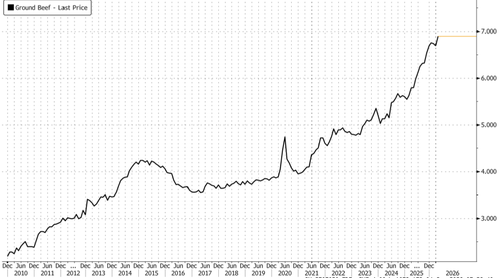
The timing amplifies concern. With U.S. cattle inventories near 75-year lows, record-high beef prices, and an industry still navigating supply constraints, even modest NWS proliferation could trigger culling, treatment costs, export disruptions (Mexico and Canada have already moved to restrict livestock and pet imports), and broader food-supply ripple effects. Historically, before eradication, screwworm inflicted massive economic damage across the livestock sector. Today's interconnected supply chains, combined with the pest's potential to affect wildlife reservoirs, make containment more complex than in the 1960s. Federal partners including CDC and FDA are coordinating on surveillance, public messaging, and potential pharmaceutical interventions, while urging ranchers and pet owners to inspect for suspicious wounds and report immediately.
This episode, rarely examined outside commodity and veterinary circles, exposes how biosecurity gaps—whether from climate-influenced migration, trade pathways, or under-resourced monitoring—can cascade into national food security challenges. Successful eradication remains the stated goal, but sustained multi-agency effort and producer cooperation will determine whether this remains a containable incursion or a harbinger of recurring threats to American agriculture.
Biosecurity Analyst: If eradication via expanded sterile fly releases succeeds quickly, impact may be limited; however, wider establishment could compound cattle herd shortages, sustain elevated beef prices, and expose ongoing weaknesses in North American pest defense systems.
Sources (6)
- [1]USDA Confirms Two Additional Cases of New World Screwworm in the United States(https://www.aphis.usda.gov/news/agency-announcements/usda-confirms-two-additional-cases-new-world-screwworm-united-states)
- [2]USDA Confirms New World Screwworm in Texas(https://www.aphis.usda.gov/news/agency-announcements/usda-confirms-presence-new-world-screwworm-united-states)
- [3]USDA confirms first screwworm case in New Mexico, 2 more in Texas(https://www.usatoday.com/story/news/nation/2026/06/08/usda-new-world-screwworm-fly-texas-outbreak/90457206007/)
- [4]Flesh-eating New World screwworm detected in Texas calf, USDA says(https://www.cnn.com/2026/06/03/health/new-world-screwworm-case-texas)
- [5]New World Screwworm Outbreak(https://www.cdc.gov/new-world-screwworm/situation-summary/index.html)
- [6]Additional screwworm cases confirmed in Texas livestock, New Mexico dog(https://www.avma.org/news/additional-screwworm-cases-confirmed-texas-livestock-new-mexico-dog)