Trump's Witkoff Backchannel: Unconventional Diplomacy, Hormuz Paralysis, and the Hidden US Pivot Reshaping Global Energy and Alliances
Synthesizing reports on US-Iran talks in Pakistan led by Steve Witkoff amid a US blockade and near-total freeze of Hormuz tanker traffic, this analysis reveals an unconventional diplomatic pivot that prioritizes transactional dealmaking to reshape energy security, elevate Pakistan's role, and reposition the US in great-power competition beyond conventional military narratives.
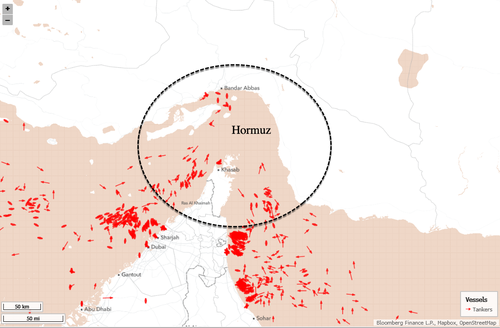
As tanker traffic through the Strait of Hormuz has ground to a near standstill with vessels making U-turns and Iranian gunboats firing on ships, President Trump has dispatched real estate developer and special envoy Steve Witkoff to Islamabad, Pakistan, for direct negotiations with Iranian officials. This move, confirmed across multiple outlets, comes amid a US naval blockade of Iranian ports, renewed Iranian threats to further restrict key waterways, and Trump's explicit warnings of striking every power plant and bridge in Iran if no deal materializes. Mainstream coverage frames this as crisis management following a brief US-Iran war and fragile ceasefire, but deeper analysis reveals a hard strategic pivot: the replacement of traditional State Department diplomacy with a transactional, real-estate-style team including Witkoff, Jared Kushner, and Vice President JD Vance signals Washington's willingness to treat great-power energy politics as a high-stakes deal rather than ideological confrontation.
Reuters reporting details how US and Iranian negotiators held their highest-level talks in decades in Pakistan, with the Strait of Hormuz as a central sticking point. Shipping data cited by CNBC and Al Jazeera shows traffic collapsed by over 95% from pre-conflict levels, with insurance costs spiking and few vessels risking passage despite the ceasefire. BBC coverage highlights the US blockade's implementation and Iranian claims of violations, while noting Pakistan's mediation role alongside indirect Chinese influence. This is not merely about reopening oil flows—roughly 20% of global seaborne petroleum transits Hormuz—but a test of who controls critical maritime chokepoints in an era of intensifying US-China competition.
The choice of Witkoff, alongside Kushner, has drawn sharp criticism from diplomatic veterans. A Time magazine report quotes former negotiators giving the duo an "F in diplomacy" for lacking expertise, warning it risks prolonging instability. Yet this unconventional approach may be the feature, not a bug: it allows Trump to pursue off-ramps that bypass bureaucratic norms, potentially linking an Iran nuclear framework to broader economic realignments, including increased US LNG exports to replace disrupted Middle East supplies. Axios notes the team continues exchanging draft proposals even after initial setbacks, suggesting persistent backchannel efforts.
Connections missed by headline-focused coverage include Pakistan's elevated role as mediator. Sources like The Express Tribune detail Trump's thanks to Pakistani leadership for hosting, which could pull Islamabad further from Beijing's orbit while complicating China's Belt and Road investments in Iranian ports. A New York Times opinion piece contextualizes the failure of prior Kushner-Witkoff efforts as contributing to escalation, yet the current talks amid blockade suggest a US recognition that prolonged conflict would accelerate de-dollarization trends and empower a Russia-China-Iran axis. Wikipedia's summary of the 2025-2026 negotiations timeline shows these Pakistan talks build on earlier Oman rounds, indicating layered diplomacy designed to manage escalation while testing new power balances.
The Polymarket odds cited in initial reporting (around 28% for traffic normalization by month's end) reflect genuine uncertainty. If the Witkoff channel yields a transactional framework—perhaps sanctions relief tied to security guarantees and energy transit rules—it could reshape not just Gulf flows but global alignment: Europe and Asia forced to diversify away from Iranian and Gulf supplies, US energy exports gaining market share, and traditional alliances recalibrated around transactional leverage rather than permanent bases or carrier groups. Trump's "No More Mr. Nice Guy" rhetoric masks a pragmatic acceptance of multipolarity, using the Hormuz crisis to force concessions that mainstream outlets attribute solely to military pressure. This pivot risks miscalculation, as noted in diplomatic critiques, but also opens pathways for realignments traditional diplomacy has failed to deliver.
LIMINAL: Trump's use of Witkoff and Kushner in Pakistan backchannels accepts multipolar limits, potentially accelerating US LNG dominance and Pakistan-mediated realignments that weaken Iran-China ties while exposing vulnerabilities in global chokepoint control.
Sources (8)
- [1]US-Iran negotiations underway, Trump says Strait of Hormuz being cleared(https://www.reuters.com/world/iran/)
- [2]Strait of Hormuz traffic barely affected on first day of US blockade, data shows(https://www.reuters.com/business/energy/us-sanctioned-chinese-tanker-passes-strait-hormuz-despite-us-blockade-data-shows-2026-04-14/)
- [3]Watch: US blockade of Iranian ports explained in two minutes(https://www.bbc.com/news/videos/cd9vg5vggvqo)
- [4]U.S. and Iran inch toward framework deal to end war, U.S. officials say(https://www.axios.com/2026/04/15/iran-war-negotiations-deal-pakistan)
- [5]“It's Not Working”: Diplomats Fear Trump's Iran Envoys Are Out of Their Depth(https://time.com/article/2026/04/15/diplomats-fear-trump-iran-envoys-kushner-witkoff-nuclear/)
- [6]Opinion | How Trump's 'Dealmakers in Peace' Failed in Iran(https://www.nytimes.com/2026/04/13/opinion/iranwar-kushner-witkoff-failures.html)
- [7]Here's the latest tanker traffic in Strait of Hormuz(https://www.cnbc.com/2026/04/16/iran-oil-tanker-traffic-strait-hormuz.html)
- [8]2025–2026 Iran–United States negotiations(https://en.wikipedia.org/wiki/2025%E2%80%932026_Iran%E2%80%93United_States_negotiations)