Google's Landmark Nuclear Deal with Constellation Signals Big Tech's Shift to Firm Clean Power Amid Grid Constraints
Google's 3.59 GW deal with Constellation, including 890 MW new nuclear via uprates, exemplifies Big Tech securing firm clean power in response to PJM grid rules and AI demand, with ripple effects for sustainability strategies across the sector.
On October 6, 2026, Google (Alphabet) announced a massive energy agreement with Constellation Energy, securing 3,590 MW of power in the PJM Interconnection grid—the largest U.S. regional transmission organization. The deal includes a 20-year power purchase agreement (PPA) for 890 MW of new nuclear capacity through uprates at 11 existing reactors across Illinois, Pennsylvania, and New Jersey, backed by over $4.3 billion in Constellation investments. The first upgraded units are slated to deliver power starting in 2028. An additional 15-year supply agreement covers 2,700 MW from Constellation's broader PJM fleet, providing revenue certainty without tying it to specific generation sources.[1][2]
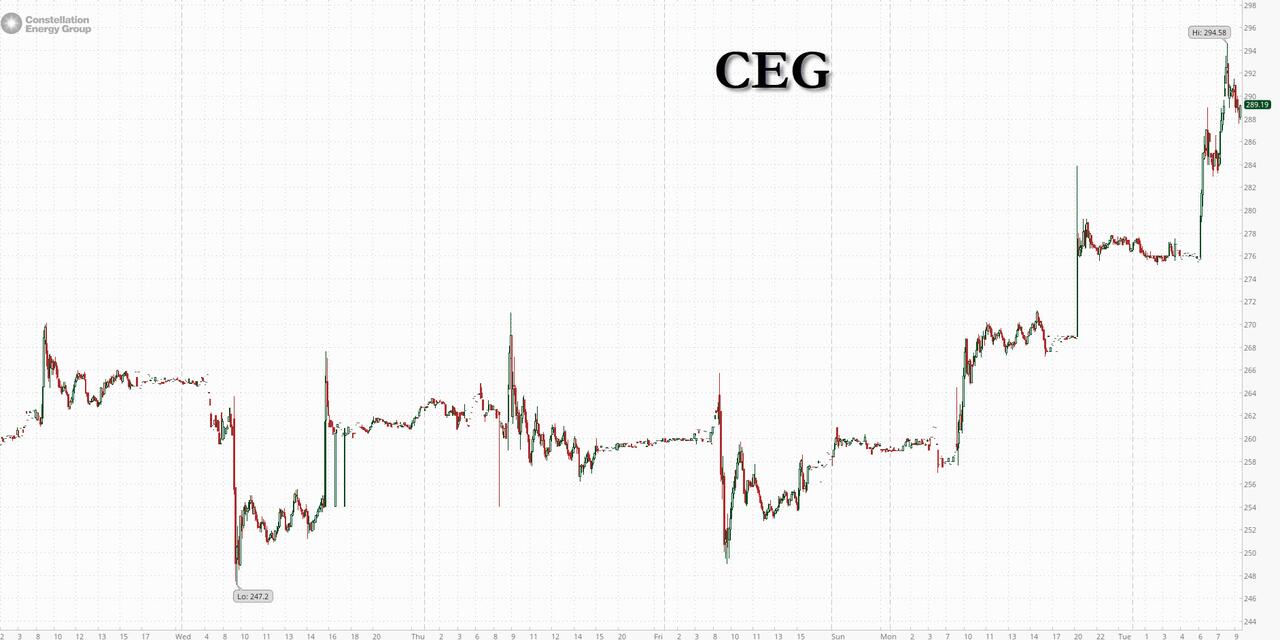
This transaction directly responds to PJM's proposed "bring your own power" policy, which aims to prevent data center load growth from burdening ratepayers by requiring hyperscalers to secure dedicated capacity or face potential curtailment during peaks. PJM faces a projected shortfall of about 6.8 GW amid surging AI-driven demand. The nuclear uprates—equivalent to adding the output of three or more small modular reactors—will expand grid capacity while sustaining roughly 4,400 jobs and creating about 7,200 temporary construction roles. Constellation shares surged up to 14-15% on the news.[2][3]
The move builds on Google's prior nuclear commitments, including funding the Duane Arnold restart and Southern Company plant upgrades, bringing its total enabled new nuclear capacity above 1.5 GW. It follows closely on Amazon's recent 690 MW nuclear PPA with Constellation and aligns with similar deals by Microsoft and Meta. Beyond power, the partnership includes a five-year technology alliance deploying Google Cloud and Gemini Enterprise AI for plant optimization, site selection, and grid modeling. Google's official statement emphasizes responsible growth: investing in clean, reliable power that adds new capacity "at no cost to other ratepayers."[4][5]
Broader context reveals a pattern: Big Tech is increasingly underwriting nuclear uprates and restarts as the most cost-effective, carbon-free baseload option to match 24/7 data center loads, outpacing intermittent renewables in reliability for hyperscale needs. This could accelerate industry-wide adoption, influencing utilities and policy toward prioritizing existing nuclear assets over new builds alone.
Big Tech: Nuclear uprates and PPAs become the default for hyperscale power procurement by 2028, pressuring grids like PJM to formalize 'bring your own power' rules industry-wide.
Sources (5)
- [1]Google enters massive 3.6-GW power deal with Constellation Energy(https://www.reuters.com/business/energy/google-enters-massive-36-gw-power-deal-with-constellation-energy-2026-10-06/)
- [2]Constellation, Google strike 890-MW nuclear deal in PJM(https://www.utilitydive.com/news/constellation-google-deal-will-bring-890-mw-of-new-nuclear-to-pjm/832223/)
- [3]Why we're backing America's existing nuclear plants(https://blog.google/company-news/why-were-backing-americas-existing-nuclear-plants/)
- [4]Google, Constellation Energy Strike Deal for Nuclear Power(https://www.bloomberg.com/news/articles/2026-10-06/google-constellation-near-billion-dollar-deal-for-nuclear-power)
- [5]Google and Oracle deals support long-term US plant operations(https://www.world-nuclear-news.org/articles/new-end-user-agreements-support-long-term-us-plant-operations)