Feedback Loops in Asset Markets: Mechanical Momentum, Policy Backstops, and Geopolitical Transmission Channels
Examination of self-reinforcing market mechanics, their under-analyzed ties to fiscal-monetary policy and geopolitical developments, synthesizing primary stability reports while presenting bullish, contrarian, and regulatory perspectives on systemic risks.
Recent price action in U.S. equities, particularly the NASDAQ's 13-day winning streak—the longest since July 2009—has recouped all losses from the brief Iran-related war scare and pushed indices to fresh highs. The submitted ZeroHedge analysis by QTR's Fringe Finance correctly diagnoses this as a mechanical feedback loop driven by call buying that forces dealer gamma hedging, short squeezes, and trend-following CTA strategies rather than any fundamental resolution of outstanding risks. However, the piece underplays the deeper policy architecture enabling these loops and their intersection with geopolitical fault lines, connections frequently absent from mainstream bullish commentary that attributes gains solely to AI-driven productivity narratives.
Primary documents reveal structural vulnerabilities. The Federal Reserve's Financial Stability Report (May 2024) notes that elevated asset valuations sit alongside high levels of nonfinancial corporate leverage and fragile funding structures in open-end funds—precisely the conditions that amplify procyclical flows. Similarly, Chapter III of the BIS Annual Economic Report 2023 examines how automated trading rules and derivative positioning can generate self-reinforcing price moves that detach from cash-flow realities, a pattern visible in both the 2020 COVID liquidity shock and the 2022 inflation-driven drawdown. The IMF's Global Financial Stability Report (April 2024) synthesizes these concerns, documenting narrow market breadth where seven technology firms account for most S&P 500 gains, warning of abrupt repricing should liquidity conditions tighten.
What the original coverage misses is the fiscal-geopolitical feedback layer. Sustained deficit spending tied to military aid packages for Ukraine and Israel (documented in U.S. Treasury quarterly refunding announcements, Q2 2024) continues to inject liquidity that finds its way into risk assets. This occurs against a backdrop of unresolved Red Sea shipping disruptions and potential energy price volatility from Middle East escalation—factors that could shift inflation trajectories and force reinterpretation of Federal Reserve rate cuts from 'supportive' to 'recessionary,' exactly the scenario the ZeroHedge piece flags but does not fully connect to primary FOMC minutes from March 2024, where participants explicitly discussed risks of financial conditions easing prematurely.
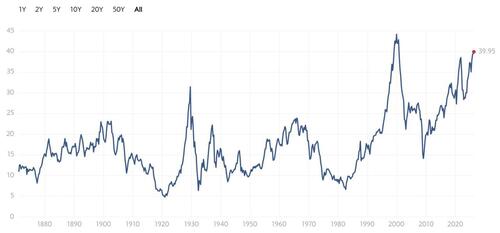
Multiple perspectives exist on interpretation. Bullish market participants and certain administration officials argue that artificial intelligence capital expenditure cycles represent a genuine paradigm shift justifying forward P/E ratios near 40 on the Shiller metric, claiming historical analogies to prior bubbles fail because 'this time' earnings growth is tangible and monetary authorities have perfected soft-landing mechanics. Contrarian analysts counter that these mechanical loops—dealer hedging, momentum algorithms, and passive ETF inflows—create precisely the instability BIS reports have flagged for years, producing unsustainable asset inflation that misallocates capital toward speculative sectors while leaving the broader economy exposed once sentiment flips. Regulatory bodies occupy a middle ground: they acknowledge improved bank resilience since 2008 yet repeatedly highlight non-bank intermediation channels as potential amplifiers of future stress.
The contrarian insight often missing from mainstream narratives is that these loops do not require a classic 'black swan' to unwind; modest deviations from perfection—slightly softer earnings, a hawkish reinterpretation of Fed easing, or renewed geopolitical supply shock—can suffice. Historical patterns from the 1987 portfolio insurance episode to the 1999-2000 NASDAQ peak demonstrate that momentum-driven rallies offer limited warning and compressed exit liquidity. Policymakers thus face a recurring dilemma: intervening to stabilize markets during unwind phases risks entrenching moral hazard that fuels the next loop. Viewed through primary sources rather than secondary punditry, current conditions reflect not resolved optimism but a fragile equilibrium where geopolitical contingencies could rapidly transmit into systemic financial stress.
MERIDIAN: Current momentum loops detached from fundamentals may persist until a geopolitical or policy deviation triggers rapid unwinding; primary stability reports suggest transmission channels to broader liquidity stress remain open despite regulatory upgrades.
Sources (4)
- [1]An Overheating Feedback Loop(https://www.zerohedge.com/markets/overheating-feedback-loop)
- [2]Federal Reserve Financial Stability Report - May 2024(https://www.federalreserve.gov/publications/financial-stability-report.htm)
- [3]BIS Annual Economic Report 2023(https://www.bis.org/publ/arpdf/ar2023e.htm)
- [4]IMF Global Financial Stability Report - April 2024(https://www.imf.org/en/Publications/GFSR/Issues/2024/04/16/global-financial-stability-report-april-2024)