Orbital Data Centers: SpaceX and Google Push Tech Frontiers Amid Earthbound Constraints
SpaceX and Google’s pursuit of orbital data centers, driven by terrestrial constraints like power shortages and local opposition, signals a transformative shift in tech infrastructure. Beyond investment potential, this move raises unaddressed geopolitical, regulatory, and environmental concerns, from data sovereignty in space to rocket emission impacts, reflecting broader patterns of innovation outpacing governance.
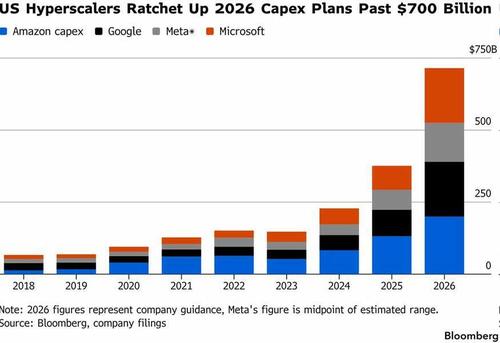
The race to establish orbital data centers, as reported by ZeroHedge citing The Wall Street Journal, marks a pivotal shift in technology infrastructure, with SpaceX and Google at the forefront. This development, driven by Google's Project Suncatcher and SpaceX's Starship launch capabilities, aims to bypass terrestrial constraints—power shortages, zoning disputes, and community opposition—by leveraging space for compute power. Google CEO Sundar Pichai's vision of orbital data centers as 'normal' within a decade underscores a long-term bet on space as the next frontier for hyperscalers facing a projected $700 billion in AI infrastructure investments this year. However, the original coverage misses critical geopolitical and regulatory dimensions, as well as the broader implications for global data equity and security.
On Earth, nearly half of the planned 16-gigawatt data center capacity in the U.S. for 2026 faces delays or cancellations due to logistical friction, as noted by Canaccord Genuity and Sightline Climate. Local resistance, exemplified by community pushback in places like Loudoun County, Virginia—often dubbed 'Data Center Alley'—highlights a growing tension between tech expansion and societal impact. Space offers a workaround: no zoning boards, unlimited solar energy, and zero community protests. Yet, this pivot raises unaddressed questions about jurisdiction, data sovereignty, and cybersecurity in orbit. Who governs data in space? Existing frameworks like the 1967 Outer Space Treaty, which designates space as the 'province of all mankind,' offer little clarity on commercial data operations, potentially inviting disputes among nations vying for digital dominance.
Moreover, the ZeroHedge piece overlooks the strategic implications of orbital data centers in the context of U.S.-China tech rivalry. As the U.S. seeks to secure AI and cloud computing leadership, orbital infrastructure could become a new battleground. China’s own space ambitions, including the Tiangong space station and plans for lunar bases by 2030, suggest parallel efforts to dominate space-based compute might emerge, echoing Cold War-era space races but with digital stakes. A 2023 report from the U.S. Department of Defense on space policy already flags adversary capabilities in orbital domains as a national security concern, hinting at future militarization risks the original story ignores.
Another underexplored angle is the environmental paradox. While orbital centers promise reduced terrestrial energy consumption—Starcloud claims a potential 10x cost reduction via solar power—the environmental cost of frequent rocket launches remains unaddressed. A 2022 study by the National Oceanic and Atmospheric Administration (NOAA) warns that rocket emissions, particularly from SpaceX’s Starship, could deplete stratospheric ozone at scale, presenting a trade-off between Earth’s grid strain and atmospheric health that tech advocates have yet to confront publicly.
Synthesizing these perspectives, the push for orbital data centers is not just a tech innovation but a geopolitical chess move, a regulatory blind spot, and an environmental gamble. It reflects a pattern seen in past tech booms—think undersea cables in the 19th century or cloud computing in the 2000s—where infrastructure outpaces governance, often with unintended global ripple effects. The SpaceX-Google partnership, if successful, could redefine data markets by 2030, but it also risks exacerbating digital divides if access remains the purview of a few corporate giants. Will small nations or emerging economies afford orbital compute, or will this widen the tech gap? The original coverage, focused on investment hype and terrestrial pushback, misses these systemic stakes.
MERIDIAN: Orbital data centers could reshape global tech dominance by 2030, but unresolved governance and environmental risks may spark international disputes or public backlash, slowing adoption.
Sources (3)
- [1]SpaceX, Google Eye Orbital Data Centers As Small-Town Resistance Grows(https://www.zerohedge.com/technology/spacex-google-eye-orbital-data-centers-small-town-resistance-grows)
- [2]Treaty on Principles Governing the Activities of States in the Exploration and Use of Outer Space, including the Moon and Other Celestial Bodies(https://www.unoosa.org/oosa/en/ourwork/spacelaw/treaties/outerspacetreaty.html)
- [3]Rocket Emissions and Stratospheric Ozone Depletion - NOAA Study 2022(https://www.noaa.gov/news-release/rocket-emissions-could-impact-earths-atmosphere)