Qatar Helium Crisis Exposes Supply Vulnerabilities as ASP Isotopes Accelerates High-Yield South African Alternative
Amid Iranian strikes disrupting one-third of global helium from Qatar's Ras Laffan facility, ASP Isotopes' accelerated Virginia Gas Project in South Africa—with its unusually rich helium concentrations, rapid drilling progress, US DFC backing, and isotope enrichment capabilities—offers a strategically significant, geopolitically stable alternative that could mitigate risks to semiconductors, healthcare, and quantum tech while illustrating weaponization of Middle East resources.
Recent escalations in the Middle East have triggered a major disruption to global helium supplies, with Iranian strikes on Qatar's Ras Laffan Industrial City halting operations at a facility responsible for roughly one-third of worldwide production. Multiple outlets including CNBC and AP News have detailed how drone and missile attacks in March 2026 forced QatarEnergy to declare force majeure, causing extensive damage that could take years to repair and immediately removing a critical source of helium used in semiconductor fabrication, MRI machines, aerospace, quantum computing, and medical imaging. Helium has no viable substitutes in many of these applications, particularly for wafer cooling and leak detection in chip manufacturing, raising fears of cascading price spikes and supply chain delays across high-tech and healthcare sectors. This situation underscores a broader pattern of resource weaponization, where control over strategic commodities in the Persian Gulf is increasingly leveraged amid regional conflicts and disruptions to the Strait of Hormuz.
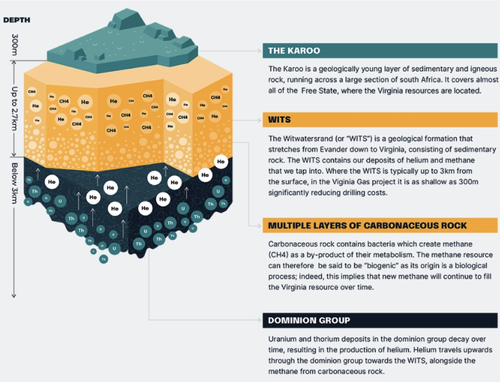
Against this backdrop, ASP Isotopes has emerged as a timely Western-aligned alternative through its acquisition of Renergen and development of the Virginia Gas Project in South Africa's Free State province. Company announcements and coverage from Gasworld confirm that Phase 1 drilling was completed four months ahead of schedule in March 2026, with commercial production targeted for late 2026. The project stands out due to exceptionally high helium concentrations—reportedly more than 10 times the global average and far exceeding Qatar's typical 0.01%—with peaks reportedly reaching several percent. Phase 1 is expected to deliver approximately 58 MCF per day of helium alongside LNG output, scaling dramatically in Phase 2 (targeted around 2030) to 895 MCF per day. At conservative prices, this could generate substantial annual revenues while addressing chronic global undersupply.
The project's location in geopolitically neutral South Africa, combined with backing from the U.S. International Development Finance Corporation, positions it as a diversifying source less susceptible to Middle East volatility. ASP Isotopes' core expertise in isotope enrichment adds a deeper dimension: the company is positioned not only to produce bulk helium but potentially to separate and enrich high-value isotopes such as helium-3, which is critical for neutron detection, advanced cryogenics, quantum sensors, and future fusion research. This integration of upstream gas production with downstream isotopic processing represents a novel vertical play that few other suppliers can match, potentially reshaping economics for industries facing both quantity and purity demands.
As traditional suppliers face geopolitical headwinds, ASP Isotopes' progress highlights shifting critical materials strategies. Success in scaling the Virginia project could stabilize prices, reduce reliance on concentrated Middle Eastern output, and accelerate adoption in semiconductors and medicine. However, execution risks remain in transitioning from drilling to sustained commercial flow. Overall, the convergence points to a reconfiguration of global helium security, where high-concentration, non-aligned deposits gain strategic premium amid escalating resource conflicts.
LIMINAL: ASP Isotopes' South African helium asset, accelerated amid Qatar's conflict-driven outage, could accelerate de-risking of Western tech and medical supply chains from Middle East resource leverage, with isotope tech providing a multiplier effect on strategic value by 2027-2030.
Sources (5)
- [1]ASP Isotopes Completes Well Drilling Required for Phase 1 of Renergen Helium Project Four Months Ahead of Schedule(https://ir.aspisotopes.com/news-events/press-releases/detail/101/asp-isotopes-completes-well-drilling-required-for-phase1)
- [2]The Iran war is threatening supply helium. What it means for markets(https://www.cnbc.com/2026/03/19/the-iran-war-is-threatening-supply-helium-what-it-means-for-markets.html)
- [3]Why the Iran war matters for the world's helium supply(https://apnews.com/article/iran-chips-semiconductor-helium-exports-war-fe934332f7c83bb722ca87db22cd57d0)
- [4]Renergen advances Virginia helium project ahead of schedule(https://www.gasworld.com/story/renergen-advances-virginia-helium-project-ahead-of-schedule/2174865.article/)
- [5]ASP Isotopes completes drilling for helium project ahead of schedule(https://www.investing.com/news/company-news/asp-isotopes-completes-drilling-for-helium-project-ahead-of-schedule-93CH-4574930)