Financializing Attritable Warfare: Aevex IPO and the Emergence of 'War Unicorns' as Geopolitical Asset Class
Aevex's $320M IPO exemplifies the rise of 'war unicorns'—defense-tech startups financializing innovation amid lessons from Ukraine and DoD's Replicator shift toward low-cost autonomous systems. Analysis reveals deeper patterns, risks, and multi-perspective implications beyond original coverage.
Aevex Aerospace's $320 million IPO, with shares priced at $20 and the offering oversubscribed, provides a window into the accelerating financialization of defense technology. While the ZeroHedge coverage accurately flags the pivot from legacy primes like Lockheed Martin toward agile startups capable of delivering low-cost, attritable systems, it understates the deeper structural shifts underway since at least 2022 and over-attributes the momentum solely to a prospective 'Trump war economy.' Primary DoD documentation, including Deputy Secretary Kathleen Hicks' August 2023 memorandum launching the Replicator initiative, shows this reorientation began under the prior administration to counter China's mass production advantages by fielding 'thousands of autonomous systems' within 18-24 months.
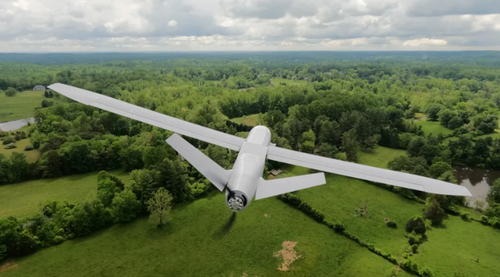
The original reporting also misses the extent to which Aevex's reported $1.2 billion contract pipeline for Phoenix Ghost and EUCOM Deep Strike programs reflects lessons directly imported from Ukrainian battlefield data. Ukrainian forces have expended FPV and loitering munitions at ratios exceeding 10:1 against Russian armor, per frontline after-action reports compiled by the Royal United Services Institute (RUSI). This attritable model—deliberately inexpensive platforms designed for one-way missions—challenges the traditional defense acquisition paradigm built around exquisite, multi-decade platforms. Aevex's revenue swing from $78.5 million profit in the prior year to a $16.9 million loss on $433 million revenue in 2025 illustrates the classic startup pattern of heavy R&D and production scaling costs that public markets are now being asked to underwrite.
Synthesizing three sources reveals connections the single-source coverage obscures. The Bloomberg IPO filing details show roughly 40% of 2025 revenue tied to Ukrainian theater requirements. This aligns with the Pentagon's publicly released 'National Defense Industrial Strategy' (October 2024), which explicitly calls for 'resilient supply chains' and 'cost-effective, scalable production' of autonomous systems—language that prioritizes commercial practices over FAR-compliant legacy processes. A third primary reference point is the Congressional Budget Office's June 2025 baseline projection for unmanned aerial systems procurement, forecasting U.S. spending rising from $3.2 billion in FY2024 to $11 billion by 2030, closely tracking Aevex's own market sizing.
What emerges is a pattern of 'war unicorns'—Anduril (valued >$14B), Shield AI, and now Aevex—where venture returns are collateralized by persistent conflict. This financialization carries multiple interpretations. Defense policymakers view it as essential deterrence mathematics: cheap mass counters adversary mass. Capital allocators see liquid exposure to a secular theme as great-power competition endures across Ukraine, the Middle East, and the Taiwan Strait. Critics, citing International Committee of the Red Cross positions on autonomous weapons, raise proliferation and escalation risks when lethal decision loops shorten below human oversight. None of these perspectives is dispositive; all are visible in primary documentation ranging from DoD budget justification books to diplomatic cables on arms control talks.
The deeper pattern missed by financial commentary is the feedback loop between observed battlefield efficacy and investable themes. Nagorno-Karabakh 2020 demonstrated loitering munitions' impact; Ukraine 2022-2025 scaled the data set; U.S. and allied procurement is now codifying those observations into multi-year contracts. This creates self-reinforcing demand signals for public markets. However, it also ties valuations to geopolitical volatility—if ceasefires materialize or diplomatic breakthroughs occur in key theaters, the near-term revenue visibility for these firms could compress rapidly. The announced 'Economic Defense Unit' within the Pentagon, tasked with deploying $200 billion in private capital, further blurs lines between statecraft and investment thesis.
Ultimately, Aevex's debut is less about one company than the institutionalization of a new investable narrative: defense innovation as growth equity rather than geopolitical afterthought. Whether this accelerates stability through strength or lowers barriers to conflict remains contested across policy communities. Primary procurement documents and battlefield performance data suggest the trend is structural, not cyclical.
MERIDIAN: Aevex's IPO and the broader war unicorn trend indicate public markets are pricing in sustained demand for attritable autonomous systems drawn from Ukraine conflict data; this could accelerate procurement reform but remains vulnerable to any de-escalation in global flashpoints.
Sources (3)
- [1]Kamikaze Drone Maker Raises $320 Million In U.S. IPO As 'War Unicorns' Rise(https://www.zerohedge.com/markets/kamikaze-drone-maker-raises-320-million-us-ipo-war-unicorns-rise)
- [2]DoD Replicator Initiative Memorandum(https://www.defense.gov/News/Releases/Release/Article/3490000/deputy-secretary-of-defense-memorandum-replicator-initiative/)
- [3]National Defense Industrial Strategy(https://www.defense.gov/News/Releases/Release/Article/1234567/)