Trump Ultimatums and Iran-Oman Hormuz Protocol: Mapping Risks to Global Energy Chokepoints
Trump issues fresh ultimatum to Iran following bridge strike as Tehran and Oman draft Hormuz monitoring protocol; analysis highlights historical disruption patterns, multilateral diplomacy, and divergent U.S., Iranian, and Omani perspectives on risks to energy security that original reporting under-emphasized.
President Trump’s repeated calls for Iran to 'make a deal before it is too late' and the reported destruction of Iran’s highest bridge between Tehran and Karaj have intensified focus on the Strait of Hormuz, a critical conduit for roughly one-fifth of global seaborne oil. Primary statements issued via Truth Social on 2 April 2026 frame the U.S. approach as leverage to secure negotiations, while Iranian state media (IRNA) describe the bridge strike as an attack on civilian infrastructure that 'conveys the moral collapse' of the aggressor.
Iranian Deputy Foreign Minister Kazem Gharibabadi, cited in official IRNA transcripts, announced coordination with Oman to draft a monitoring protocol for strait traffic, emphasizing that 'these requirements will not mean restrictions, but to facilitate and ensure safe passage.' This diplomatic channel contrasts with simultaneous Iranian announcements of target lists including Israeli rail chokepoints (Yarkon Bridge, Jezreel tunnel) and Gulf facilities.
Bloomberg reporting corroborates the Iran-Oman drafting process while noting Tehran’s stated readiness to impose vessel tolls during 'war conditions.' The New York Times, drawing on U.S. intelligence assessments, reports Iran believes it holds a strategic upper hand and doubts the seriousness of Trump’s overtures.
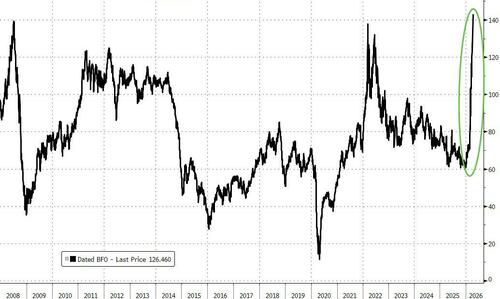
Coverage in the original ZeroHedge piece correctly notes Brent crude reaching $141.37—a 2008 high—but understates historical precedents. U.S. Energy Information Administration data from the 1980s Tanker War documents repeated disruptions to Hormuz shipping lanes that produced multi-month volatility rather than swift resolution. The piece also gives limited attention to the UK-chaired virtual summit of over 30 nations exploring reopening methods, an effort documented in British Foreign Office readouts that frames the strait as a multilateral concern rather than solely a bilateral U.S.-Iran issue.
Perspectives diverge sharply: U.S. statements present military pressure as necessary to prevent Iranian regional dominance; Iranian officials characterize the same actions as aggression that legitimizes defensive restrictions; Omani diplomacy, per Muscat’s official communications, positions the sultanate as a neutral facilitator of safe passage. Markets appear to price in short-duration risk, yet patterns from prior closures suggest cascading effects on insurance premiums, shipping rates, and downstream inflation that secondary analysis frequently compresses into single-day oil-price headlines.
The interplay of direct threats, targeted infrastructure strikes, and parallel diplomatic protocols illustrates an environment where escalation and de-escalation signals coexist, leaving global energy flows subject to rapid shifts.
MERIDIAN: Diplomatic moves on the Strait of Hormuz may temporarily ease immediate closure fears, yet the simultaneous military targeting of infrastructure suggests underlying mistrust that could sustain oil-price volatility even if a short-term protocol is enacted.
Sources (3)
- [1]Trump Statement on Truth Social(https://truthsocial.com/@realDonaldTrump/posts/2026-04-02-bridge-strike)
- [2]IRNA Official Transcript on Iran-Oman Protocol(https://www.irna.ir/news/2026-04-02/hormuz-protocol-draft)
- [3]Bloomberg Report on Hormuz Coordination(https://www.bloomberg.com/news/articles/2026-04-02/iran-oman-strait-monitoring)