Trump's Section 301 Forced-Labor Tariffs on 60 Trading Partners Set to Reshape Global Supply Chains and Inflate Consumer Costs
USTR's June 2026 proposal for 10-12.5% tariffs on 60 economies over forced-labor import bans, following SCOTUS rejection of broader IEEPA tariffs, represents a creative protectionist pivot. It will drive supply chain reconfiguration, elevate consumer costs, pressure allies and rivals alike to align with U.S. standards, and forms part of a larger dual Section 301 strategy on labor and overcapacity that few are fully tracking.
The U.S. Trade Representative's June 2026 determination that 60 major economies have failed to adequately ban imports of goods made with forced labor marks a pivotal escalation in the Trump administration's protectionist trade strategy. Following the Supreme Court's February 2026 invalidation of broad tariffs imposed under the International Emergency Economic Powers Act, the administration has pivoted to Section 301 of the Trade Act of 1974 as a more durable legal vehicle. USTR Ambassador Jamieson Greer announced affirmative findings that these countries' acts, policies, and practices are "unreasonable" and burden U.S. commerce by allowing artificially cheap goods produced with forced labor to distort markets and undermine American workers.[1][2]
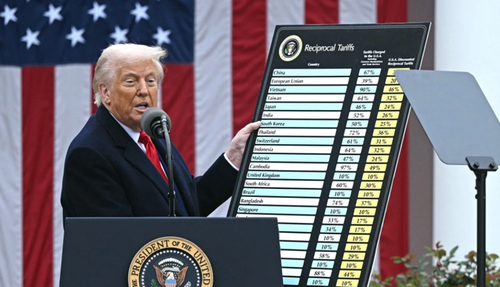
The proposal imposes additional duties of 10% on imports from partners that have taken partial steps—such as Canada, Mexico, the EU, Taiwan, and the UK, often via USMCA or reciprocal trade commitments—and 12.5% on others including China, India, Japan, South Korea, Brazil, and Switzerland. A targeted textile mechanism offers limited relief for apparel and textiles from qualifying economies, with specific exceptions outlined in an annex. Public comments are due July 6, with hearings beginning July 7. Greer stated that "the failure of our most important trading partners to address the importation of goods made with forced labor is unacceptable," framing the move as essential to leveling the playing field and preventing the global entrenchment of forced labor.[3][4]
This is not merely a narrow labor-rights enforcement action. Covering economies representing approximately 99% of U.S. imports, the tariffs form part of a dual-track Section 301 strategy alongside parallel probes into structural excess capacity and overproduction, primarily targeting China but encompassing 16 key manufacturing economies. By using the moral imperative of combating "slave labor"—building on U.S. precedents like the Uyghur Forced Labor Prevention Act—the administration achieves broad-based protectionism that applies pressure universally, including to allies. This approach compels trading partners to adopt stricter import bans aligned with American standards or face sustained duties, effectively externalizing U.S. regulatory preferences.[5]
Analysts tracking supply-chain implications note that these measures will accelerate reconfiguration of global production networks. Importers in sectors vulnerable to forced-labor risks (garments, electronics, agriculture, solar, critical minerals) face higher compliance costs, audit burdens, and potential sourcing shifts toward "friend-shored" or domestic suppliers. Law firms and trade groups warn of broad cost increases across supply-chain layers, inflationary pressure on U.S. consumers, and retaliatory risks from affected nations. While some countries may respond with new forced-labor import regimes to qualify for lower rates, the net effect is likely higher prices for American households and businesses alongside a less efficient, more fragmented global trade system. This pattern—leveraging statutory investigations for economy-wide remedies—remains under-analyzed in mainstream coverage despite its potential to lock in a new era of managed trade.[6][7]
The initiative reveals a sophisticated legal and rhetorical architecture: post-SCOTUS adaptation, universal application to avoid singling out China (while still hitting it harder), and alignment with "reciprocal trade" principles. Its success in reordering supply chains will depend on implementation details, partner responses, and whether it withstands legal or WTO challenges. Yet the direction is clear—protectionism dressed in humanitarian garb is becoming the structural foundation of U.S. trade policy.
Liminal: These tariffs cleverly sustain broad protectionism after the Supreme Court setback by weaponizing forced-labor concerns against nearly all trading partners, likely fragmenting supply chains, raising U.S. consumer prices across everyday goods, and forcing a friend-shoring acceleration that prioritizes geopolitical alignment over pure efficiency.
Sources (5)
- [1]USTR Makes Findings and Proposes Action in 60 Section 301 Investigations Relating to Failures to Take Action on Trade in Forced Labor Goods(https://ustr.gov/about/policy-offices/press-office/press-releases/2026/june/ustr-makes-findings-and-proposes-action-60-section-301-investigations-relating-failures-take-action)
- [2]US plans tariffs of up to 12.5% over forced labor concerns(https://www.reuters.com/world/china/us-proposes-additional-tariffs-imports-60-economies-over-forced-labor-2026-06-03/)
- [3]Trump administration launches new forced labor investigations into dozens of countries as it fights to restore tariffs(https://www.cbsnews.com/news/trump-administration-forced-labor-investigations-tariffs/)
- [4]Why USTR’s Latest Section 301 Actions Matter for Your Supply Chain(https://www.morganlewis.com/pubs/2026/04/why-ustrs-latest-section-301-actions-matter-for-your-supply-chain)
- [5]U.S. launches fresh Section 301 probes into 60 economies over forced-labor trade practices(https://www.cnbc.com/2026/03/13/us-section-301-probe-trade-trump-labor-practices.html)