National Beef sees worst of cattle cycle over as margin hits 2.1%
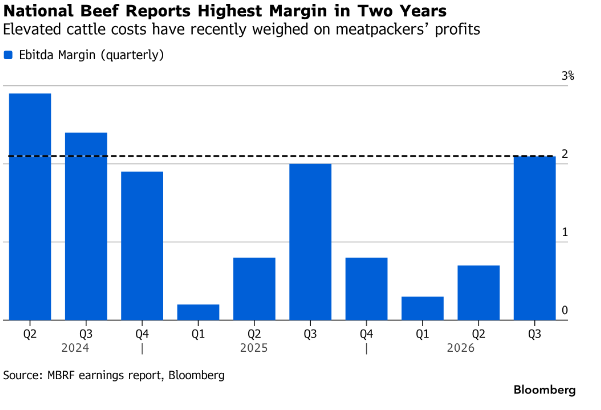
National Beef said it believes the worst part of the cattle cycle is over, reporting a 2.1% earnings margin before items including interest and taxes, its highest since the third quarter of 2024. Cattle futures and supermarket ground beef prices have retreated from recent highs, while herd contraction, imports and policy shifts shape the split between processors, ranchers and consumers. The inflection point matters because beef prices feed directly into food inflation, household spending and restaurant costs.
National Beef CEO Tim Klein told reporters the company believes it is through the worst part of the cattle cycle, pointing to reduced US slaughter volumes and still-strong consumer demand for beef. The Missouri-based processor, controlled by Brazil's MBRF Global Foods SA, reported an earnings margin before items including interest and taxes of 2.1%, its highest since the third quarter of 2024. The margin is the profit left after direct costs but before financing, taxes and other adjustments.
Evidence of easing pressure comes from cattle futures and supermarket prices. US live cattle futures are well below the highs seen in late April, and USDA-tracked supermarket ground beef prices remain slightly below their peaks while upward momentum has slowed. Years of herd contraction had shrunk the US cattle population to its smallest size in decades, lifting livestock costs and squeezing processors that buy cattle and sell beef. Lower cattle costs and improving margins have not yet produced more promotions at supermarkets.
The shift matters beyond meatpacking. Beef is a visible component of food inflation, and processors sit between ranchers, retailers and consumers. JBS NV's US beef business has also reported improving earnings, adding to signs that industry margin pressure is easing. The Trump administration's moves to increase foreign ground-beef imports and resume live cattle shipments from Mexico have helped address tight supplies, but have angered mom-and-pop ranchers. Oklahoma State University economist Derrell Peel has described the rebuilding phase as a multiyear process.
For households, the inflection point touches grocery bills and restaurant menus. Cattle cycles affect beef prices with a lag: lower livestock costs have not yet translated into supermarket ground beef prices low enough to signal relief for consumers. For restaurants and food manufacturers, beef input costs remain a central pressure point, while ranchers face a policy environment that includes more foreign ground-beef imports and resumed live cattle shipments from Mexico. The split ledger shows processors gaining margin while smaller producers absorb adjustment costs.
Households see the effect through grocery bills and restaurant prices, processors through margins, and ranchers through import and live-cattle policy that affects supply and producer income.
Sources (1)
- [1]America's Top Beef Processor Sees Worst Part Of Cattle Cycle Over(https://www.zerohedge.com/markets/americas-top-beef-processor-sees-worst-part-cattle-cycle-over)