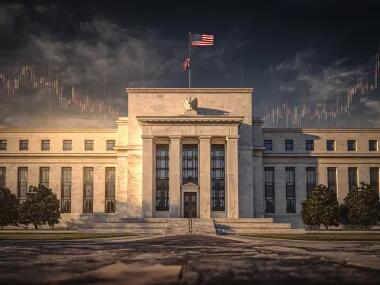
Fed's 2% Inflation Target: The Quiet Erosion of Future Purchasing Power for Younger Generations
The Fed's 2% target creates predictable long-term purchasing power loss, hitting young savers hardest; credible data and economic literature support calls for inflation-aware financial strategies.
The Federal Reserve's longstanding commitment to a 2% longer-run inflation target, as reaffirmed in its January 2026 Statement on Longer-Run Goals and Monetary Policy Strategy, aims to balance maximum employment with price stability. However, this policy implies a steady decline in the real value of money over time. At a consistent 2% annual rate, purchasing power halves approximately every 35 years, according to standard compound calculations used in financial planning tools. Official Fed documents explicitly tie this target to the personal consumption expenditures (PCE) price index, noting it fosters well-anchored expectations for economic decision-making. Historical data and economic analyses show actual inflation often exceeds this benchmark over extended periods, amplifying cumulative effects on savings and wages. Economists like Milton Friedman, in his 1982 paper 'Monetary Policy: Theory and Practice,' observed that under a pure commodity standard such as gold, monetary policy principles become minimal as the system self-regulates, contrasting with fiat systems reliant on discretionary management. This perspective aligns with critiques of neutral economic analysis that overlook moral and distributional consequences of monetary policy. For younger Americans, inflation's impact extends beyond immediate costs: it erodes the compounding potential of early savings, delays milestones like homeownership, and complicates retirement planning over 40-50 year horizons. Surveys and reports indicate Gen Z and Millennials face heightened uncertainty, with inflation expectations rising sharply post-pandemic and influencing long-term financial behaviors. Strategies for protection include inflation-hedging assets such as commodities, equities, or alternatives like Bitcoin, whose fixed supply contrasts with expandable fiat supplies. Official data from the Bureau of Labor Statistics and Fed projections underscore that while the target supports stability, persistent deviations or higher realized rates transfer real costs to future holders of cash and fixed-income assets.
[Financial Planner]: Young adults prioritizing inflation-protected assets like TIPS, real estate, or diversified equities can offset the documented 50% purchasing power halving over 35 years at the Fed's target rate.
Sources (6)
- [1]Federal Reserve Statement on Longer-Run Goals and Monetary Policy Strategy(https://www.federalreserve.gov/monetarypolicy/files/fomc_longerrungoals.pdf)
- [2]Why does the Federal Reserve aim for inflation of 2 percent over the longer run?(https://www.federalreserve.gov/faqs/5D58E72F066A4DBDA80BBA659C55F774.htm)
- [3]Inflation Calculator: CPI & Purchasing Power(https://www.calcregistry.com/calculators/financial/inflation-calculator)
- [4]Milton Friedman Hoover Institution Archive on Monetary Policy(https://miltonfriedman.hoover.org/internal/media/dispatcher/214992/full)
- [5]How Does Inflation Impact Young Americans?(https://www.pgpf.org/article/how-does-inflation-impact-young-americans/)
- [6]GenZ will carry deepest psychological scars from inflation, say experts(https://gulfnews.com/business/markets/genz-will-carry-deepest-psychological-scars-from-inflation-say-experts-1.98615426)