US Raises Alarm Over Potential ASML EUV Machine in China Amid Tightening Export Controls
Bloomberg-sourced reports detail US Commerce Secretary Lutnick confronting ASML over possible EUV machine diversion to China; ASML denies all allegations amid anonymous US claims of evidence, with no public proof released. Story ties into export control enforcement issues and US-China tech rivalry.
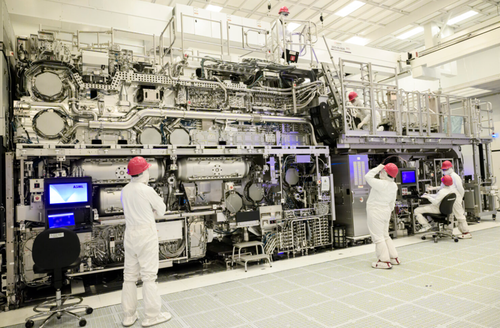
Dutch semiconductor equipment giant ASML is facing renewed scrutiny from the US government over whether one of its advanced extreme ultraviolet (EUV) lithography machines may have reached China, in potential violation of long-standing export restrictions. Commerce Secretary Howard Lutnick reportedly conveyed these concerns directly to ASML executives in a series of recent meetings, according to people familiar with the discussions.
Bloomberg first reported the development, noting that US officials expressed suspicions of non-compliance, including possible shipments of EUV-related equipment to China, though no public evidence has been provided and ASML has strongly denied any breach. The company maintains that all 314 of its operating EUV systems are accounted for globally and that it has never shipped such machines—or even specialized components—to China. ASML has emphasized its ability to remotely monitor tool operations via data feeds from customer fabs.
The claims emerge against the backdrop of Huawei's recent unveiling of advanced semiconductor production pathways and broader US efforts to curb China's access to cutting-edge chip technology. Analysts from Citi and Bloomberg Intelligence suggest the concerns may reflect China's incremental progress using legacy deep ultraviolet (DUV) tools rather than an outright compliance failure by ASML. Shares in ASML dipped as much as 2% following the reports.
This episode highlights persistent challenges in enforcing the semiconductor blockade, including the difficulty of proving negatives, the role of allied nations like the Netherlands in license approvals, and China's growing engineering sophistication. It also underscores the limits of unilateral US controls in a global supply chain where indirect routes or reverse-engineering could play roles, even as ASML insists on strict adherence. The dispute adds pressure to ongoing US-China tech decoupling, where enforcement gaps risk accelerating China's self-reliance push.
Analyst: Heightened US scrutiny could delay ASML's DUV license renewals for China and accelerate Beijing's indigenous EUV development timeline by 1-2 years, further fragmenting global chip supply chains.
Sources (4)
- [1]US Tells ASML It’s Concerned China May Have Top Chip Tool(https://www.bloomberg.com/news/articles/2026-06-19/us-tells-asml-it-s-concerned-china-may-have-top-chip-tool)
- [2]ASML Denies US Allegation That EUV Machine Reached China(https://aiweekly.co/alerts/asml-denies-us-allegation-that-euv-machine-reached-china)
- [3]US raises concerns with ASML over potential EUV machine diversion to China: report(https://seekingalpha.com/news/4605155-us-raises-concerns-with-asml-over-potential-euv-machine-diversion-to-china-report)
- [4]The US says ASML's top chip tool may be in China. ASML says it isn’t.(https://techcrunch.com/2026/06/19/the-us-says-asmls-top-chip-tool-may-be-in-china-asml-says-it-isnt/)