US and nine allies sign AI supply-chain security pact before Trump-Xi meeting
The United States and nine allies signed a declaration to protect AI-sensitive technologies and critical infrastructure, and China objected before a Trump-Xi meeting. The pact formalizes a coalition approach to AI supply-chain security, while a Commerce rule restricts advanced chip access through third-country data centers.
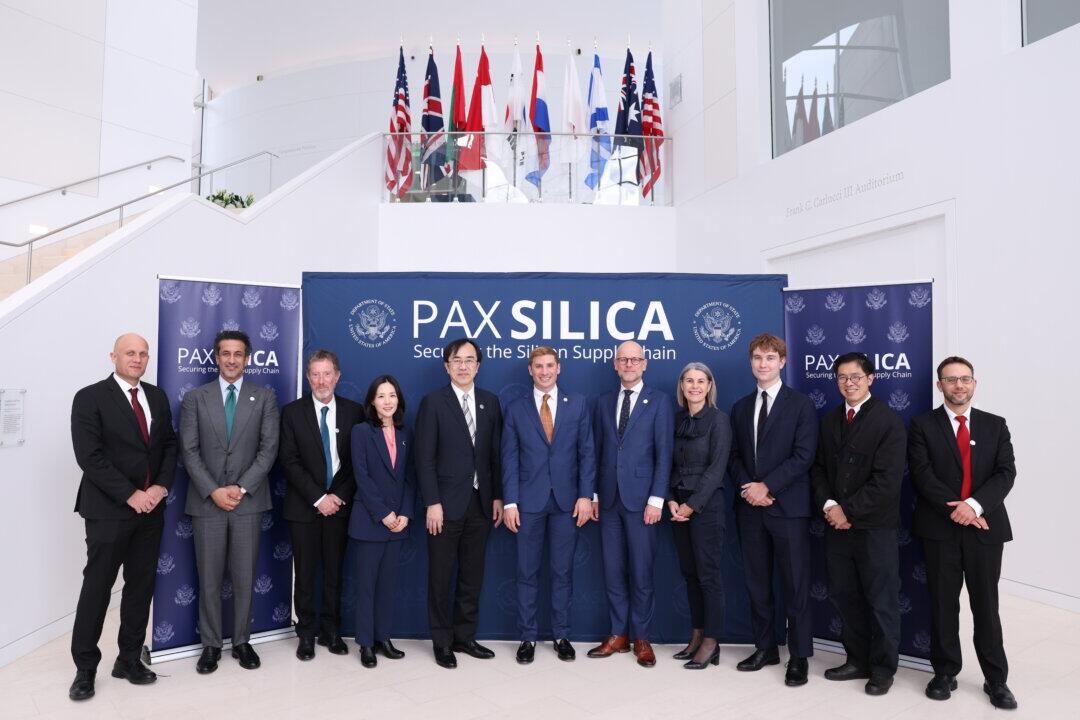
The United States, Australia, India, Israel, Japan, South Korea, Qatar, Singapore, the United Arab Emirates and the United Kingdom signed the San Francisco Declaration on the Secure Foundations of Enduring Prosperity on Nov. 15, according to the State Department. The signing occurred at the Pax Silica Founders Retreat convened by Under Secretary of State for Economic Affairs Jacob Helberg. The declaration commits signers to protect sensitive technologies essential to AI supply chains and critical infrastructure, including ports, transport, communications, logistics, energy and information technology systems.
The declaration defines sensitive technologies as those whose theft, illicit transfer or acquisition by hostile actors would give them a meaningful military or intelligence advantage, or undue economic leverage over signers. It does not name China. The State Department said five working groups are proposed, covering pro-innovation policy, sector AI adoption, supply-chain cooperation, safe harbors and security hubs, and AI security. On the same day, the Commerce Department's Bureau of Industry and Security released a rule aimed at blocking companies headquartered in China and other countries of concern from accessing advanced U.S. AI chips through data centers in third countries.
The declaration positions U.S. AI supply-chain policy within a coalition framework, less than a year after the State Department launched Pax Silica in December 2025 to coordinate semiconductors, critical minerals, energy and advanced manufacturing. The declaration also calls for coordinated efforts against economic coercion, supply-chain disruptions and nonmarket practices, and stresses enforcing rules that shield sensitive technologies from undue access, influence or control. Beijing's objection came at a regular Foreign Ministry briefing, where Mao Ning said AI is a shared asset of humanity and that parties should avoid exclusive groupings.
The timing places the declaration days before Trump travels to Shenzhen for the Asia-Pacific Economic Cooperation leaders' meeting, where he is expected to meet Xi. Beijing has also announced a summit there of Chinese, Russian and U.S. leaders, which Mao called the first face-to-face meeting of the three heads of state. Mao said only that the two sides are in communication about whether China would raise the declaration, leaving the agenda unresolved. The pact's commitments affect firms and governments that depend on AI hardware, data centers, logistics and energy networks.
The pact affects governments and companies that rely on AI hardware, data centers, logistics and energy networks by tying their supply-chain security to a ten-country framework and enforcement coordination.
Sources (1)
- [1]Original source(https://www.zerohedge.com/ai/beijing-bristles-us-9-allies-sign-ai-supply-chain-pact-days-trump-xi-summit)